
Top 5 Valve Casting Manufacturers: Processes, Materials & NDT Standards
Selecting the right valve casting manufacturer is one of the most critical decisions a procurement engineer can make. It dictates not only the upfront unit cost of the component but also the long-term safety, reliability, and total cost of ownership of the entire fluid control system. In this comprehensive engineering guide, we dissect the top five global valve casting manufacturers, explore the precise boundaries between investment and sand casting processes, and decode the strict ASTM material grades and Non-Destructive Testing (NDT) standards required to prevent catastrophic pipeline failures.
The Hidden Risks in Valve Casting Procurement
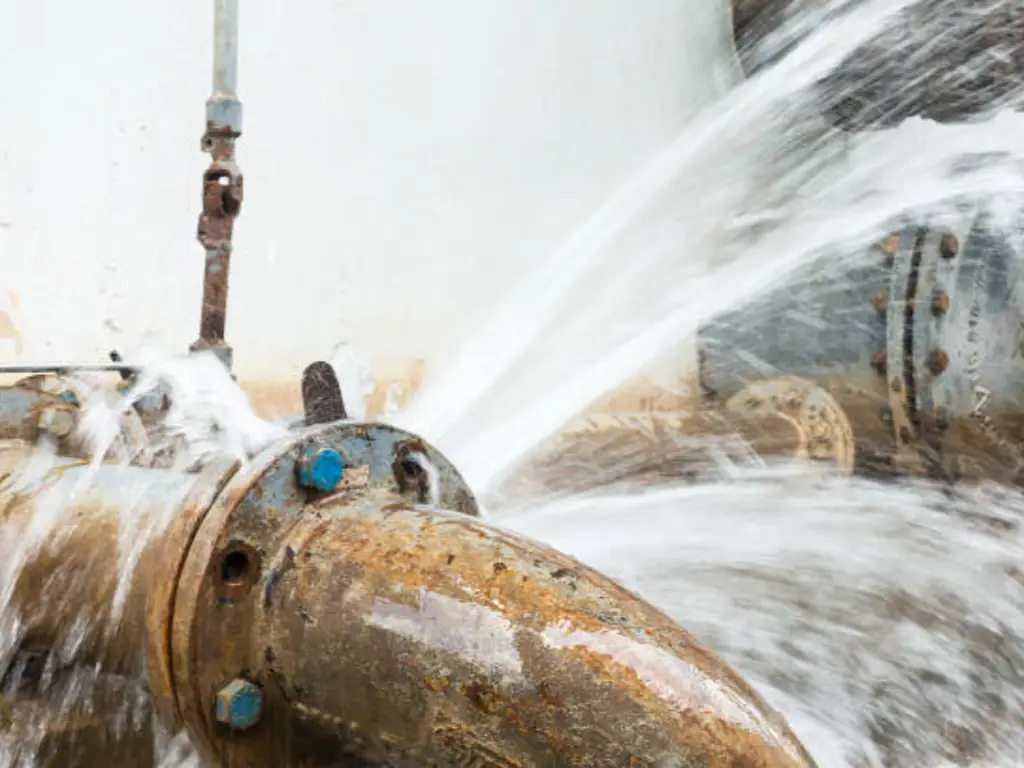
Procuring industrial valve bodies is not merely about sourcing raw metal shapes; it is a critical engineering decision that dictates the safety, longevity, and overall profitability of a fluid control system. The most severe threat in valve manufacturing does not come from the outside—it lurks within the walls of the casting itself. Microscopic shrinkage porosity, gas holes, and slag inclusions are invisible to the naked eye, yet they possess the potential to cause catastrophic field failures in high-pressure oil, gas, and chemical pipelines.
Many procurement teams fall into the trap of prioritizing the lowest piece-part price, focusing solely on the upfront cost of the raw casting. However, the Total Cost of Ownership (TCO) paints a much darker picture. Consider this destructive scenario: To save 10% on the initial casting budget, a buyer selects a substandard foundry. The rough casting looks acceptable, but internal voids remain undetected due to a lack of proper volumetric inspection. The valve undergoes expensive CNC machining, assembly, and finally, the high-pressure hydrostatic test (hydro-test).
When the valve fails the hydro-test due to internal leakage, the consequences are disastrous. The costs associated with disassembly, metallurgical analysis, rework welding, scrap rates, and the subsequent penalties for delayed project delivery routinely exceed 300% of the original casting procurement cost. The few hundred dollars saved on raw materials instantly destroy the profit margin of the entire pipeline project. This guide is designed to help B2B buyers navigate these hidden risks by evaluating top-tier manufacturers, understanding casting process boundaries, specifying the correct ASTM materials, and demanding uncompromising Non-Destructive Testing (NDT) standards.
Leading Valve Casting Manufacturers You Should Know
Evaluating a valve casting manufacturer requires looking past the glossy brochures and examining their core competencies, production scale, and quality control infrastructure. There is no single “perfect” foundry in the world; there is only the most appropriate partner for your specific material, budget, and engineering application. A high-end aerospace foundry will be a massive budget overkill for standard water valves, just as a high-volume automated sand casting plant may struggle with the intricate tolerances of a miniature high-pressure needle valve.
Engineering Navigation Tip: Unsure about the difference between Silica Sol Investment Casting, Shell Molding, and Resin Sand? Click here to jump to our definitive casting process selection guide before reviewing the manufacturers below.
| Manufacturer | Core Process | Main Materials | Key Certifications | Target Applications |
|---|---|---|---|---|
| Besser Casting | Silica Sol Investment Casting | Stainless Steel (CF8M), Carbon Steel | ISO 9001, Material Traceability | Fluid Control, Water Treatment, Pump Parts |
| Stainless Foundry & Eng. | Sand & Investment Casting | 250+ Special Alloys (High-Nickel) | PED, ASME NQA-1, 10CFR50 | Nuclear Power, Petrochemical, Defense |
| Eagle Alloy, Inc. | Automated Shell Molding | Carbon Steel, Low-Alloy Steel | ISO 9001, Lean Manufacturing | Fluid Power, Oil & Gas, Rail |
| Barron Industries | Precision Investment Casting | Superalloys, Aluminum, SS | AS9100D, NADCAP | Aerospace, Deep-sea Oil & Gas |
| NovaCast Limited | Sand & Investment Casting | Bronze, Aluminum Bronze, Iron | ISO 9001, Marine Approvals | Desalination, Marine, Waterworks |
Besser Casting
Location: Ningbo, Zhejiang, China
Core Business: High-precision valve bodies, pump components, and fluid control parts for international OEM brands.
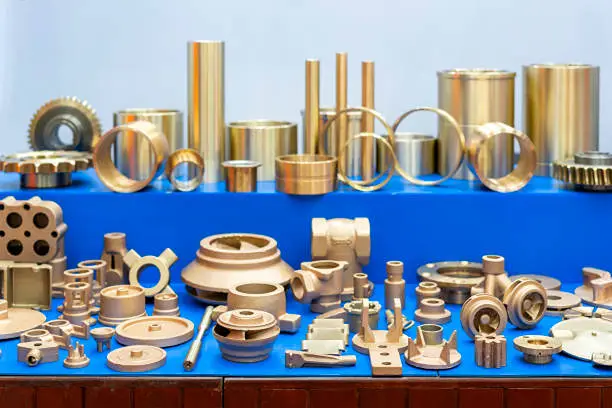
Company Overview: Besser Casting operates as a premier source factory dedicated to high-value-added investment casting, with a distinct specialization in the silica sol process. They provide an integrated, one-stop manufacturing solution that covers everything from initial mold design and pouring to advanced CNC machining. Besser Casting is recognized for achieving exceptional dimensional tolerance control (adhering strictly to ISO 8062 CT5-CT7 standards) and delivering export-grade surface finishes, significantly reducing the need for secondary machining on stainless steel valve components.
Pros & Cons:
Pros: Offers an unbeatable cost-to-performance ratio for mid-to-high precision valves; excellent surface finish capabilities; closed-loop production from raw casting to final machining makes them an ideal, low-friction partner for mid-sized international buyers.
Cons: As a single-node manufacturing facility based in China, buyers located in regions with volatile or extremely high tariff barriers (such as specific North American sectors) may need to factor in geopolitical supply chain considerations compared to localized options.
Source & Disclaimer: Pros and cons are evaluated based on general macro-supply chain logic and public industry positioning. Buyers are advised to request formal MTRs and audit reports directly from the manufacturer to ensure alignment with their specific project requirements.
Stainless Foundry & Engineering, Inc.
Location: Milwaukee, Wisconsin, USA
Core Business: Complex valve bonnets, high-pressure bodies, and mission-critical fluid control parts requiring exotic metallurgy.
Company Overview: Stainless Foundry & Engineering (SF&E) is a powerhouse in the American casting industry, operating as a dual-process foundry that houses both sand and investment casting lines within the same facility. They are an early adopter of the Pressure Equipment Directive (PED) and stand as one of the few foundries capable of meeting the extremely stringent ASME NQA-1 and 10CFR Part 50 Appendix B standards required for the United States nuclear power industry.
Pros & Cons:
Pros: Boasts top-tier compliance and certification endorsements, particularly for defense and nuclear applications; possesses exceptional material R&D capabilities, routinely pouring over 250 complex and exotic high-nickel alloys.
Cons: The massive overhead required to maintain nuclear-grade certifications results in high manufacturing costs, creating a significant budget premium (often overkill) for standard, commercial-grade low-pressure valves.
Source & Disclaimer: Pros and cons are evaluated based on general macro-supply chain logic and public industry positioning. Buyers are advised to request formal MTRs and audit reports directly from the manufacturer to ensure alignment with their specific project requirements.
Eagle Alloy, Inc.
Location: Muskegon, Michigan, USA
Core Business: Mid-to-high volume industrial valve bodies and fluid power assemblies.
Company Overview: Eagle Alloy is a highly automated U.S.-based foundry that has heavily integrated Lean Manufacturing principles into its DNA. They are widely respected in the industry for their mastery of the shell molding process. This highly automated approach allows them to deliver superior surface finishes and tighter dimensional accuracy for medium-to-large valve bodies compared to traditional resin sand casting, all while maintaining incredibly high turnover rates.
Pros & Cons:
Pros: The combination of shell molding and robotic automated pouring lines ensures extremely fast delivery times for large-batch orders; provides zero geopolitical supply chain risks for North American buyers.
Cons: When quoting large-volume orders using standard basic materials (like standard carbon steel), their pricing structure typically cannot compete with the aggressive pricing models of Asian supply chains.
Source & Disclaimer: Pros and cons are evaluated based on general macro-supply chain logic and public industry positioning. Buyers are advised to request formal MTRs and audit reports directly from the manufacturer to ensure alignment with their specific project requirements.
Barron Industries
Location: Oxford, Michigan, USA
Core Business: Ultra-high-pressure valve components, aerospace fluid controls, and extreme-environment castings.
Company Overview: Barron Industries focuses exclusively on investment casting projects that require ultimate reliability and zero-defect performance. Holding stringent AS9100D and NADCAP certifications, they cater to the defense, aerospace, and deep-sea exploration sectors. What sets them apart is their hardcore internal Non-Destructive Testing (NDT) infrastructure, featuring digital X-ray and fluorescent penetrant inspection (FPI) capabilities in-house.
Pros & Cons:
Pros: Delivers true aerospace-grade quality control tailored for extreme pressure and severe corrosion scenarios; comprehensive internal testing reduces reliance on third-party labs and speeds up validation.
Cons: Hyper-focused on high-precision, low-volume, high-value projects. Their production scheduling, minimum order requirements, and pricing are not optimized for the conventional civil or commercial valve markets.
Source & Disclaimer: Pros and cons are evaluated based on general macro-supply chain logic and public industry positioning. Buyers are advised to request formal MTRs and audit reports directly from the manufacturer to ensure alignment with their specific project requirements.
NovaCast Limited
Location: Melksham, Wiltshire, UK
Core Business: Marine-grade valve bodies, large pump casings, and desalination pipe fittings.
Company Overview: NovaCast Limited seamlessly combines strong local British engineering heritage with global supply chain management. They excel in pre-engineering, utilizing advanced casting simulation software to accurately predict and eliminate shrinkage porosity risks before a single tool is cut. Furthermore, they are highly regarded for their expertise in casting non-ferrous metals, particularly bronze and aluminum bronze, which are critical for anti-corrosion applications in seawater.
Pros & Cons:
Pros: Outstanding upfront engineering simulation prevents costly trial-and-error delays; deep metallurgical expertise in seawater-resistant non-ferrous castings.
Cons: Because their business model incorporates supply chain integration, large production runs of standard carbon steel valves might be subcontracted to their Far East network rather than produced locally in the UK, which requires buyers to strictly specify their origin requirements.
Source & Disclaimer: Pros and cons are evaluated based on general macro-supply chain logic and public industry positioning. Buyers are advised to request formal MTRs and audit reports directly from the manufacturer to ensure alignment with their specific project requirements.
Investment Casting vs Sand Casting for Valve Bodies
Selecting the right casting process is not merely a technical preference; it is a complex commercial calculation balancing wall thickness tolerances, surface roughness requirements, and the Total Cost of Ownership (TCO). Buyers must align the physical dimensions of the valve with the economic realities of the tooling amortization.
When to Choose Investment Casting (Lost Wax)
The silica sol investment casting process is the undisputed champion of precision. It is capable of achieving extremely tight dimensional tolerances ranging from ISO 8062 CT5 to CT7, alongside an excellent surface roughness of Ra 3.2 to 6.3. This precision dramatically reduces, and in some cases entirely eliminates, the need for expensive secondary CNC machining on complex internal flow paths.
However, the laws of physics and economics dictate a strict boundary for this process. Investment casting is the optimal choice for valves with a nominal diameter smaller than DN50 (2 inches)—such as intricate high-pressure ball valves, needle valves, or severe-service control valves. Once the valve size increases beyond this threshold, the cost of the ceramic shell materials, the wax volume, and the extended curing times cause the per-unit price to rise exponentially. For larger valves, insisting on silica sol investment casting is often an engineering misstep that ruins project budgets.
When to Rely on Sand, Shell Molding, and Sodium Silicate
The true TCO battleground lies in the mid-range valve sizes: DN50 to DN150 (2 to 6 inches). In this range, buyers must rigorously calculate the trade-offs. While silica sol offers high yields and low machining costs, its base price is high. Here, processes like Water Glass (Sodium Silicate) investment casting or automated Shell Molding become highly attractive. Shell molding, for instance, provides a great middle-ground, offering better surface finishes than traditional sand casting while keeping tooling and production costs manageable for medium-to-large batches.
For heavy industrial applications involving large gate valves, butterfly valves, and massive check valves exceeding DN300 (12 inches), traditional Resin Sand casting is the absolute standard. Although the surface finish is rougher (Ra 12.5 to 25) and requires significant machining allowances, the extremely low mold costs and the ability to pour massive tonnages of molten metal make sand casting irreplaceable in municipal water treatment and main oil pipelines.
Essential Material Grades for Fluid Control
A true fluid control engineer never simply requests “stainless steel” or “iron.” The durability of a valve under pressure and corrosive attack depends entirely on the precise metallurgical chemistry. Specifying exact ASTM (American Society for Testing and Materials) grades is the ultimate litmus test separating amateur buyers from seasoned procurement veterans.
Stainless Steel and Duplex Alloys
For applications involving corrosive media, acids, or high-purity food-grade fluids, austenitic stainless steel is required. The industry standard is ASTM A351 CF8M (the cast equivalent of 316 stainless steel), which contains molybdenum to resist pitting corrosion. However, in extreme environments like offshore platforms or seawater desalination plants, CF8M is not enough. High chloride concentrations can lead to Stress Corrosion Cracking (SCC)—a sudden, catastrophic failure mechanism. In these scenarios, engineers must upgrade to Duplex Stainless Steel, such as ASTM A890 CD3MN (cast 2205). Duplex alloys offer a dual-phase microstructure that provides twice the yield strength of standard austenitic steels and near-total immunity to chloride-induced SCC, justifying their higher material costs.
Carbon Steel and High-Pressure Applications
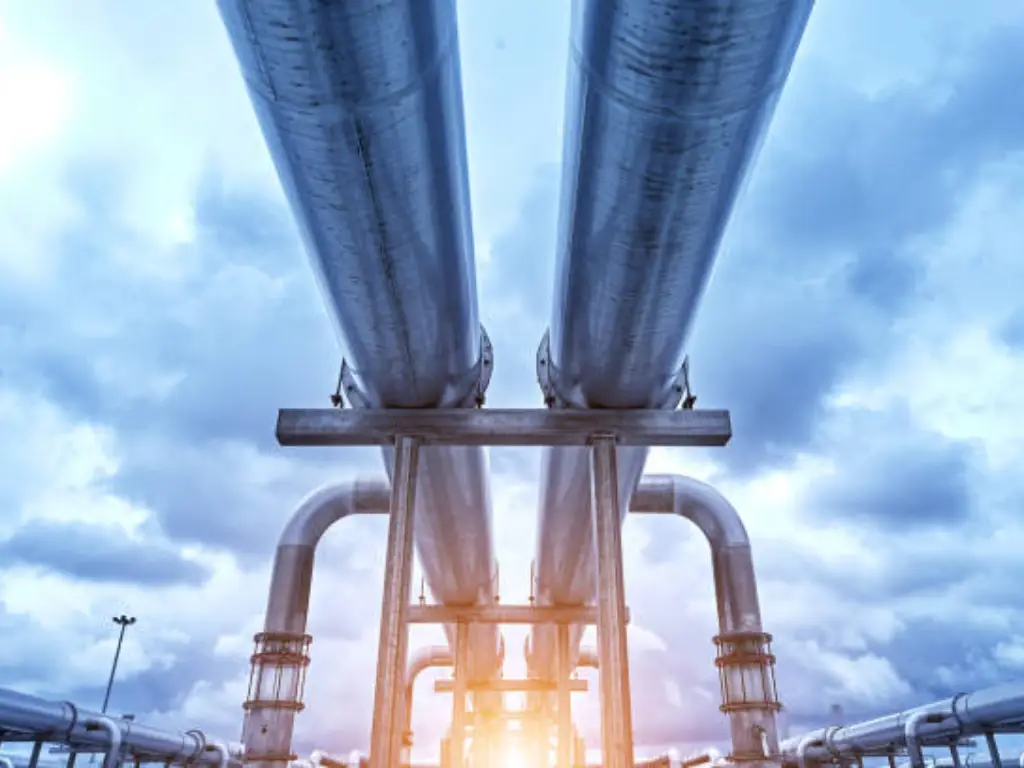
For high-pressure, high-temperature applications where corrosion is not the primary threat—such as steam lines, power generation, and standard crude oil transport—carbon steel reigns supreme due to its strength and cost-effectiveness. The most universally specified grade is ASTM A216 WCB. While inexpensive, WCB poses distinct manufacturing challenges. It has a high susceptibility to “hot tearing” (cracking during the solidification process as the metal shrinks). Therefore, casting WCB requires a foundry with deep engineering expertise in runner and riser design to ensure directional solidification feeds molten metal into the thickest sections of the valve body before it freezes.
Ductile Iron for Low-Pressure & Water Works
To establish a completely mutually exclusive and collectively exhaustive (MECE) material strategy, we must address the massive low-pressure sector. For municipal water distribution networks, HVAC systems, and low-pressure slurry lines that do not endure extreme heat or highly aggressive chemicals, carbon and stainless steels are unnecessary expenses. Here, Ductile Iron (such as ASTM A395 or A536) completely dominates. Unlike traditional brittle gray cast iron, ductile iron contains graphite nodules that give it remarkable tensile strength, impact resistance, and elongation properties. It offers the structural integrity required for large butterfly and gate valves at a fraction of the cost of steel.
Decoding Non-Destructive Testing (NDT) in Valve Foundries
This is the ultimate technical moat in valve procurement. Many foundries promise “strict quality control,” but in reality, they only perform basic visual inspections or low-pressure water testing. To guarantee that a valve body can withstand thousands of PSI without catastrophic rupture, buyers must demand rigorous Non-Destructive Testing (NDT) in accordance with standards like ASME B16.34.
Volumetric Inspection: Why RT Trumps UT in Castings
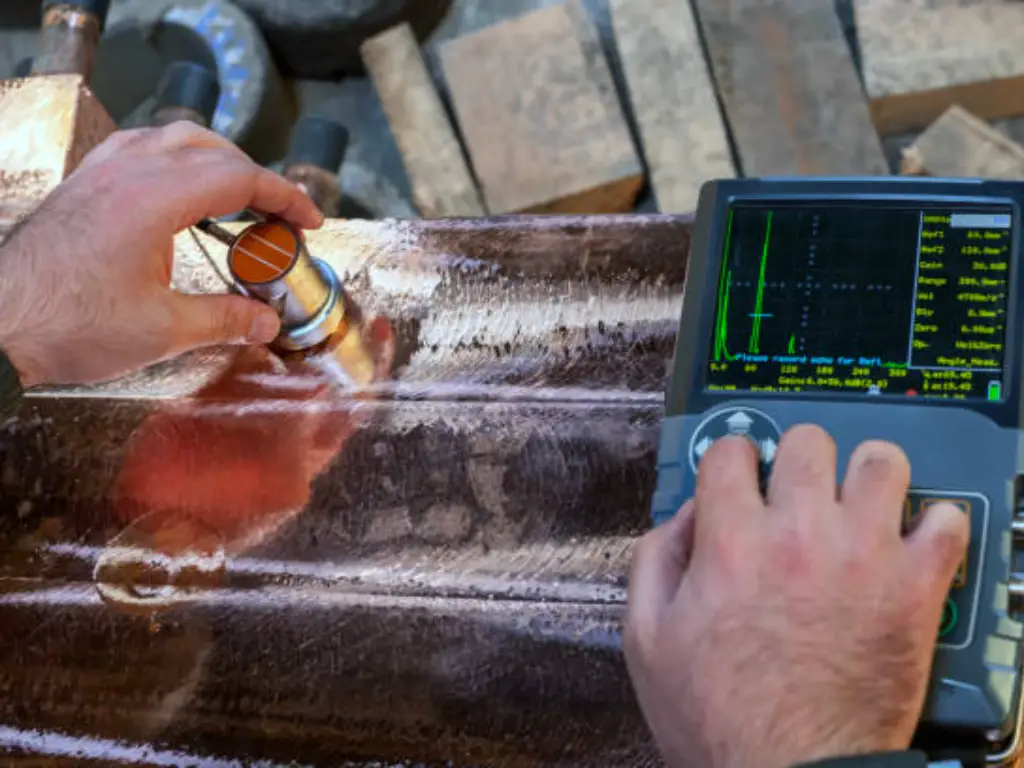
When inspecting the internal volume of a metal component, the two primary methods are Radiographic Testing (RT) and Ultrasonic Testing (UT). Many buyers mistakenly accept UT reports from foundries because ultrasonic testing is faster and cheaper. This is a critical physical error when dealing with castings.
Unlike forged metals, castings—especially austenitic stainless steels—possess a very coarse and non-uniform dendritic grain structure. When high-frequency ultrasonic waves enter a cast valve body, these large grains cause severe acoustic scattering and signal attenuation (often referred to as “grass” or “forest” echoes on the UT screen). This scattering makes UT incredibly insensitive to deep internal defects in castings, leading to dangerous false negatives (missing actual shrinkage voids).
Therefore, for high-pressure, hazardous-media valve bodies, UT is highly unreliable. Radiographic Testing (RT) is not an option; it is the mandatory baseline. RT acts as an X-ray for the metal, providing undeniable visual film evidence of internal shrinkage, gas porosity, and inclusions, ensuring the valve’s pressure-containing envelope is structurally sound.
Surface Flaw Detection: PT vs. MT
After a casting undergoes CNC machining, the cutting tools can expose micro-cracks that were previously hidden just beneath the rough skin. Under continuous pressure cycling, these micro-cracks will propagate and cause leaks. Surface flaw detection is vital, but the method depends entirely on the material.
For non-magnetic materials like CF8M Stainless Steel or Aluminum, Liquid Penetrant Testing (PT) must be utilized. A highly visible dye is applied, which seeps into open cracks via capillary action. However, for ferromagnetic materials like WCB Carbon Steel or Ductile Iron, PT is suboptimal. Buyers must insist on Magnetic Particle Testing (MT). MT induces a magnetic field through the valve; any defect disrupts the magnetic flux, causing iron particles to gather at the flaw. Crucially, MT is far more sensitive than PT and can detect sub-surface cracks up to 2-3mm deep, catching defects that PT would completely miss.
Strategic Criteria for Vetting a Casting Partner
Transforming this technical knowledge into actionable procurement power requires strict auditing during the RFQ (Request for Quotation) phase. A reliable partner must offer more than just a competitive price per kilogram. Ensure your chosen foundry can provide:
- Full Traceability & Certification: ISO 9001 is a given. You must demand an EN 10204 3.1 Material Test Report (MTR) with every shipment. This legally binding document proves the exact chemical composition from the pre-pour spectrometer analysis and the mechanical yield strengths from the test bars.
- Pre-Production Simulation: Ask if the foundry utilizes solidification simulation software (like MagmaSoft or ProCAST) to optimize the gating system before cutting the physical mold. This proves they engineer quality into the part, rather than trying to inspect defects out of it.
To eliminate ambiguity when communicating with foundries, utilize this standardized RFQ email template to signal that you are an educated buyer demanding high standards:
Subject: RFQ for [Quantity]x [Valve Size] Valve Bodies - [Company Name]

Dear Sales & Engineering Team,

We are seeking a reliable foundry partner to cast our upcoming series of industrial valve bodies. Please find the attached 3D STEP files and 2D PDF drawings for your review.

Technical Requirements:
1. Material: [e.g., ASTM A351 CF8M / ASTM A216 WCB]
2. Casting Process: [e.g., Silica Sol Investment Casting / Shell Molding]
3. Dimensional Tolerance: Must comply with ISO 8062 [e.g., CT6]
4. Quality Assurance: We require an EN 10204 3.1 MTR (Chemical & Mechanical) with the shipment.
5. NDT Requirements: Please quote the cost of [e.g., 100% RT per ASME B16.34 / 100% MT on machined surfaces].

Please provide your best quotation, estimated mold tooling timeline, and any DFM (Design for Manufacturability) suggestions regarding wall thickness and draft angles.

Best regards,
[Your Name]
The 3 Golden Rules of Valve Casting Procurement
To finalize your sourcing strategy, never close a deal without verifying these three critical baselines:
- Always Demand Original NDT Films: A paper certificate is easily fabricated. For high-pressure applications, insist on receiving the original Radiographic Testing (RT) films or raw digital scans to verify volumetric integrity.
- Beware the “Cheap Duplex” Trap: True duplex alloys (like CD3MN) require precise and expensive solution annealing. Anomalously low prices almost always indicate skipped heat treatments, which will lead to rapid chloride stress corrosion cracking in the field.
- Clarify Tooling Ownership Upfront: Ensure your purchasing contract explicitly states that your company retains full ownership of the casting molds and patterns once the initial tooling fee is paid. This prevents vendor lock-in and hostage-pricing in future production runs.
 English
  Japanese
  German
  Italian