
Casting vs Molding — Cost, Quality, and Design: What Engineers Need to Know
If you have a part design in hand and need to choose between casting and molding, you are in good company. Every manufacturing engineer and procurement manager faces this decision at some point, and the answer is rarely as simple as “metal parts get cast, plastic parts get molded.” The real answer lives in the intersection of material requirements, production volume, precision demands, and how your part is actually designed.
This article walks through the five dimensions that matter most when choosing between casting and molding, with concrete numbers rather than vague adjectives, so you can make a sourcing decision grounded in data.
What Casting and Molding Actually Mean
At the most fundamental level, both casting and molding involve shaping a material inside a cavity. The difference is how the material gets there.
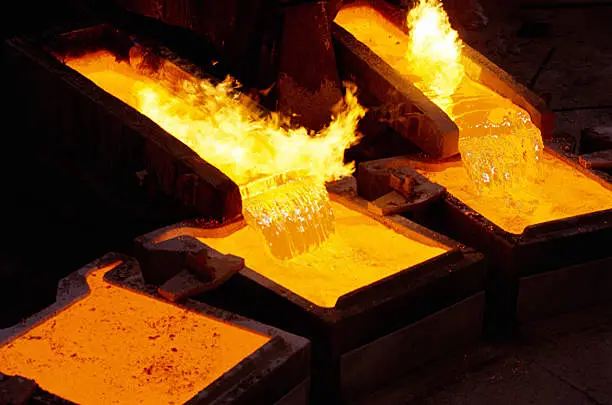
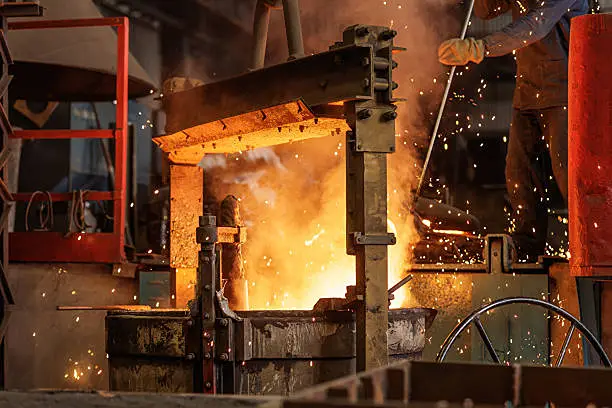
Casting pours or gravity-feeds molten material — predominantly metal — into a mold cavity. The liquid metal fills the cavity under its own weight or low pressure, then cools and solidifies. Think of pouring concrete into a form: gravity does the work.
Molding — specifically injection molding, its dominant industrial form — injects molten material under extreme pressure (500 to 2,000 bar) into a precision-machined, permanently sealed steel mold. The material is forced in, cooled rapidly, and ejected. Think of a high-speed waffle iron: material in, clamp, heat, eject, repeat.
The practical implications of this difference cascade through every downstream decision. Casting molds can be disposable (sand casting patterns, investment casting ceramic shells) or permanent (die casting dies). Injection molds are always permanent — precision-ground steel tools designed for hundreds of thousands of cycles. Casting cycle times range from minutes to hours; injection molding cycles are measured in seconds.
This distinction also explains why the two processes serve different production philosophies: casting tolerates variety and complexity at the cost of speed, while molding rewards standardization with breathtaking efficiency.
Material Capabilities: What Each Process Can Handle
Material selection is the first filter in any process decision. If your part requires a specific alloy for strength, corrosion resistance, or high-temperature performance, your options narrow immediately.
| Material Category | Casting | Injection Molding | Key Notes |
|---|---|---|---|
| Carbon & Low-Alloy Steels | ✅ Sand, investment, shell | ❌ | Wide range from AISI 1020 to 4140 |
| Stainless Steels (304, 316, 17-4PH) | ✅ Investment, shell | ❌ | Investment casting achieves near-net shape for hard-to-machine grades |
| Duplex Stainless Steels | ✅ Investment | ❌ | Requires precise alloy control during melt |
| Aluminum Alloys (A356, A380) | ✅ Die, investment, sand | ❌ (except thixomolding) | A380 for high-pressure die casting, A356 for heat-treated structural parts |
| Nickel Superalloys (Inconel 718, Hastelloy C-276) | ✅ Vacuum investment | ❌ | Requires vacuum melting to prevent oxidation |
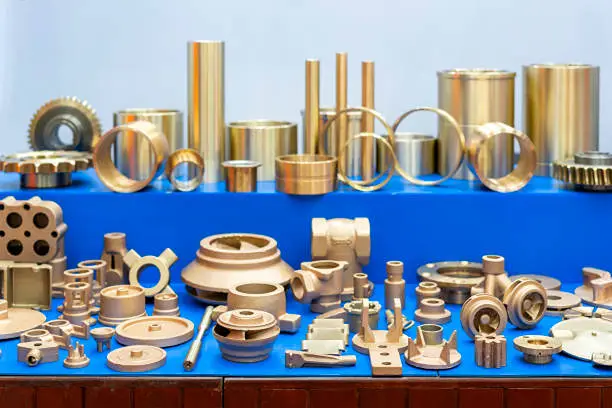
| Copper & Bronze Alloys | ✅ Sand, permanent mold | ❌ | Higher melting points constrain mold material |
| Thermoplastics (ABS, PP, PC, Nylon 6/6, PEEK) | ❌ | ✅ | Thousands of grades available; fillers modify properties |
| Thermosets (Epoxy, Phenolic) | Partial (resin casting) | ✅ | Cross-linking during molding prevents re-melting |
| Silicone & Rubber | Partial (room-temp curing) | ✅ (liquid silicone, compression) | Different curing mechanisms per process |
A special case worth noting: Metal Injection Molding (MIM) combines metal powders with a polymer binder, injected like plastic, then debound and sintered. It bridges the metal-plastic divide but only for small parts (typically under 100 g) at high volumes.
If you need a metal part, you are in the casting world. If you need a plastic part, you are in the molding world. This first filter eliminates roughly half the decision tree before you even begin comparing costs.
Cost, Volume, and Speed: The Business Case Comparison
Once material compatibility is established, economics takes over. Three sub-dimensions drive the business case: tooling investment, per-part cost at volume, and lead time. Understanding how they interact is the difference between a profitable production line and a financial sinkhole.
Tooling Investment: What You Pay Before the First Part
Tooling is the entry ticket. The price varies by an order of magnitude depending on which process you choose.
| Process | Typical Tooling Cost | Tool Life (Cycles) | Amortization Profile |
|---|---|---|---|
| Sand Casting | $500 – $5,000 | 1 (disposable) | Per-mold, not amortized |
| Investment Casting | $3,000 – $20,000 | 5,000 – 20,000 | Moderate tooling, medium runs |
| Die Casting | $10,000 – $100,000+ | 100,000 – 500,000 | High tooling cost needs volume |
| Injection Molding | $10,000 – $100,000+ | 100,000 – 1,000,000+ | Highest upfront; lowest per-part at scale |
| Urethane Casting | $300 – $3,000 | 25 – 50 | Ultra-low for prototyping |
Injection molds are the most expensive for a reason: they are precision-machined from hardened tool steel (P20, H13, or S136), often with multiple cavities, hot-runner systems, and complex ejection mechanisms. A single-cavity mold for a simple part might cost $10,000; a multi-cavity, multi-slider mold for a complex enclosure can exceed $100,000.
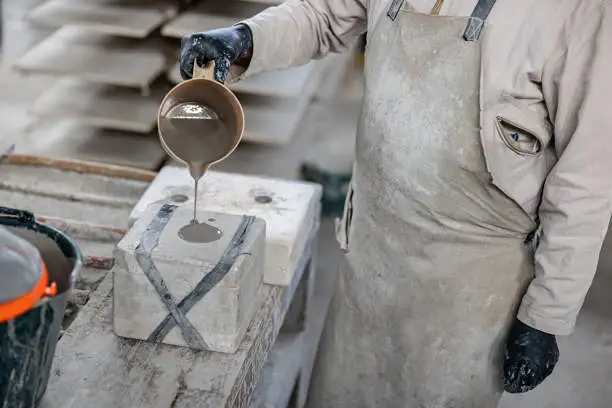
Sand casting patterns cost far less. The pattern can be made from wood, plastic, or aluminum, and the mold itself is formed from sand and binder each time. Low-cost pattern, disposable mold. This is why sand casting dominates low-volume and prototype metal work.
Per-Part Cost at Volume: Where the Lines Cross
Tooling is the cover charge. Per-part cost is the bar tab, and it determines profitability over the product lifecycle.
At prototype volumes (1–100 units), urethane casting wins decisively: $50 to $500 per part with near-zero tooling cost. Sand casting follows at $20 to $500 per part depending on complexity. Injection molding is essentially off the table: the $40,000 mold alone means $400 per part if you only make 100.
At medium volumes (100–5,000 units), the picture shifts. Investment casting delivers per-part costs of $20 to $200, competitive for complex metal parts. Sand casting remains viable for larger components. Injection molding begins to work, with per-part costs dropping to $5 to $50, though the mold amortization still weighs heavily on total cost.
At high volumes (10,000+ units), injection molding becomes the overwhelming economic choice. Per-part costs fall to $0.50 to $5, driven by near-perfect material utilization (95%+) and cycle times measured in seconds. Die casting approaches but does not match these economics: metal feedstock costs more, cycle times are longer, and material yield is lower (85–95%).
Consider a 100-gram part: at 100 units, urethane casting at $80/part costs ~$8,000 total; injection molding requires a $40,000 mold, so even at $0.50/part the total exceeds $40,000. At 100,000 units, casting at $20/part hits $2,000,000, while injection molding at $0.50/part plus amortized tooling costs ~$90,000. Volume rewrites the economics completely.
Lead Time: From Drawing to Delivery
Lead time is the dimension most comparison articles overlook, and it can make or break a product launch.
| Process | Pattern/Mold Making | Sample Delivery | Bulk Production |
|---|---|---|---|
| Urethane Casting | 2–5 days | Same day – 3 days | 1–2 weeks |
| Sand Casting | 3–10 days | 1–2 weeks | 2–4 weeks |
| Investment Casting | 1–3 weeks | 2–4 weeks | 4–8 weeks |
| Die Casting | 4–8 weeks | 2–4 weeks | 6–12 weeks |
| Injection Molding | 4–12 weeks | 2–4 weeks | 4–8 weeks |
These are benchmarks, not guarantees. Mold complexity (simple two-plate vs. multi-slider with lifters), material availability (specialty alloys can add 2–4 weeks), and post-processing requirements (heat treatment, machining, surface finishing) all stretch the timeline. A part that needs investment casting followed by solution annealing, CNC machining on five axes, and electropolishing does not ship in four weeks. Plan for eight to twelve.
That said, modern foundries with automated shell-making lines have compressed investment casting timelines significantly. The industry benchmark for a well-equipped investment casting shop is roughly 10 days for mold development, 10 days for first samples, and 30 days for bulk delivery. That is about half the time a traditional manual-shell foundry would require.
Quality, Precision, and Design Constraints
Cost and speed get the headlines, but precision and design rules determine whether your part actually works. This is where most generic “casting vs molding” articles stop short. They say “molding is more precise,” which is true in some cases and misleading in others.
Tolerance and Surface Finish: The Numbers That Matter
Precision is a spectrum, not a binary. Investment casting can achieve CT4–CT7 tolerances under ISO 8062-3, comparable to commercial-grade injection molding. Sand casting, at the other extreme, operates at CT9–CT13. That is adequate for large structural components but requires significant machining allowance for mating surfaces.
| Process | ISO Tolerance Grade | Typical Surface Finish (Ra) | Precision Sweet Spot |
|---|---|---|---|
| Injection Molding | CT4–CT7 | 0.05–1.6 μm | Consistency at massive scale |
| Investment Casting | CT4–CT7 | 1.6–6.3 μm | Complex geometry, single piece |
| Die Casting | CT5–CT8 | 0.8–3.2 μm | Thin-wall aluminum, medium-high volume |
| Shell Mold Casting | CT6–CT8 | 3.2–12.5 μm | Steel parts, tighter than sand |
| Sand Casting | CT9–CT13 | 6.3–25 μm | Large parts, machining allowance OK |
The critical distinction is not “which is more precise” but “what kind of precision do you need?” Injection molding delivers consistency precision: part #1 and part #1,000,000 are essentially identical. Investment casting delivers geometry precision: a single casting can replace an assembly of five machined-and-welded components, eliminating tolerance stack-up across joints and the labor hours that go with them.
Surface finish follows a similar logic. Injection-molded parts emerge with Ra 0.05–1.6 μm, ready for consumer-facing surfaces with no secondary work. Investment castings at Ra 1.6–3.2 μm may need light finishing for visible surfaces but are already functional for internal components. Sand castings at Ra 6.3–25 μm almost always require machining on critical faces.
Each process carries its own defect risks. Injection molding is prone to sink marks, warpage, knit lines, and short shots — all related to how the molten plastic flows and cools inside the cavity. Casting contends with porosity, shrinkage cavities, inclusions, and incomplete fills — defects tied to solidification dynamics and gas entrapment. Neither process is inherently “higher quality”; both demand rigorous process control to deliver good parts.
Injection molding delivers consistency precision — part #1 and part #1,000,000 are essentially identical. Investment casting delivers geometry precision — a single casting replaces an assembly of five machined-and-welded components, eliminating tolerance stack-up entirely.
Design for Manufacturability: How Part Design Dictates Process Choice
Your part design is not process-neutral. The same functional geometry that works beautifully in one process may be impossible, or punishingly expensive, in another. Understanding the DFM rules for each process is what separates a smooth production ramp from a redesign death march.
Four DFM dimensions matter most:
Wall thickness. Injection molding demands uniform wall thickness — ideally 1–3 mm — because uneven cooling causes warpage and sink marks. Wall thickness variation should stay within 15% across the part. Casting is far more forgiving: investment casting handles walls from 0.5 mm to 75 mm in the same part, and thick sections do not cause the sink-mark problems that plague injection molding. If your part has both thin webs and thick bosses, casting is the more natural fit.
Draft angles. Every permanent-mold process requires draft — a taper on vertical surfaces for part ejection. Injection molding needs 0.5–2°; die casting 1–3°. Investment casting is the exception: the wax pattern is elastic and the ceramic shell is broken away after casting, so draft angles are essentially zero. This is a powerful advantage for parts with near-vertical walls or undercuts that would need complex sliders in a permanent mold.
Undercuts and side actions. Both injection molding and die casting handle undercuts, but each one adds a slider or lifter to the mold, increasing tooling cost by 15–40%. Investment casting sidesteps this: complex internal cavities are created by assembling wax patterns before the ceramic shell is built. Undercuts are essentially free.
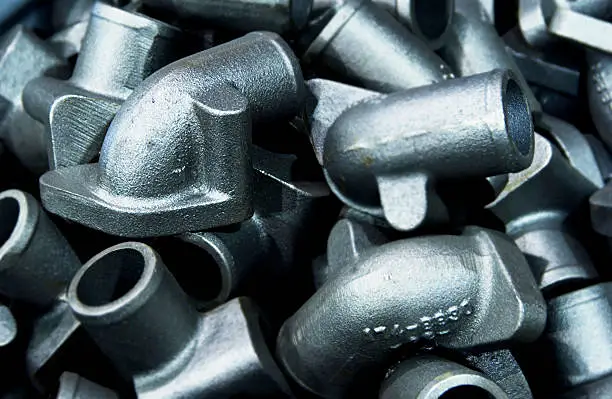
Part consolidation. This is where investment casting has a DFM advantage that compounds across the entire production chain. A single investment casting can replace an assembly of multiple machined components that would otherwise need to be welded, brazed, or bolted together. The result: fewer tolerance stack-ups, fewer assembly labor hours, no weld-heat-affected zones, and a single material certification instead of one per component. For a pump body or valve housing — where internal passageways, mounting flanges, and pressure boundaries all need to coexist — this consolidation can reduce total manufacturing cost by 30–50% compared to a fabricated assembly.
The DFM equation has a hidden variable: what happens after the part comes out of the mold. A casting that consolidates five components into one still needs machining on critical surfaces, possibly heat treatment, and possibly surface finishing. If these secondary operations are spread across three different vendors, the coordination overhead — shipping, quality inspection at each handoff, schedule alignment — can erase the consolidation savings. Vertically integrated foundries that house casting, heat treatment, CNC machining (14 vertical machining centers, ±0.01 mm precision), and surface finishing (16 treatment types) under one roof eliminate this friction. Companies like Ningbo Besser Casting operate this full-chain model, where a single quality team inspects at every stage rather than just final audit. When evaluating a supplier for a part-consolidation project, the page you should read first is not the casting page — it is the machining and finishing capabilities page. The casting delivers the geometry; the machining makes it functional; the finishing makes it ready for installation. If any link in that chain is outsourced, you inherit the coordination risk.
Making the Right Choice: A Decision Framework
By now, you have walked through the four critical dimensions: material, economics, precision, and design rules. The final step is to sequence them into a decision ladder, narrowing your options at each rung until only the right process remains.
Step 1: Filter by material. Metal part? Casting camp — sand, investment, or die casting depending on what follows. Plastic part? Injection molding is your default. This filter alone eliminates the wrong half of the decision tree.
Step 2: Filter by volume. Prototype quantities (under 100 units)? Urethane casting or sand casting. Medium run (100–5,000)? Investment casting, shell mold, or permanent mold. High volume (10,000+)? Injection molding for plastics, die casting for metals.
>Step 3: Filter by precision. Need CT4–CT6 tolerances with complex internal geometry? Investment casting. Need CT6–CT8 with massive scale and low per-part cost? Injection molding or die casting. Need CT9+ on a part the size of an engine block? Sand casting. To understand the full trade-offs between the precision metal options, see our investment casting vs die casting guide.
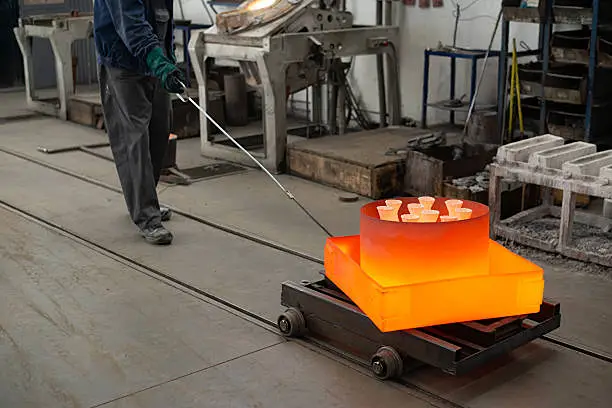
Step 4: Filter by timeline. Can you wait 8–12 weeks for an injection mold, or do you need samples in 2 weeks? Urethane and sand casting are the speed plays; investment casting occupies the middle ground; injection molding and die casting require patience.
Step 5: Vet the full supply chain. A casting supplier that can only pour metal is half a supplier. The question: who handles secondary operations, and are they under the same roof? When machining, heat treatment, surface finishing, and assembly are split across multiple vendors, every handoff is a quality risk, a schedule risk, and a hidden cost. Suppliers that integrate the full process chain — raw material through finished, inspected, packaged parts — remove those handoffs. If you are consolidating a multi-piece assembly into a single casting, the supplier’s secondary process capability matters as much as the casting itself. The casting delivers the geometry, but the machining, finishing, and inspection deliver the part you can actually install.
The “best” process is never absolute. It is a function of your material, your volume, your precision requirements, and your timeline — filtered through the reality of what your part design actually permits. Start with the material. Let volume narrow the field. Use precision and lead time to make the final call. And before you commit to any supplier, look past the casting capacity and into the full process chain. The number that matters is not how fast they pour metal. It is how fast they deliver finished, inspected parts to your dock. For metal parts, the more relevant comparison is often casting vs machining — see our dedicated guide.
 English
  Japanese
  German
  Italian