
When an engineer types “17 4 ph stainless steel vs 316” into a search bar, they are not asking for a textbook definition. They are likely staring at a component drawing or a failed part, weighing whether to spec the high-strength precipitation-hardening grade or stick with the corrosion-resistant workhorse. The answer depends on what you are asking the part to do — and on how it gets manufactured.
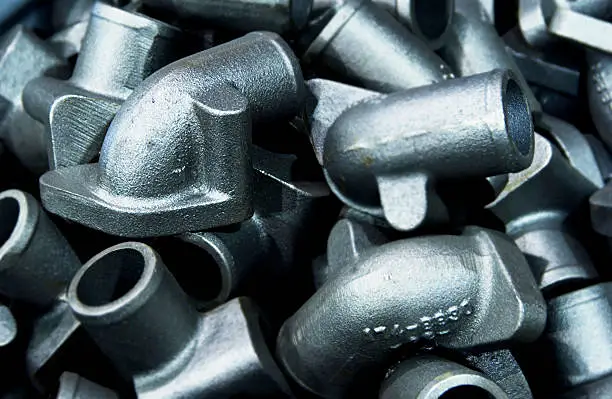
This comparison goes beyond the standard data-sheet numbers. It focuses on what changes when you cast these alloys rather than machine them from bar stock, because for many industrial OEMs, investment casting is the most cost-effective route to complex, near-net-shape components in both materials.
What Sets 17-4 PH and 316 Apart — Composition and Family Differences
Before comparing properties, understand this: these two alloys come from entirely different metallurgical families. Treating them as interchangeable because both are “stainless steel” is the first mistake.
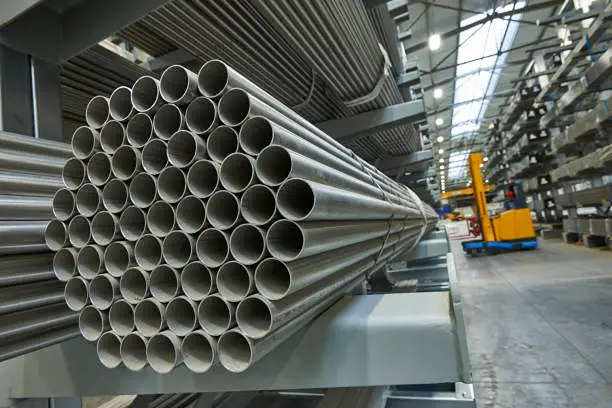
17-4 PH (UNS S17400, SAE Type 630) is a martensitic precipitation-hardening stainless steel. Its defining characteristic is the addition of 3–5% copper, which — when combined with a precise aging heat treatment — precipitates fine particles throughout the microstructure, dramatically increasing strength and hardness. Niobium (0.15–0.45%) acts as a grain refiner.
316 (UNS S31600) is an austenitic stainless steel. Its defining characteristic is 2–3% molybdenum, an element absent from 17-4 PH. Molybdenum is what gives 316 its signature resistance to pitting corrosion in chloride-rich environments. 316L, the low-carbon variant (C ≤ 0.03%), adds superior weldability by preventing chromium carbide precipitation at grain boundaries.
| Element | 17-4 PH (wt%) | 316 (wt%) | Key Role |
|---|---|---|---|
| Chromium (Cr) | 15.0–17.5 | 16.0–18.0 | Passive film formation, baseline corrosion resistance |
| Nickel (Ni) | 3.0–5.0 | 10.0–14.0 | Austenite stabilization (316); secondary role in 17-4 PH |
| Copper (Cu) | 3.0–5.0 | — | Enables precipitation hardening in 17-4 PH |
| Molybdenum (Mo) | — | 2.0–3.0 | Pitting resistance in chloride environments (316) |
| Carbon (C) | ≤ 0.07 | ≤ 0.08 (316L: ≤ 0.03) | Strength contribution; low-C variants improve weldability |
| Niobium (Nb) | 0.15–0.45 | — | Grain refinement in 17-4 PH |
A useful mental model: 17-4 PH is the track-tuned sports car — engineered for peak mechanical output at the expense of all-weather comfort. 316 is the luxury cruiser — built to handle salt, rain, and chemicals without complaint, even if it will not win a drag race.
Strength vs. Corrosion — The Core Trade-Off
Every material decision between these two grades ultimately comes down to a single trade-off: mechanical strength versus corrosion resistance. Understanding the magnitude of this trade-off — not just its direction — is what separates a good material specification from an expensive field failure. The data below quantifies exactly what you gain and what you give up.
Mechanical Properties — Where 17-4 PH Dominates
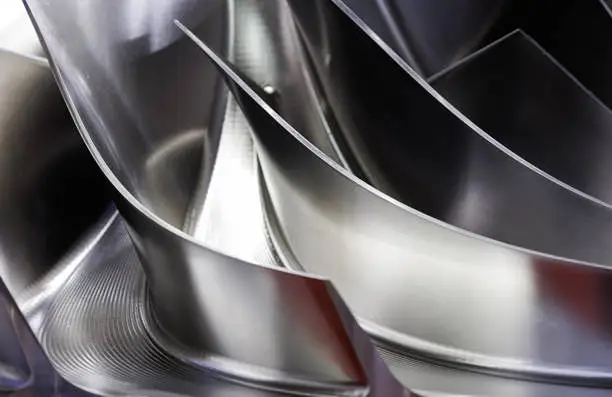
In terms of raw load-bearing capacity, 17-4 PH operates in a different league. After solution annealing and precipitation hardening, its yield strength can reach four to five times that of annealed 316, depending on the aging condition selected.
| Property | 17-4 PH (H900) | 17-4 PH (H1150) | 316 (Annealed) |
|---|---|---|---|
| Tensile Strength | 1,310–1,379 MPa (190–200 ksi) | ~1,000 MPa (~145 ksi) | 480–620 MPa (70–90 ksi) |
| Yield Strength | 1,170–1,275 MPa (170–185 ksi) | ~862 MPa (~125 ksi) | 170–300 MPa (25–44 ksi) |
| Elongation | 6–14% | ~19% | 40–60% |
| Hardness | 42–46 HRC | 31–33 HRC | ~81–94 HRB (approx. <22 HRC) |
Sources: ASTM A564, AMS 5643 minimum requirements; typical values from industry datasheets.
The practical implication of this strength differential is significant. A 17-4 PH component can carry the same load with a thinner cross-section, reducing both weight and material cost. For valve stems, pump shafts, and aerospace structural brackets — applications where 316 parts fail through wear or plastic deformation — switching to 17-4 PH often eliminates the failure mode entirely.
But there is a cost. The same microstructure that gives 17-4 PH its strength makes it significantly more brittle than 316. Elongation of 6–14% in the H900 condition means the material will fracture with minimal plastic deformation — a critical consideration for impact-loaded parts or applications where ductile failure (bending before breaking) is a safety requirement. MIL-HDBK-5J explicitly warns against using 17-4 PH in critical low-temperature applications due to sharply reduced impact toughness.
The aging temperature itself is a design variable. H900 (482°C) delivers maximum strength but minimum toughness. H1025 (552°C) provides the most balanced industrial compromise. H1150 (621°C) maximizes toughness and stress corrosion cracking resistance at the expense of roughly 25% of the peak strength. For most industrial components, H1025 or H1150 is the pragmatic choice — few applications genuinely need the last 10% of strength at the cost of dramatically increased brittleness.
Corrosion Resistance — Why 316 Remains the Benchmark
If strength is 17-4 PH’s home turf, corrosion resistance is where 316 decisively pulls ahead. The difference is not subtle — it is the difference between a material that can handle seawater immersion and one that will corrode within weeks.
The Pitting Resistance Equivalent Number (PREN = %Cr + 3.3 × %Mo + 16 × %N) provides a useful quantitative comparison, even though it was developed for austenitic and duplex grades:
- 316: PREN ≈ 23–29 (driven by 2–3% Mo, weighted 3.3× in the formula)
- 17-4 PH: PREN ≈ 15–17 (no molybdenum, modest chromium)
This gap translates into starkly different real-world performance:
| Environment | 316 | 17-4 PH |
|---|---|---|
| General atmospheric | Excellent | Good (comparable to 304) |
| Chloride-rich / seawater | Good to excellent (Mo provides pitting resistance) | Poor — susceptible to pitting and crevice corrosion |
| Dilute acids (H₂SO₄, H₃PO₄) | Excellent (< 0.1 mm/year) | Moderate to poor (0.5–1.2 mm/year) |
| Sour service (H₂S) | NACE MR0175/ISO 15156 compliant | Severely restricted; many end users have effectively banned it |
| Hydrogen exposure | Resistant to hydrogen embrittlement | Not recommended — susceptible to embrittlement |
The metallurgical root cause is twofold. First, 17-4 PH simply lacks molybdenum — the element that gives 316 its signature resistance to chloride-induced pitting. Second, and more insidiously, the copper-rich precipitates that give 17-4 PH its strength actually have lower corrosion resistance than the surrounding matrix. Aging the material to increase strength simultaneously degrades its already-modest corrosion performance.
A widely cited field case from engineering forums documents a 17-4 PH component that corroded to failure within three years while an adjacent 316 part in the same service environment remained intact. The failed 17-4 PH part exhibited visible copper discoloration — a telltale sign of selective corrosion of the copper-rich precipitates. Further industry reports document that 17-4 PH H900 fasteners in a marine atmospheric environment can experience complete failure within one month.
The takeaway is unambiguous: if your part will see chlorides, acids, hydrogen, or prolonged moisture, 316 is the safer choice. The strength advantage of 17-4 PH is irrelevant if the part corrodes before it ever reaches its design load.
Where Each Grade Excels — Application by Application
Data sheets become useful only when mapped to real service conditions. Ask yourself three questions before choosing: (1) Is this part load-bearing? (2) What media will it contact? (3) What happens if it fails?
High-Stress Components — Aerospace, Oil & Gas, and Industrial Equipment
When a 316 part fails from wear, deformation, or fatigue in a mildly corrosive environment, 17-4 PH is the natural upgrade path. Common examples include:
- Valve stems and trim: 17-4 PH H1150 provides the high-cycle fatigue resistance needed for actuated valves, with sufficient corrosion resistance for non-sour hydrocarbon service. AMS 5643 is the standard procurement specification.
- Pump shafts and impellers: Surface hardness above 40 HRC dramatically reduces abrasive wear compared to 316’s sub-22 HRC — particularly important for pumps handling slurries or particulates.
- Aerospace structural fittings: The strength-to-weight ratio of H1025-aged 17-4 PH enables lighter, more compact designs than 316 could achieve at equivalent load ratings.
- High-strength fasteners: Applications requiring preloads that would yield a 316 bolt.
Corrosion-Critical Environments — Marine, Chemical, and Food-Grade Applications
In these environments, 316 is not merely “better” — it is the only viable choice between the two:
- Marine hardware and seawater-contact parts: The molybdenum in 316 provides pitting resistance that 17-4 PH simply cannot match. For immersed service, even 316 has limits — duplex 2205 or super-austenitic grades may be required.
- Chemical processing equipment: 316 maintains corrosion rates below 0.1 mm/year in most concentrations of sulfuric, phosphoric, and acetic acids at ambient temperatures. 17-4 PH does not.
- Food, pharmaceutical, and medical devices: 316L’s combination of corrosion resistance, weldability, and biocompatibility (FDA/USP Class VI) makes it the standard. 17-4 PH’s copper content raises concerns for some food-contact applications.
- Heat exchangers and pressure vessels: Where extensive welding is required, 316L’s resistance to intergranular corrosion after welding is essential.
When Neither Is Perfect — Considering Duplex Stainless Steels
A surprising number of “17-4 PH vs 316” comparisons are actually the wrong question. The real need — combining higher strength than 316 with better corrosion resistance than 17-4 PH — is often better served by a third option: duplex stainless steel.
2205 duplex (UNS S32205) splits the difference with precision: yield strength around 450 MPa (roughly double 316’s and 60% of 17-4 PH H1150), combined with a PREN of approximately 35 — exceeding even 316 by a wide margin thanks to higher chromium (22%), molybdenum (3–3.5%), and nitrogen (0.14–0.20%) additions.
If your component needs to carry moderate loads in a chloride-heavy environment — a seawater pump bracket, for example — neither 17-4 PH (will corrode) nor 316 (may lack strength) is optimal. 2205 duplex, while more expensive than either, often delivers the lowest total cost of ownership by performing where neither alternative can.
The Casting Factor — What Changes When You Cast These Alloys
Nearly all publicly available material comparison data assumes wrought product forms — bar, plate, and sheet. But when you are sourcing investment cast components, the properties you actually receive depend as much on the foundry’s process control as on the alloy chemistry stamped on the heat certificate. This section covers what changes and what you need to verify.
As-Cast vs. Wrought — What the Data Sheets Do Not Tell You
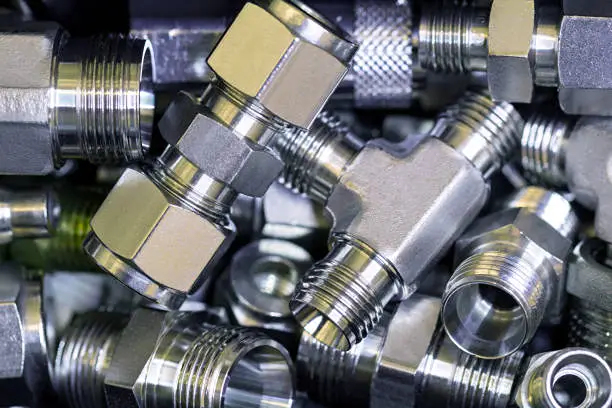
Cast microstructures differ fundamentally from wrought microstructures. Casting produces a coarse dendritic grain structure with inherently lower ductility than the fine, recrystallized grains of a rolled or forged product. Cooling rate — governed by mold material, wall thickness, and gating design — determines grain size, which in turn affects strength and toughness isotropy. Castings are typically more isotropic than wrought products (no rolling-direction bias), but their absolute properties in any given direction are usually lower than wrought counterparts of the same alloy.
For 17-4 PH, this gap is significant. In the as-cast (un-heat-treated) condition, yield strength can be 20–30% below the values published in standard data sheets, which assume wrought starting material. A properly executed solution anneal followed by precipitation hardening is non-negotiable — without it, the copper remains in solid solution and the precipitation-hardening mechanism never activates.
For 316, the gap is smaller because there is no precipitation-hardening mechanism to lose. However, cast 316 parts still require solution annealing (1,040–1,150°C followed by rapid quench) to dissolve chromium carbides formed during slow cooling and restore full corrosion resistance.
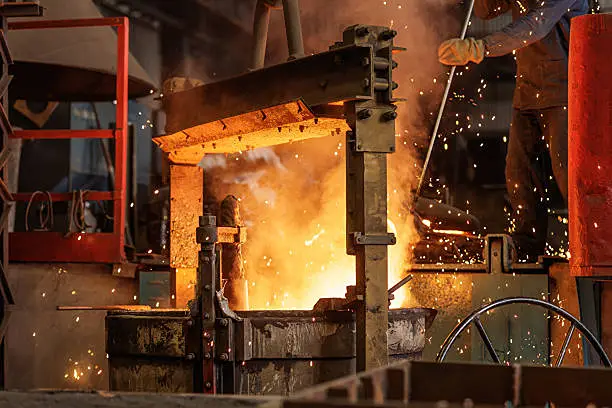
Investment casting using the silica sol shell process can achieve surface finishes of Ra 3.2 μm and dimensional tolerances of CT4–CT6 per ISO 8062 — producing near-net-shape parts that often require minimal secondary machining. But achieving these outcomes consistently requires rigorous process control: automated shell-building lines, spectrometer-verified alloy blending before each pour, and in-process quality checks at every stage.
When evaluating casting suppliers for 17-4 PH or 316 components, verifiable quality credentials matter. An internationally certified foundry holding IATF 16949, ISO 9001, and PED certifications — such as BesserCast — demonstrates the process maturity needed to produce castings that meet AMS 5643 or ASTM A564 property requirements consistently, batch after batch.
Heat Treatment After Casting — Getting the Properties You Specified
Heat treatment is where the value of 17-4 PH casting is either realized or lost. A foundry that pours the metal correctly but heat-treats it incorrectly will deliver parts that look right but perform below specification.
The complete cycle for 17-4 PH castings is:
- Solution annealing: Heat to 1,040 ± 15°C, hold until uniform, then cool rapidly (oil or forced air). This dissolves all precipitates and produces Condition A — soft, machinable, but nowhere near final strength.
- Precipitation hardening (aging): Reheat to the target aging temperature, hold, and air-cool. The temperature — not the duration — determines the final property balance:
- H900 (482°C / 1 hour): Maximum strength and hardness. Maximum brittleness. Avoid if the part will see chlorides or impact loads — stress corrosion cracking risk is high in this condition.
- H1025 (552°C / 4 hours): The industrial sweet spot. Good strength with meaningful toughness improvement over H900.
- H1150 (621°C / 4 hours): Best toughness and stress corrosion cracking resistance. The recommended starting point for most industrial components unless maximum hardness is absolutely required.
For 316 castings, the requirement is simpler: solution anneal at 1,040–1,150°C followed by water quenching. No aging step is needed — 316 does not precipitation-harden. The annealing restores the corrosion resistance that slow cooling during casting may have compromised.
Before sending an RFQ, ask your foundry three questions: (1) Do you perform heat treatment in-house or outsource it? In-house capability reduces lead time and quality risk. (2) Can you provide furnace charts and hardness readings for each heat-treat batch? This is the minimum verification that the specified cycle was actually run. (3) Do you have experience with the specific aging condition (H1025, H1150, etc.) that the part requires? A foundry familiar with H900 may lack the cycle-control precision needed for H1150.
Making the Final Material Decision
You have the data. Here is how to turn it into a decision.
Quick Decision Guide
| If your primary concern is… | Choose… | Key reason |
|---|---|---|
| Mechanical strength and hardness | 17-4 PH (H1025 or H1150) | 4–5× yield strength of 316 |
| Corrosion resistance (chlorides, acids) | 316/316L | Molybdenum provides pitting resistance 17-4 PH lacks |
| Sour service (H₂S) compliance | 316 | NACE MR0175 compliant; 17-4 PH is restricted |
| Marine or chloride-rich environment | 316 or 2205 duplex | 17-4 PH will fail quickly |
| Impact loading or cryogenic temperatures | 316 | 17-4 PH has poor low-temperature toughness |
| Wear resistance and surface hardness | 17-4 PH | >40 HRC achievable vs <22 HRC for 316 |
| Weld-intensive fabrication | 316L | Low carbon prevents intergranular corrosion after welding |
| Investment cast, complex geometry | Either (but verify foundry capability) | Both are castable; 17-4 PH requires more heat-treat expertise |
Casting Procurement Checklist
If you are sourcing cast components in either grade, confirm these three points before issuing a purchase order:
- The foundry heat-treats in-house (especially critical for 17-4 PH) and can provide batch-level furnace charts.
- Dimensional inspection uses CMM rather than manual gauges — CT4–CT6 tolerances require automated verification.
- The foundry’s certifications (ISO 9001, IATF 16949, PED if applicable) are current and the scope covers your part’s end-use industry.
Selecting between 17-4 PH and 316 is only the first decision. Finding a foundry that can execute the chosen grade to specification — with proper heat treatment, dimensional control, and traceable quality documentation — is what turns a good material choice into a reliable part.
References
- ASTM International. “ASTM A564/A564M — Standard Specification for Hot-Rolled and Cold-Finished Age-Hardening Stainless Steel Bars and Shapes.” Current edition.
- SAE International. “AMS 5643 — Steel, Corrosion-Resistant, Bars, Wire, Forgings, Mechanical Tubing, and Rings, 17-4 PH.” Current edition.
- British Stainless Steel Association. “Calculation of Pitting Resistance Equivalent Numbers (PREN).” bssa.org.uk.
- NACE International. “NACE MR0175/ISO 15156 — Materials for Use in H₂S-containing Environments.”
- Ryerson. “17-4 Stainless Steel: Properties, Applications, and Benefits.” ryerson.com.
- Setra Systems. “What Is the Difference Between 17-4 PH and 316L Stainless Steel?” setra.com.
 English
  Japanese
  German
  Italian