
Pump Materials Compared: The Ultimate Casing Selection Guide to Avoid Catastrophic Failures
Fluid handling systems are the lifeblood of modern industrial manufacturing. Whether you are pumping aggressive chemicals in a petrochemical plant, abrasive slurry in a mining operation, or high-purity water in a pharmaceutical facility, the pump casing is the primary pressure boundary separating your hazardous process fluid from the outside environment. Selecting the wrong pump casing material is not merely an operational hiccup—it is a direct path to catastrophic system failures, hazardous environmental leaks, exorbitant downtime costs, and serious safety hazards.
Too often, procurement decisions are driven solely by initial capital expenditure (CAPEX) or oversimplified chemical compatibility charts. However, industrial reality is far more complex. To build a robust fluid system, engineers must navigate a labyrinth of variables: dynamic pressure ratings, thermal shock, mechanical creep, and microscopic cavitation. This comprehensive guide will walk you through the entire spectrum of pump casing materials—from traditional metals and exotic alloys to advanced engineering plastics and technical ceramics—equipping you with the deep engineering insights required to avoid fatal specification errors.
Core Metal Casings: Balancing Mechanical Strength and Corrosion Resistance
Metal alloys maintain absolute dominance in heavy industrial applications. When dealing with extreme pressures, high temperatures, and severe mechanical stress, metal casings are structurally irreplaceable. However, the performance gap between a standard cast iron casing and an exotic alloy casing is monumental.
Traditional Choices: Cast Irons, Carbon Steels, and Bronzes
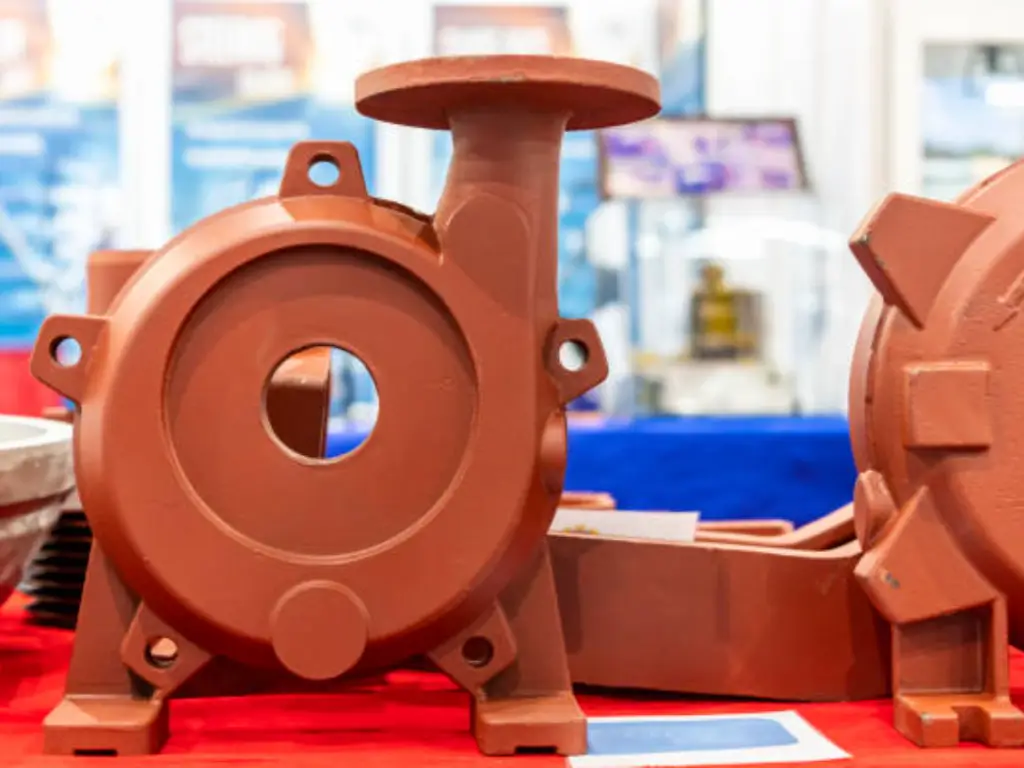
For benign fluids like clean water or mild industrial liquids operating under moderate pressures, traditional metals offer excellent mechanical strength at a highly economical price point.
- Grey Cast Iron (e.g., ASTM A48): This is the industry standard for general-purpose water pumps. It is highly cost-effective and dampens vibration well. However, it harbors a fatal flaw: brittleness. Grey cast iron cannot withstand severe mechanical impact or sudden thermal shocks. Think of it like a heavy glass cup—sturdy under steady pressure, but prone to shattering under impact.
- Ductile Iron (e.g., ASTM A536): By introducing nodular (spherical) graphite into the microstructure, ductile iron solves the brittleness problem of grey iron. It behaves more like tempered glass, offering significantly higher tensile strength and pressure-containing capabilities while remaining more affordable than carbon steel.
- Bronze: Known for its natural resistance to seawater and brackish water, bronze is frequently used in marine and low-pressure municipal applications. However, its lower yield strength limits its use in high-pressure industrial environments.
High-Performance Metals: Stainless Steels and Exotic Alloys
When industrial processes introduce highly corrosive acids, concentrated chlorides, or abrasive suspended solids, traditional metals will corrode away in a matter of weeks. This is the domain of high-performance metallurgy.
| Material Grade | Max Temp limit (Approx) | Corrosion Resistance | Abrasion Resistance |
|---|---|---|---|
| 316L Stainless Steel | Up to 300°C+ | Good (Weak against high chlorides) | Moderate |
| Duplex Stainless Steel (e.g., CD4MCu) | Up to 250°C | Excellent (High pitting resistance) | Excellent |
| Hastelloy C-276 | Up to 400°C+ | Outstanding (Handles harsh acids) | Moderate to High |
| High-Chrome White Iron | Up to 200°C | Poor to Moderate | Maximum (Slurry benchmark) |
While 316L Stainless Steel is often considered the default "upgrade," it has a critical weakness: pitting corrosion when exposed to high concentrations of chlorides (such as seawater or brine). In these environments, the passive oxide layer of 316L is easily penetrated, leading to rapid localized failure.
To combat this, engineers turn to Duplex Stainless Steels, which combine austenitic and ferritic microstructures, offering nearly double the yield strength of 316L and immense resistance to chloride stress corrosion cracking. For the absolute harshest chemical environments, superalloys like Hastelloy C-276 utilize high molybdenum and nickel content to resist severe oxidizing and reducing acids at the molecular level. Conversely, in heavy mining slurry applications where abrasion is the primary enemy, High-Chrome White Iron reigns supreme, providing a Brinell hardness that simply crushes incoming particulates.
Non-Metallic and Lined Casings: The Ultimate Chemical Shields
There is a persistent bias in heavy industry that "metal is always better." However, when dealing with extreme chemical corrosives like concentrated hydrochloric acid or sodium hypochlorite, even the most expensive exotic metals can eventually degrade. In these scenarios, non-metallic materials are the ultimate defense.
Engineering Plastics (PP, PVC, PVDF, and PTFE)
Thermoplastics offer a chemical resistance profile that metals simply cannot match.
- Polypropylene (PP): Excellent for general acidic and alkaline solutions, but structurally limited to temperatures around 80°C.
- PVDF (Kynar) & PTFE (Teflon): These are the heavyweights of the plastic world. They are practically immune to almost all industrial acids and bases, operating reliably at temperatures up to 150°C. Think of PTFE as the "non-stick coating" of the fluid world—chemicals simply cannot bite into its molecular structure.
⚠ CRITICAL ENGINEERING WARNING: While pure PTFE or PVDF possesses incredibly high melting points, utilizing a solid, pure plastic casing in a high-temperature, high-pressure pump application is extremely dangerous. At temperatures exceeding 100°C, under continuous mechanical stress, these plastics are highly susceptible to Cold Flow (Mechanical Creep). The casing will literally deform over time, leading to loss of bolt torque, gasket blowouts, and highly dangerous chemical leaks.
Lined Pump Casings: The Best of Both Worlds
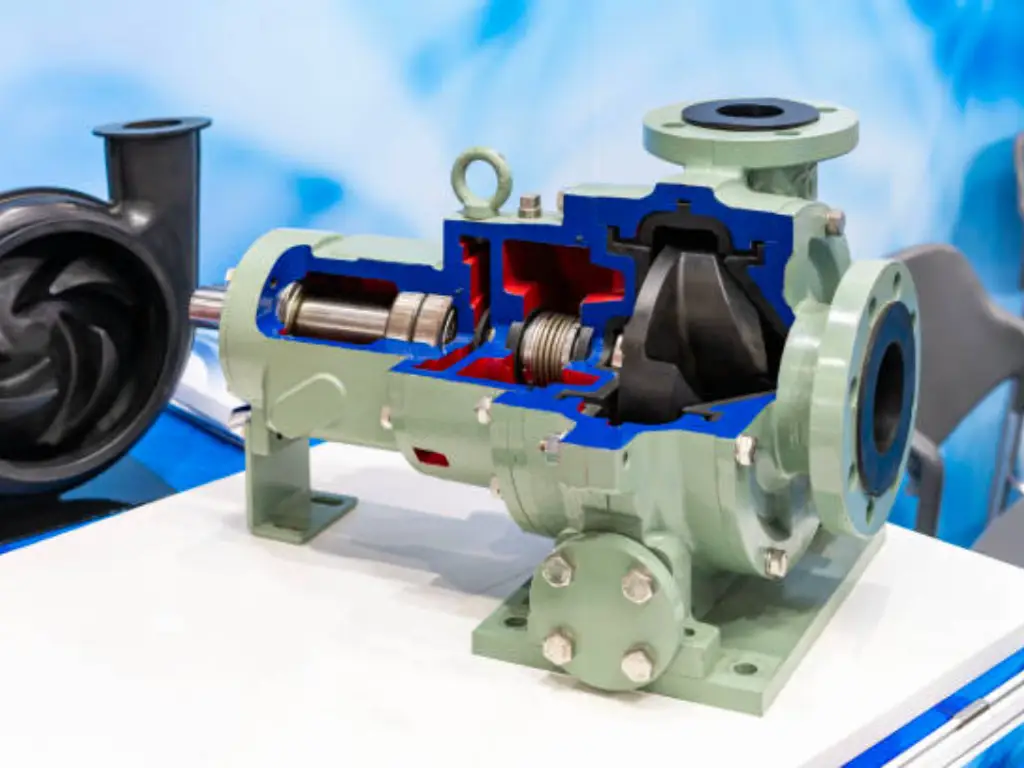
To solve the fundamental contradiction between the poor pressure-containing ability of plastics and the poor chemical resistance of standard metals, the industry developed Lined Casings.
By using a heavy-duty Ductile Iron outer armor to absorb all mechanical pipe strain and internal pressure, and lining the wetted internals with a thick layer of PFA or PTFE, engineers create a pump that is externally bulletproof and internally invincible to acid.
Similarly, for extreme abrasion applications like rock-heavy mining tailings, solid metal casings will be gouged away. A Rubber-lined casing solves this through elastic deformation. When a sharp rock hits a thick natural rubber lining, the rubber flexes, absorbs the kinetic energy, and bounces the rock away like a trampoline, extending the casing’s lifespan significantly compared to bare metal.
Advanced Composites and Ceramics: Surviving Extreme Industrial Environments
When the operational boundaries are pushed to the absolute extreme, standard metallurgy and plastics fall short. This is where advanced material science steps in, offering specialized solutions that dictate the future of industrial fluid transport.
Engineered Composites (FRP/GRP) in Heavy Duty Applications
Fiberglass Reinforced Plastics (FRP/GRP) are rapidly gaining market share, particularly in the massive vertical pumps used for seawater desalination and power plant cooling towers. A major FRP pump casing weighs roughly one-quarter of a comparable metallic casing. More importantly, it is completely immune to galvanic corrosion in saltwater. Where massive metallic pumps require constant sacrificial anode monitoring to prevent rusting in the ocean, FRP casings operate maintenance-free for decades.
Advanced Technical Ceramics (SiC/Alumina)
Silicon Carbide (SiC) and Alumina represent the extreme minority of pump casing selections, reserved for the most vicious applications, such as Flue Gas Desulfurization (FGD) slurries in coal power plants. Ceramic casings possess diamond-like hardness and unparalleled resistance to a combination of heavy wear and strong acids. However, they come with a severe caveat: they have the temper of glass. While they can run flawlessly for ten years in a stable slurry system, a single severe mechanical impact or water hammer shockwave can shatter a solid ceramic casing instantly.
The True Cost of Pump Casing Material Selection: Beyond Initial Purchase Price
After understanding the material options, procurement teams must confront the commercial reality. Evaluating a pump casing purely on its initial purchase price is a fundamentally flawed strategy that leads to disastrous Total Cost of Ownership (TCO).
"A catastrophic failure of a slurry pump casing at an alumina refinery due to improper material consideration under water hammer conditions led to explosive brittle fracture, massive production halt, and severe safety hazards." — Referenced from AFT (Applied Flow Technology) case studies.
Consider the real-world math: Specifying a cheap cast iron pump ($X initial cost) for an aggressive chemical application might seem like a budget win today. However, when that casing corrodes and breaches every six months, the true cost includes replacing the pump twice a year, the exorbitant cost of unexpected plant downtime (often thousands of dollars per hour), hazardous material cleanup, and potential environmental fines.
Conversely, properly specifying a Duplex Stainless Steel or PTFE-lined pump ($3X initial cost) ensures zero downtime and absolute safety for over 5 years. In heavy industry, the cheapest material is often the most expensive choice you can make.
The Hidden Killers: Systemic Factors Beyond Chemical Compatibility
You can cross-reference chemical charts perfectly and still witness your newly installed pump casing fail within months. This occurs because fluid systems harbor hidden physical killers that destroy materials regardless of their chemical inertness.
Cavitation Pitting Resistance and Material Yield
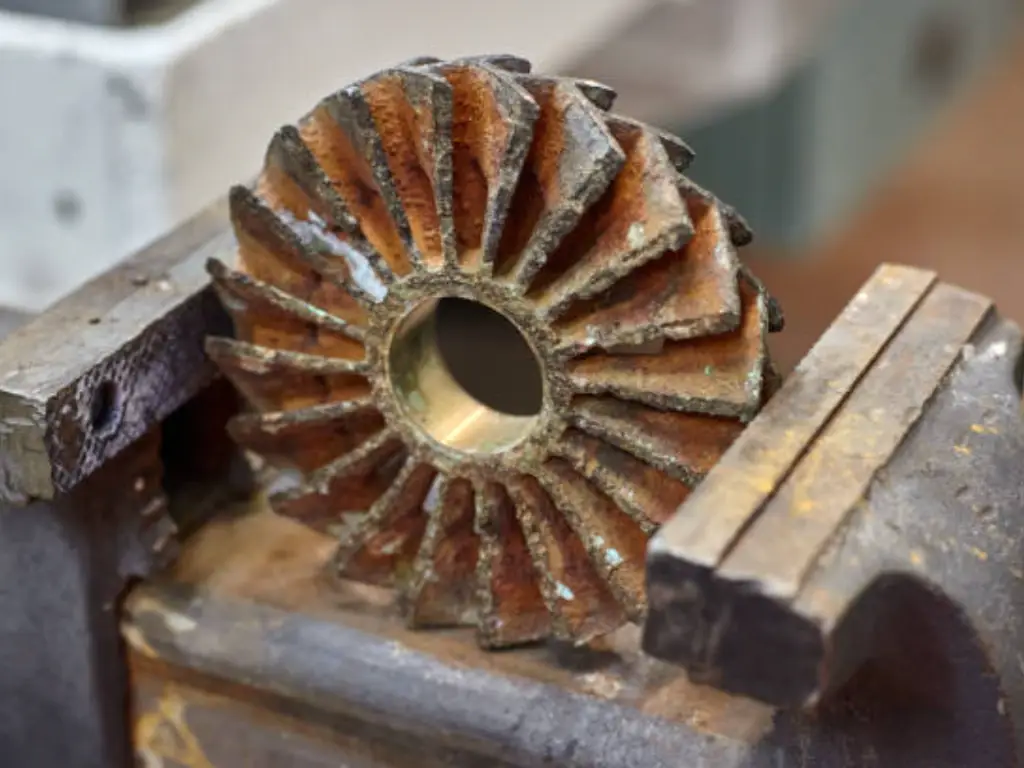
When the Net Positive Suction Head available (NPSHa) drops below the required level (NPSHr), the fluid boils at room temperature, forming vapor bubbles. As these bubbles reach the higher pressure zones inside the casing, they collapse violently. This collapse generates microscopic liquid jets with localized pressures exceeding 10,000 psi. These micro-jets act like millions of tiny bombs detonating against the inner wall of the casing. Under severe cavitation, even hard 316L stainless steel will be pitted into a "honeycomb" structure within weeks. In these scenarios, raw hardness isn’t enough; material yield strength and fatigue resistance (such as utilizing Aluminum Bronze) are vital for survival.
Thermal Shock Vulnerability
It is not just the absolute temperature that destroys a casing, but the rate of change. In applications involving Clean-in-Place (CIP) systems or intermittent high-temperature processes, a pump casing might be exposed to a sudden temperature spike (ΔT > 100°C in seconds). High-hardness, rigid materials (like cast iron or pure ceramics) cannot expand uniformly fast enough. The internal stresses build up instantaneously, resulting in catastrophic brittle cracking.
Industry-Specific Compliance and Standards: The Veto Factors
In highly regulated industries, the physical properties of a material are entirely irrelevant if the casing does not possess the correct legal and engineering certifications. Industry standards hold ultimate veto power over your selection:
- API 610 (Petrochemical & Refinery): Strict regulations govern pressure boundaries handling highly flammable hydrocarbons. Standard cast iron is strictly prohibited for pressure casings due to fire risks; carbon steel or high-grade alloys are globally mandated.
- FDA / 3-A Sanitary Standards (Food & Pharmaceutical): The casing material must not only be non-toxic and corrosion-resistant (typically 316L SS) but must also achieve specific internal surface roughness (Ra) standards to prevent bacterial growth.
- NFPA 20 (Fire Protection Systems): This standard explicitly prohibits the use of grey cast iron for the casing of main fire pumps, as the thermal shock from cold water hitting a casing heated by an ambient fire could cause it to shatter, rendering the fire suppression system useless.
Conclusion & Next Steps: Moving from Design to Precision Manufacturing
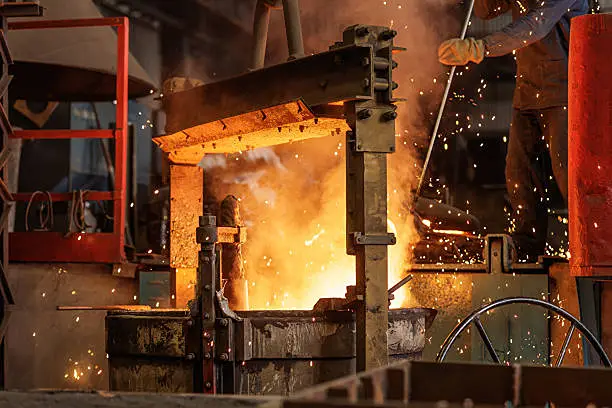
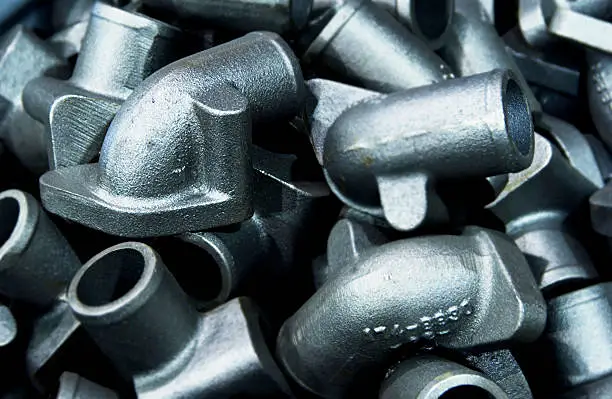
Selecting the correct theoretical material on paper is only half the battle. In reality, if your chosen foundry utilizes outdated casting processes, your highly specified High-Chrome Iron or Duplex Stainless Steel casing will be riddled with internal shrinkage cavities, sand inclusions, and severe chemical deviations. A microscopic gas pore inside a casing wall will become a guaranteed leak path under high pressure, instantly turning your brilliant engineering design into a liability.
Furthermore, high-end customized pump casings have traditionally been plagued by notoriously long lead times (often up to 6 months) and rough internal surfaces that induce energy-wasting turbulence and localized cavitation.
This is where BesserCasting reshapes the global supply chain. With 20 years of bespoke metallurgical expertise and over 4,500 custom casting projects completed, we eliminate the gap between theoretical material science and flawless manufacturing:
- Absolute Material Purity: We utilize advanced German SPECTRO spectrometers for real-time, pre-pouring chemical analysis, ensuring that your Hastelloy, Duplex SS, or Nickel alloys meet ASTM/DIN standards with 100% molecular accuracy.
- Hydrodynamic Integrity: By utilizing premium Silica Sol Investment Casting (and vacuum casting for extreme specifications), we eliminate internal sand inclusions. We can achieve complex volute runner profiles with incredibly low internal surface roughness (Ra 1.6-3.2), maximizing your pump’s hydraulic efficiency while minimizing cavitation risks.
- Unmatched Speed & Precision: Operating 2 fully automated shell-making lines, we have compressed shell-curing times from the industry-standard 7 days down to just 36 hours. Paired with our in-house facility of 14 CNC machining centers, we provide a true one-stop solution, consistently delivering CT4-CT6 assembly tolerances without the agonizing wait.
Don’t let subpar foundry execution ruin your fluid system engineering.
Get your free, expert Material Failure Risk Diagnostic today.
No CAD drawings required. Simply tell us your fluid medium, operating temperature, and system pressure. Our metallurgical team will provide you with a comprehensive anti-leakage material selection report and a TCO optimization strategy.
 English
  Japanese
  German
  Italian