
When an engineer starts searching “types of investment casting,” they are rarely looking for a chemistry lesson. More often, there is a part drawing on the desk — a stainless steel valve body, a nickel-alloy turbine component, or a batch of carbon steel brackets — and someone needs to know which process will deliver the right tolerances, surface finish, and cost structure.
Investment casting, also known as lost-wax casting, is not one uniform process. The type you choose determines everything from dimensional accuracy to per-part cost and lead time. This guide breaks down the four main types, explains what each does best, and gives you a practical decision framework for choosing the right one for your project.
What Defines the Types of Investment Casting
The types of investment casting are primarily classified along two dimensions. The first — and most important for part quality — is the shell-building system: the binder and refractory material used to create the ceramic mold around the wax pattern. This is what separates water glass casting from silica sol casting, and it directly controls surface finish, dimensional tolerance, and alloy compatibility.
The second dimension is the pouring method: gravity pouring, vacuum casting, or counter-gravity filling. This affects metal cleanliness, internal soundness, and material yield — critical for aerospace and high-spec applications but less relevant for general industrial parts.
Think of the shell system as the foundation that sets your quality ceiling. The pouring method is the delivery mechanism — it determines how cleanly the metal fills the mold. For the vast majority of industrial parts, the shell system is the decision that matters most. The sections that follow walk through each shell type, from the most economical to the most precise.
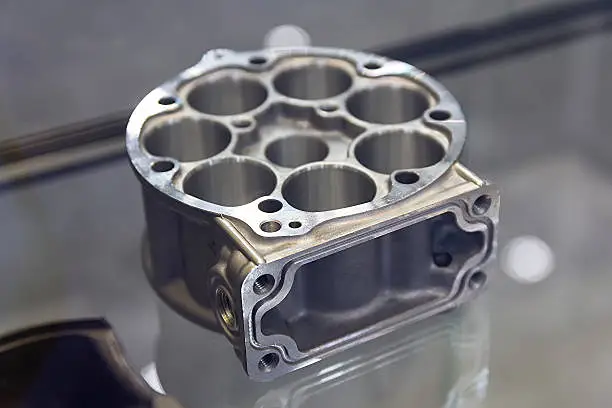
Water Glass (Sodium Silicate) Investment Casting — The Cost-Effective Workhorse
Water glass casting is the most economical entry point into investment casting. It trades some precision and surface quality for lower cost and faster turnaround — and for many carbon steel and low-alloy steel parts, that trade-off is exactly the right call.
How the Water Glass Process Works
The process gets its name from the binder: sodium silicate (Na₂SiO₃), a low-cost inorganic compound with a high pH between 11.5 and 12.5. The refractory material is quartz sand, coarser than the zircon sand used in premium processes. The slurry is applied to the wax pattern assembly in layers, but fewer coats are needed compared to silica sol casting — the shell cures chemically via CO₂ gelling or a liquid hardener rather than slow air-drying.
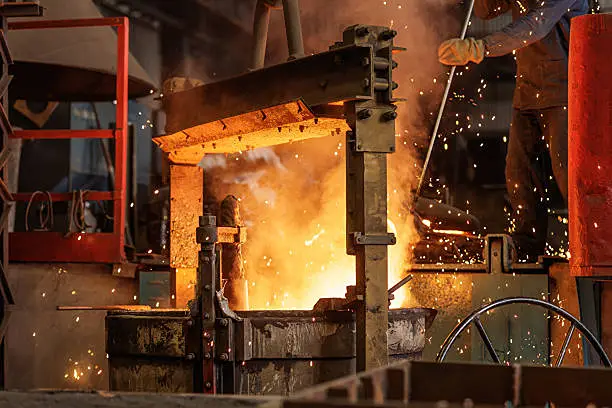
What really sets the water glass process apart is how it handles dewaxing. Instead of flash-firing the shell in an autoclave, the mold is submerged in hot water at approximately 90–95°C. The wax melts, floats to the surface, and is skimmed off for recycling. The entire shell-building cycle runs 2–3 days, roughly half the time required by silica sol.
The hot-water dewaxing method is gentler on the ceramic shell than flash-firing, but it limits the process to alloys with lower pouring temperatures. This is the single most important technical boundary between water glass and silica sol — if your alloy needs more than ~1,100°C, the water glass shell structure begins to soften. That is when silica sol becomes non-negotiable.
Applications, Advantages, and Limitations of Water Glass Casting
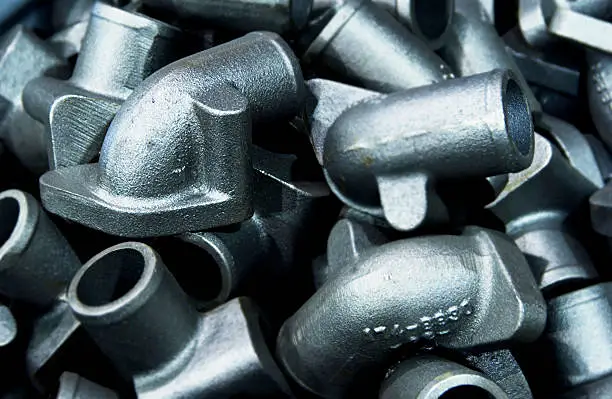
Water glass investment casting is the default choice for carbon steel and low-alloy steel parts where surface finish requirements are moderate and cost sensitivity is high. Typical applications include agricultural machinery brackets, construction equipment hardware, pump housings, forklift components, and general industrial fittings.
The advantages are straightforward. Unit cost runs roughly 60–70% of an equivalent silica sol casting. The shorter shell-building cycle means faster order turnaround. The process handles larger parts well — components above 5 kg in weight or exceeding 400 mm in overall dimensions are well within its capability window.
The trade-offs come in precision and surface quality. Under ISO 8062, water glass casting typically achieves CT7 to CT8 tolerance grades, corresponding to roughly ±1.0% linear tolerance. Surface roughness lands in the Ra 6.3–25 μm range — adequate for non-sealing surfaces but insufficient for gasket faces or visible-grade finishes without secondary machining. Thin walls below 2 mm are problematic. And because the quartz-based shell is more porous than a zircon shell, certain stainless steel grades can suffer from surface oxidation and a defect pattern foundry engineers know as “frosting.”
Practical rule of thumb: if your part is carbon steel, weighs over 5 kg, has no surface finish tighter than Ra 6.3 μm, and price is the primary concern — water glass is your starting point.
Silica Sol (Colloidal Silica) Investment Casting — The Precision Standard
Silica sol casting is what most engineers picture when they think of precision investment casting. It costs more and takes longer, but the as-cast quality it delivers often eliminates or substantially reduces downstream machining — making the total cost equation far more favorable than the unit price suggests.
How the Silica Sol Process Achieves Superior Precision
Four technical factors separate silica sol from water glass at the molecular level. First, the binder: colloidal silica is a stable dispersion of nanoscale SiO₂ particles (5–100 nm) in near-neutral-pH water. These particles pack densely as water evaporates during air-drying, creating a mold shell that is intrinsically less porous than a chemically gelled water glass shell.
Second, the refractory material: silica sol shells use zircon sand (zirconium silicate) instead of quartz. Zircon has a melting point above 2,000°C, which means the shell stays dimensionally stable when pouring high-temperature alloys — nickel-based superalloys at 1,350–1,500°C, or stainless steels at 1,580–1,620°C.
Third, the shell-building rhythm: each layer must air-dry under controlled temperature and humidity before the next is applied. This takes 5–7 days for a full shell, roughly twice as long as water glass, but the slow cure prevents the micro-cracks that plague faster processes.
Fourth, dewaxing and burnout: the shell goes through flash-firing or autoclave dewaxing, followed by a high-temperature sintering cycle at 870–1,095°C. This eliminates every trace of wax and moisture while sintering the ceramic particles into a dense, strong mold.
Applications, Advantages, and Limitations of Silica Sol Casting
Silica sol is the go-to process whenever the material is stainless steel, duplex stainless, or a nickel-based alloy. Typical applications cluster in industries where failure is expensive: valve bodies and pump impellers for chemical processing, turbocharger wheels for automotive, surgical instruments and implant components, food-grade sanitary fittings, marine hardware exposed to saltwater corrosion, and aerospace structural castings.
The precision metrics explain why. Silica sol routinely achieves CT4–CT6 tolerance grades under ISO 8062, or approximately ±0.5% linear tolerance. Surface finish as-cast runs Ra 1.6–6.3 μm — smooth enough that sealing surfaces often require no additional machining. Minimum wall thickness can go as low as 0.6 mm, enabling thin-walled geometries that water glass simply cannot reproduce.
The cost premium is real: per-part pricing typically runs 25–40% above water glass. And the longer shell-building cycle means lead times stretch accordingly. But this is where the total-cost-of-ownership lens becomes essential. A silica sol valve body may cost 30% more as a raw casting, but if it saves you a CNC facing operation on the flange sealing surface, the fully machined part can actually be cheaper than the water glass equivalent. For annual volumes under approximately 1,000 pieces — where tooling amortization dominates — silica sol is the economically rational choice for precision parts.
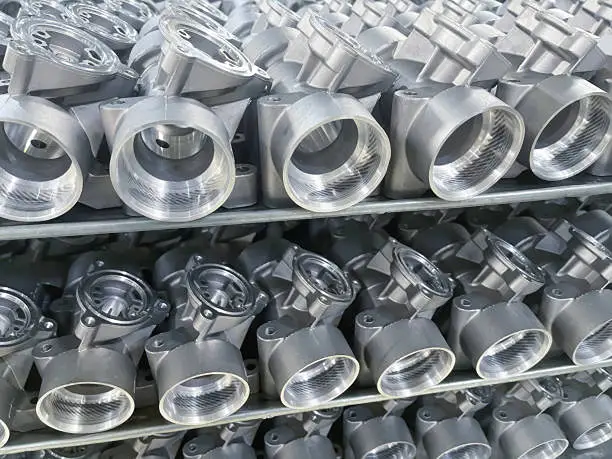
- Cost-effective — ~60–70% of silica sol price
- Fast turnaround — shell built in 2–3 days
- Handles larger parts (>5 kg, >400 mm)
Limitation: CT7–CT8, Ra 6.3–25 μm, no stainless steels
- CT4–CT6 precision — ±0.5% linear tolerance
- All stainless steels, nickel alloys, superalloys
- Ra 1.6–6.3 μm as-cast, walls down to 0.6 mm
Limitation: 25–40% higher unit cost, longer lead time
Specialty Investment Casting Methods You Should Know
Three more investment casting methods fill the gaps where water glass and silica sol fall short. They are not everyday tools, but knowing they exist can save an engineer from specifying the wrong process for an advanced application.
| Method | How It Works | Best For |
|---|---|---|
| Vacuum Investment Casting | Melting and pouring performed inside a vacuum chamber (typically 10⁻¹–10⁻³ Pa), eliminating gas porosity and oxidation during mold filling | Nickel-based superalloys (Inconel, Hastelloy), titanium alloys, aerospace turbine hot-section components |
| Counter-Gravity (Hitchiner Process) | A vacuum draws molten metal upward into the mold from below the melt surface, yielding metal utilization of 60–95% vs. 15–50% for gravity pouring | Thin-walled complex geometries, aerospace structural parts requiring highest metal cleanliness |
| Plaster Mold Investment Casting | Gypsum-based investment slurry poured into a flask around the wax pattern; lower-temperature burnout, no ceramic shell firing needed | Aluminum and copper alloys with melting points below ~1,100°C, finest surface detail parts |
For 90% of industrial investment casting projects, the water glass and silica sol processes cover the requirement. These specialty methods are the high-performance tools you reach for when the application — or the alloy — demands something beyond the mainstream.
For 90% of industrial projects, water glass or silica sol covers your needs. The question is not which type is better — it is which type matches your material, tolerance requirements, and budget. The decision framework below walks you through it.
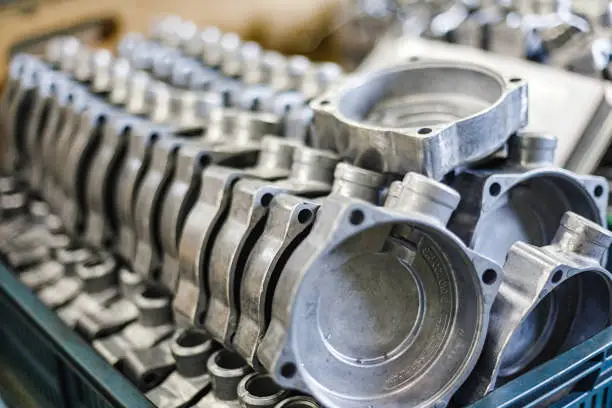
How to Choose the Right Investment Casting Type for Your Project
Knowing the four types is useful. Knowing which one fits your part is what turns knowledge into a purchase order. The selection logic boils down to three variables: material (determines what is technically possible), precision and surface requirements (determine what grade of process you need), and budget and lead time (determine the final decision). Work through them in that order.
Material-Process Compatibility at a Glance
The fastest way to narrow your options is to check whether your alloy is compatible with each process. Not every metal works with every shell system — the casting temperature and chemical reactivity of the alloy impose hard boundaries.
| Alloy Category | Water Glass | Silica Sol | Notes |
|---|---|---|---|
| Carbon Steel / Low-Alloy Steel | ✓ Recommended | ✓ Works | Both processes handle these well; water glass is more economical |
| 304 / 316 Stainless Steel | ✗ Not recommended | ✓ Recommended | Stainless demands silica sol to avoid surface oxidation and achieve Ra 3.2 μm or better |
| Duplex Stainless (2205, 2507) | ✗ Not recommended | ✓ Required | Pouring temperatures of 1,580–1,620°C exceed water glass shell limits |
| Nickel Alloys (Inconel, Hastelloy) | ✗ Not compatible | ✓ Required (or vacuum) | Pouring at 1,350–1,500°C; water glass shells soften above ~1,100°C |
| Aluminum / Copper Alloys | ✓ Works | ✓ Works | Both compatible; plaster mold also an option |
| Titanium Alloys | ✗ Not compatible | Limited | Vacuum casting is standard due to titanium’s reactivity with oxygen |
If your material appears in the “Not recommended” column for the process you were considering, stop there — no amount of cost savings justifies a process that cannot reliably cast your alloy. When in doubt, send your material specification to your foundry and ask for a formal feasibility assessment before committing to tooling.
A Practical Decision Tree for Selecting Your Investment Casting Type
Once you have confirmed material compatibility, work through these four steps. This is the same sequence an experienced foundry engineer follows when quoting a new part.
Step 1 — Identify your material category.
Is your part stainless steel, duplex stainless, nickel alloy, or titanium? If yes, jump directly to Step 3 — you need silica sol or vacuum casting. If your part is carbon steel or low-alloy steel, proceed to Step 2.
Step 2 — Check your precision and surface requirements.
Do you need tolerances of CT6 or tighter? Is your surface finish requirement Ra 6.3 μm or smoother? Is any wall section thinner than 2 mm? A “yes” to any one of these pushes you toward silica sol. Three “no” answers mean water glass is a viable option.
Step 3 — Check for special application requirements.
Is this an aerospace, medical, or food-contact application? If yes, silica sol or vacuum casting is the baseline — regulatory and quality system requirements effectively rule out water glass. Does your alloy require vacuum melting (titanium, certain nickel grades)? If yes, vacuum investment casting is your only option.
Step 4 — Run the economics.
If you have reached this step with both water glass and silica sol still viable, the tiebreaker is volume and total cost. Annual demand under roughly 1,000 pieces favors silica sol — the lower tooling amortization and reduced machining cost offset the higher unit price. Annual demand above 1,000 pieces, with carbon steel material and moderate finish requirements, makes water glass the more economical choice. Critically, compare total part cost — casting plus machining — not the casting price alone. The 25–40% casting premium for silica sol often shrinks to 10–15% or less when machining savings are factored in.
Here is something most first-time buyers miss: not every foundry operates both water glass and silica sol production lines. A facility that only runs one process has an incentive — conscious or not — to steer every inquiry toward the process it owns. Working with a manufacturer that maintains both lines, such as BesserCast, means the process recommendation you receive is driven by your part’s requirements rather than the factory’s equipment limitations. If you are unsure which type fits your component, sending the drawing to a dual-process foundry for a technical assessment costs nothing and can prevent an expensive mis-specification.
Not sure which process fits your part? Send us your drawing — our engineering team runs a free casting simulation and recommends the right type, not the one we happen to own.
If you would like a no-obligation technical review of your part drawing to determine the most suitable investment casting process, BesserCast’s engineering team offers free feasibility assessments including casting simulation analysis — request a consultation here.
Free feasibility assessment. Casting simulation included. Response within 24 hours.
Request Your Free Assessment →References
- ISO 8062:1994. “Castings — System of dimensional tolerances and machining allowances.” International Organization for Standardization.
- Campbell, John. Complete Casting Handbook: Metal Casting Processes, Metallurgy, Techniques and Design. 2nd Edition, Elsevier/Butterworth-Heinemann, 2015. sciencedirect.com
 English
  Japanese
  German
  Italian