
You pick up a metal casting. The surface looks fine. But what’s inside — a hidden crack, a pocket of trapped gas, a shrinkage cavity waiting to fail under load? If that question has crossed your mind, you already understand why non-destructive testing exists.
NDT — non-destructive testing — is a family of inspection techniques that evaluate material integrity without damaging the part. Unlike destructive tests that require cutting, breaking, or sectioning a sample, NDT lets you examine a component and still put it into service. For anyone sourcing custom metal castings, understanding NDT is not a technical curiosity. It is the difference between ordering parts with confidence and ordering parts with a prayer.
What Is NDT and Why It Matters in Casting
Non-destructive testing answers one question: is this part good enough to use — without destroying it to find out? Think of it like a CT scan for metal. Where a doctor uses imaging to see inside a patient without surgery, an inspector uses NDT to see inside a casting without cutting it open.
Casting, by its nature, creates internal features that surface inspection alone can never reveal. When molten metal flows into a mold and solidifies, three types of internal defects can form: porosity (gas bubbles trapped during solidification), shrinkage cavities (voids where metal contracted as it cooled), and inclusions (foreign particles — slag, sand, or refractory material — embedded in the metal). These are not theoretical risks. They are inherent to the casting process, and their severity depends on gating design, pouring temperature, cooling rate, and a dozen other variables.
This is why NDT plays a fundamentally different role in casting than it does in weld inspection. Weld defects tend to be planar — cracks, lack of fusion, incomplete penetration — running along a joint line. Casting defects are volumetric: spherical or irregular voids distributed through the body of the part. The distinction matters because different NDT methods have different strengths. A technique that excels at finding cracks in a pipeline weld might be the wrong tool for finding shrinkage in a pump housing.
One more useful distinction: NDT vs. NDE (non-destructive evaluation). In industry practice, NDT is pass/fail — does the part meet the acceptance criteria or not? NDE goes further, quantifying the size, shape, and orientation of a flaw to assess whether it is safe to leave in place. For most casting buyers, you will be specifying NDT requirements — what methods, to what standard, with what acceptance criteria. That makes understanding the options essential.
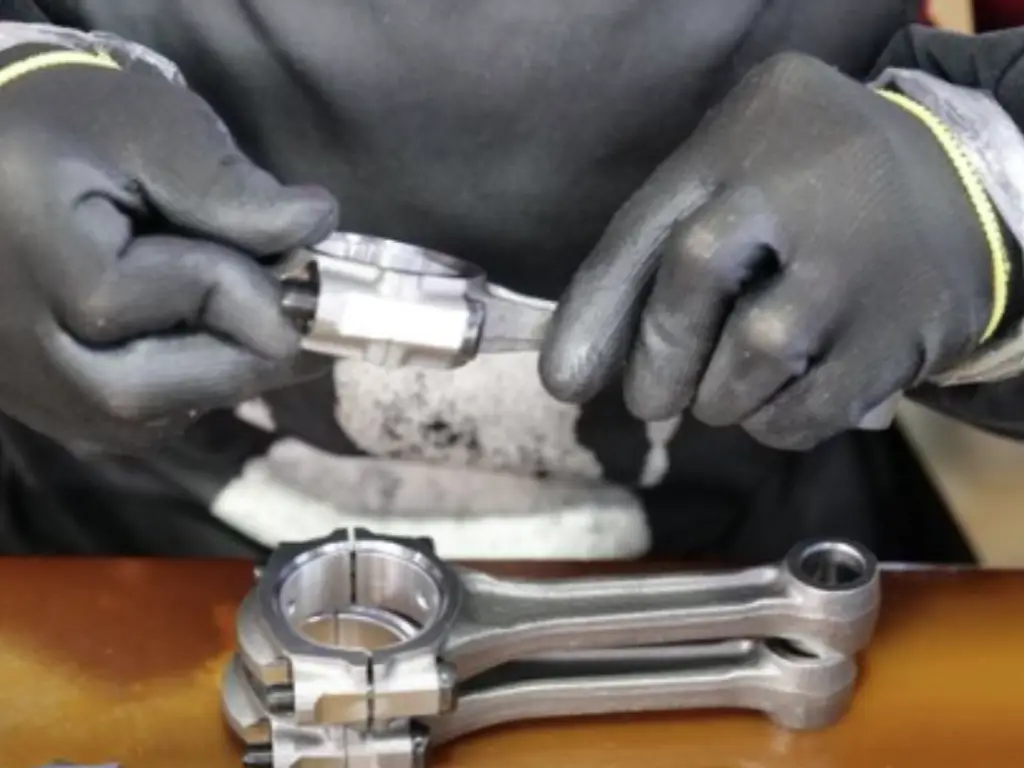
The 6 Core NDT Methods at a Glance
Before diving into selection logic, you need to know what each method actually does. Each NDT method answers a different question. Are you looking for a surface crack or an internal void? Measuring dimensional accuracy or verifying material composition? The answer determines which technique belongs in your inspection plan.
| Method | What It Detects | Best For | Key Limitation | Relevance to Castings |
|---|---|---|---|---|
| Visual Testing (VT) | Surface defects, cracks, corrosion, obvious discontinuities | First-pass inspection on all parts; catching obvious flaws before they reach downstream processing | Surface only — sees nothing below the skin | ⭐⭐ Surface finish assessment; spotting visible casting defects like cold shuts or misruns |
| Penetrant Testing (PT) | Surface-breaking cracks, porosity, seams | Non-porous materials; machined surfaces where tiny cracks need to be visible | Cannot detect subsurface flaws; requires thorough surface cleaning before and after | ⭐⭐⭐ Detecting micro-cracks on machined casting surfaces — especially after CNC operations |
| Magnetic Particle (MT) | Surface and near-surface cracks (up to ~2mm deep) | Ferromagnetic steels — fast, cheap, and highly sensitive | Only works on ferromagnetic materials; useless on stainless steel or aluminum | ⭐⭐⭐ Carbon steel and alloy steel castings; surface crack detection on as-cast or machined surfaces |
| Ultrasonic Testing (UT) | Internal flaws, wall thickness, planar defects (cracks, lack of fusion) | Thick sections; detecting cracks oriented perpendicular to the surface | Requires skilled operators; surface roughness degrades coupling and signal quality | ⭐⭐⭐⭐⭐ Internal shrinkage detection; wall thickness verification in hollow castings |
| Radiographic Testing (RT) | Volumetric defects — porosity, gas pockets, inclusions, shrinkage | Complex internal geometry; castings where internal soundness is critical | Radiation safety requirements; expensive; cracks can be missed if not aligned with the beam | ⭐⭐⭐⭐⭐ Gold standard for casting internal quality — especially porosity and inclusion detection |
| Eddy Current (ET) | Surface and near-surface cracks in conductive materials | Tube inspection; conductivity sorting; detecting fatigue cracks around fastener holes | Limited penetration depth (~5mm); works best on non-ferromagnetic conductive materials | ⭐⭐ Conductive alloy castings; surface micro-crack detection without PT chemicals |
Two insights to carry forward from this overview:
First, UT and RT are complementary, not competing. RT excels at volumetric defects — it produces an image where porosity shows up as dark spots and inclusions as bright specks. This makes RT the go-to for casting quality verification. UT, by contrast, is more sensitive to planar defects like cracks and lack of fusion — the kind of flaw that might be invisible on a radiograph if it is not oriented parallel to the beam. In critical applications, both methods are used on the same part: RT to check casting soundness, UT to screen for cracks.
Second, VT is never optional. It is always the first step — quick, nearly free, and capable of catching obvious defects before they consume expensive inspection resources. The most efficient inspection programs layer methods: VT screens everything, then targeted NDT (UT, RT, PT, or MT) investigates suspect areas or validates critical dimensions.
Together they cover what either alone would miss. Specifying both is not redundancy — it is coverage.
How to Choose the Right NDT Method for Your Parts
Choosing an NDT method is not a pure technical decision. It is a matching exercise. Your material, your defect type, your production volume, and your budget collectively determine the right answer. The three-step framework below turns this matching process from guesswork into repeatable logic.
Step 1: Match the Method to Your Material
Material is the first filter. If you do not know whether your part is ferromagnetic, you cannot decide whether MT is an option. Here is a quick sorting guide:
| If Your Material Is… | Methods Available | Methods Unavailable |
|---|---|---|
| Carbon steel / alloy steel (ferromagnetic) | VT, PT, MT, UT, RT | — |
| Austenitic stainless steel (304, 316) / aluminum (non-magnetic) | VT, PT, UT, RT, ET | MT (material is non-magnetic) |
| Martensitic stainless steel (410, 420) | VT, PT, MT, UT, RT | — (ferromagnetic — MT works) |
| Nickel-based alloys / superalloys | VT, PT, UT, RT | MT (most nickel alloys are non-magnetic) |
A simple magnet test at your desk answers the ferromagnetic question in seconds. If a magnet sticks, MT is on the table. If it does not, cross MT off your list.

Step 2: Decide What Kind of Defect You Are Looking For
The defect type you are hunting dictates your method choice more than any other factor. Here is how the mapping works in practice:
- Surface cracks → PT (universal, works on any non-porous material) or MT (faster and more sensitive, but only for ferromagnetic parts)
- Internal porosity, gas pockets, inclusions → RT (the gold standard for casting internal quality; produces a permanent image showing defect size, shape, and distribution)
- Internal cracks, lack of fusion, laminations → UT (planar defects reflect sound waves strongly; RT may miss cracks not aligned with the beam)
- Wall thickness loss, corrosion → UT (measures remaining wall thickness from one side, no need for two-sided access)
- Near-surface micro-cracks (conductive materials) → ET (fast, non-contact, ideal for production-line screening)
For casting buyers, the most important calibration is this: RT’s blind spot is real. A crack oriented perpendicular to the X-ray beam can be essentially invisible on a radiograph. Consider a pump body casting — RT clearly shows the shrinkage porosity in the volute wall, but a hairline crack running radially through a bolt flange may not register at all. UT catches it. This is why specifying “RT or UT” is not a cost-saving shortcut. They find different things.
Step 3: Factor in Production Reality — Cost, Speed, and Access
The theoretically ideal method means nothing if it does not fit your production reality. Four practical constraints shape every real-world NDT decision:
Cost. At the low end, VT costs almost nothing — a trained inspector and good lighting. PT and MT are inexpensive per-part. UT sits in the middle tier, with portable equipment costing a few thousand dollars and inspection rates of roughly 2–5 minutes per location, depending on geometry. RT is the most expensive — $50–200 per film shot, plus the cost of radiation safety infrastructure, certified personnel, and film processing or digital detector systems.
Speed. VT and MT are fast enough for 100% screening. PT adds dwell time for the penetrant to seep into defects. UT speed depends heavily on part geometry — a simple flat plate scans quickly; a complex casting with curves, bosses, and variable thickness takes much longer. RT is the slowest: setup, exposure, and film processing add up, especially for large or thick-section parts.
Access. UT, MT, and PT all work with single-sided access — you only need to reach one surface. RT typically requires access to both sides (source on one side, film or detector on the other), though digital radiography with portable systems has loosened this constraint somewhat.
Documentation. If you need a permanent inspection record — for regulatory compliance, customer deliverables, or traceability — RT provides a physical film or digital image. UT stores digital waveforms. VT, PT, and MT traditionally produce only written reports, though digital cameras and automated MT systems are changing this.
For custom, low-to-medium-volume casting orders — which is what most investment casting buyers are ordering — a practical default inspection package is: VT (100%) + dimensional inspection via CMM + RT or UT on critical sections specified in the drawing. Adding PT or MT for machined surfaces and threaded areas is a marginal cost increase that buys significant risk reduction.
VT < PT < MT < UT < RT
Slowest: RT
UT, MT, PT
Both sides: RT
RT (film), UT (digital)
What NDT Capabilities Reveal About a Casting Supplier
A casting supplier’s NDT equipment list is an encrypted quality report. You can read more from it than “they have testing equipment.” The equipment brands, the certifications they hold, and whether testing is done in-house or outsourced — each of these is a signal about how seriously the supplier takes quality. Here is how to decode them.
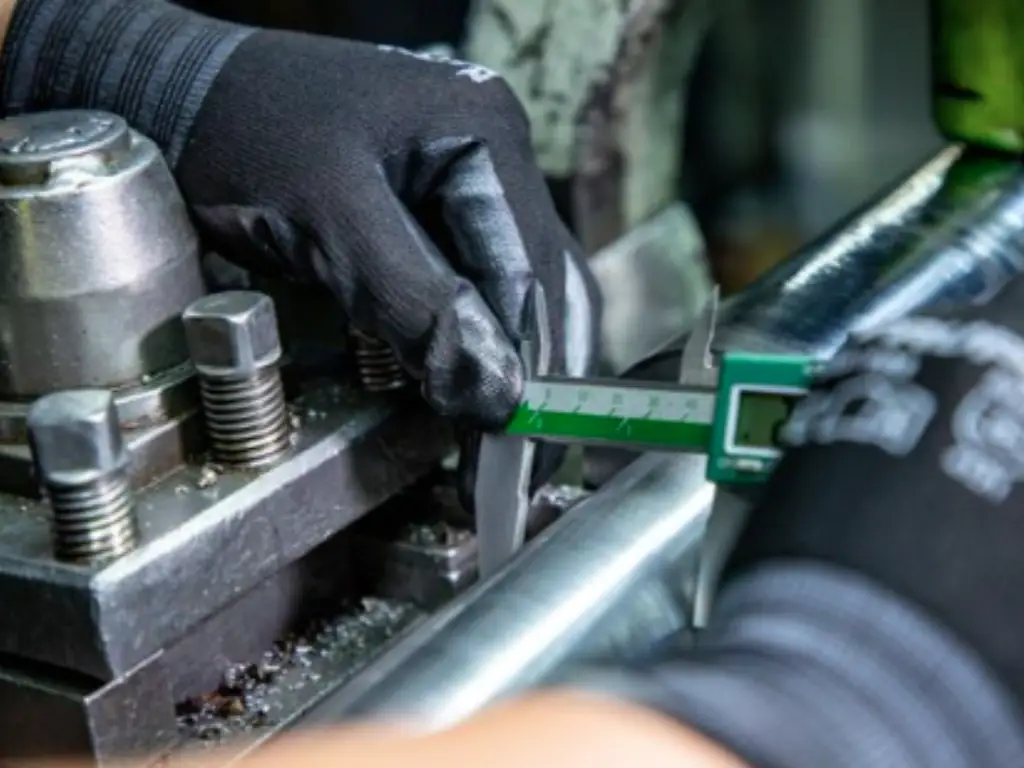
Reading the Equipment List — What Each Device Signals
The presence of testing equipment is less informative than the type, brand, and integration of that equipment into the production flow.
Spectrometer (chemical analysis). A German SPECTRO spectrometer can detect alloying elements at ppm-level precision. The difference between a SPECTRO and a generic domestic spectrometer is roughly an order of magnitude in measurement accuracy. But the more revealing signal is when the spectrometer is used. A foundry that blends and tests alloy chemistry before pouring — pre-furnace batch adjustment — is operating at a fundamentally different quality level than one that tests a sample from the pour and ships whatever came out.
Coordinate measuring machine (CMM). Hexagon is the industry benchmark brand. The key signal is not just owning a CMM. It is whether every production batch ships with a CMM dimensional report. A supplier that provides batch-level CMM data is telling you they have nothing to hide on dimensional accuracy.
X-ray and ultrasonic equipment. In-house X-ray capability signals active investment in internal quality control. Outsourcing RT to a third-party lab is common and not inherently a red flag, but it means the supplier’s quality feedback loop has an extra step and an extra delay. In-house UT, by contrast, is relatively affordable and should be expected of any casting supplier serving industries with structural integrity requirements.
Salt spray / corrosion testing. A salt spray chamber running 24/7 — rather than being pulled out for one-off customer requests — signals that corrosion resistance is part of the supplier’s standard quality monitoring, not an afterthought.
Certifications and Quality Systems — The Management Signal
Certifications are the software to equipment’s hardware. They tell you whether the supplier has a repeatable quality system — one that produces consistent results independent of which operator is on shift.
ISO 9001:2015 is the entry ticket. It confirms a quality management system exists, but it sets a wide bar. Certification alone tells you little about how well the system functions in practice.
IATF 16949:2016 is a different animal. Originally developed for automotive supply chains, its core requirement is process control and defect prevention, not just defect detection. For a casting supplier, achieving IATF 16949 certification is significantly harder than for a machining-only shop, because the casting process has more variables — melt temperature, pour rate, shell permeability, cooling time — that must be controlled within narrow windows. A foundry with IATF 16949 has demonstrated that its process control meets the automotive industry’s standard for defect prevention, which is among the strictest in manufacturing.
ISO 14001 and ISO 45001 address environmental management and occupational health and safety. In the casting industry, these are not soft credentials. Casting is a high-emission, high-energy-consumption sector, and governments worldwide are tightening environmental regulations on foundries. In China, foundries are tiered for power supply priority — a foundry with ISO 14001 and ISO 45001 is likely to be classified as a top-tier facility with guaranteed production continuity even during government-mandated power restrictions. A foundry without these certifications faces the real risk of production stoppages — and consequently, your order delays.
This combination of certifications and in-house testing equipment is not something every foundry can claim. It signals that quality is not a department in the factory — it is embedded in how the operation runs. Ningbo Besser Casting (bessercast.com), for instance, holds all four certifications — ISO 9001, IATF 16949, ISO 14001, and ISO 45001 — and operates a full in-house testing line that includes a SPECTRO spectrometer, Hexagon CMM, X-ray, ultrasonic, and 24/7 salt spray testing. For buyers who need more than a certificate on the wall, that level of infrastructure is the real differentiator. Review their full quality certifications and testing equipment list.
Common Questions About NDT Testing Methods
What is the difference between NDT and destructive testing?
Destructive testing — tensile testing, Charpy impact, bend tests — tells you material properties by breaking a sample. NDT tells you whether a specific finished part has defects, without destroying it. They serve complementary purposes: destructive testing validates the material and process; NDT validates the individual part. Both belong in a complete quality program.
Which NDT method is best for castings?
There is no single best method, but for most casting applications, the combination of RT and UT provides the most complete coverage. RT is the reference method for internal casting quality — it visualizes porosity, shrinkage, and inclusions in a way no other technique can match. UT adds sensitivity to cracks and enables thickness measurement from one side. For machined surfaces, add PT or MT to screen for surface-breaking defects.
How much does NDT testing cost?
Costs vary dramatically by method and scale. A visual inspection might cost pennies per part in high volume. PT and MT run a few dollars per part. UT inspection of a complex casting might cost $20–100 depending on the number of inspection points and geometry complexity. RT is the most expensive, typically $50–200 per exposure for film radiography. Digital radiography has higher upfront equipment cost but lower per-shot consumable cost. For small-batch custom castings, the NDT cost per part is higher, but it is a fraction of the cost of a field failure.
Do I need to specify NDT requirements when ordering custom castings?
Yes — and the more specific you are, the better. A vague note like “NDT required” on a drawing leaves too much to interpretation. Specify: (1) which NDT methods to apply, (2) which zones or features of the part need inspection, (3) the applicable standard (for example, ASTM E1742 for radiographic inspection of castings), and (4) the acceptance criteria — what defect type, size, or quantity is rejectable. If you are unsure what to specify, a qualified casting supplier can recommend an inspection plan based on the part’s function and criticality. But you should still review and approve it, not delegate the decision entirely.

 English
  Japanese
  German
  Italian