
Why Investment Casting Defects Cost More Than You Think
A single part number on a troubled production line once required weld repair on 75% of all castings produced. The annual rework cost for that part alone ran between $8,000 and $10,000, at roughly 800 to 900 pieces per year (Investment Casting Institute, 2018). That figure covers only the welding. It excludes the castings scrapped outright, the machining hours lost on parts already cut before the defect was caught, and the customer relationships strained by late deliveries.
The industry rule of thumb: a defect discovered after machining has begun amplifies the scrapped-part cost by three to five times. You are not just throwing away raw metal — you are throwing away value-added labor, machine time, and a lost production slot. If a defective casting reaches your customer’s assembly line, the cost multiplies again through warranty claims, line-down penalties, and reputational damage no purchase order can quantify.
Understanding investment casting defects is therefore not an academic exercise. It is a supply chain risk management capability. Whether you are a quality engineer troubleshooting a batch of porous valve bodies or a procurement manager evaluating a new foundry, the ability to read defect patterns — what type, where, how often — gives you a diagnostic window into a supplier’s true process capability.
Annual Rework Cost — Single Part Number
$8,000 – $10,000
75% weld-repair rate at 800—900 pieces/year. Does not include scrap, machining waste, or late-delivery penalties.
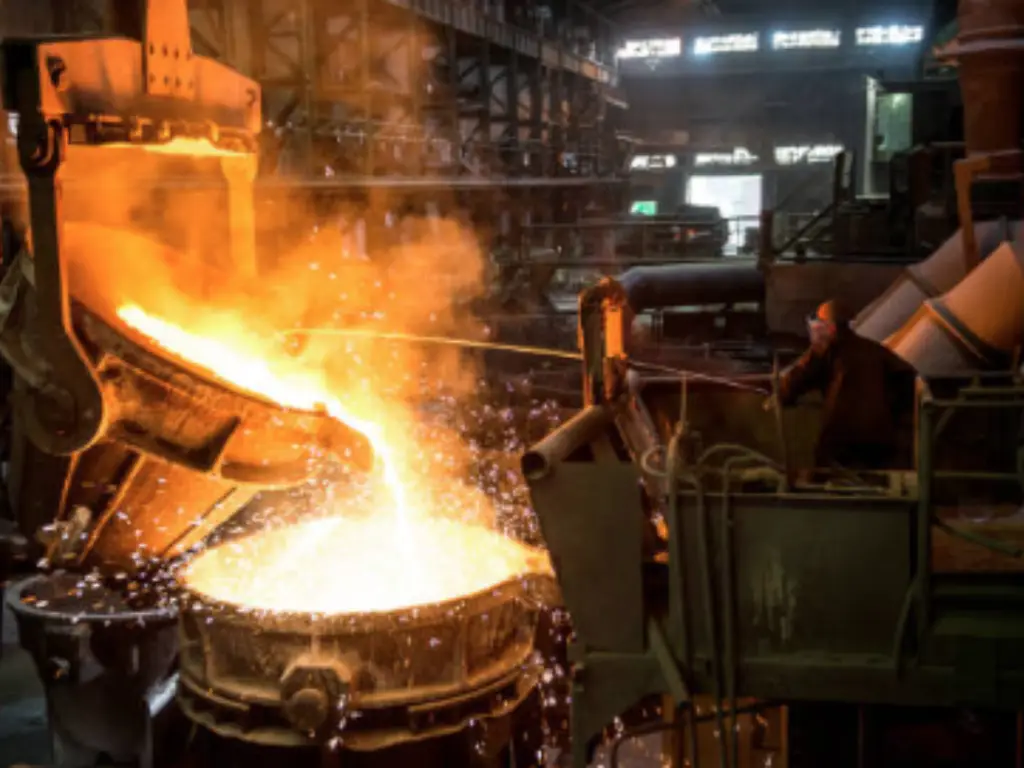
The Defect Landscape: Types, Causes, and Root Mechanisms
Every investment casting defect traces back to one of three root-cause dimensions: melt quality (gas content and cleanliness), solidification behavior (shrinkage and stress), or shell-mold interaction (mechanical and chemical exchanges between metal and ceramic). Understanding this three-axis framework helps you move beyond surface-level descriptions to diagnose what actually went wrong.
Gas Porosity and Shrinkage: The Twin Threats to Internal Integrity
Porosity is the most common defect category, but not all pores are created equal. The distinction between gas-driven and shrinkage-driven porosity determines the entire corrective path.
Gas porosity forms when dissolved gases — primarily hydrogen — come out of solution during solidification and become trapped. In austenitic stainless steels, hydrogen solubility drops from roughly 25 ppm in the liquid to about 5 ppm in the solid at the freezing front — meaning approximately 80% of dissolved hydrogen is expelled during solidification. If the solidifying shell advances faster than the gas can escape, bubbles form. The resulting pores are round, smooth-walled, and often clustered near the cope surface. Common sources include wet charge material, inadequate melt degassing, residual moisture in the ceramic shell, and air mechanically entrapped by turbulent mold filling.
Shrinkage porosity is geometry-driven. As liquid metal solidifies, it contracts by 3% to 7% in volume depending on the alloy. Without a continuous liquid feed path to compensate, the last areas to freeze develop irregular, angular cavities with rough, dendritic internal walls — concentrated in thick sections, boss junctions, and gate roots that solidified prematurely. The Niyama criterion quantifies this risk: when the ratio of temperature gradient (G) to the square root of cooling rate (√R) drops below approximately 1 (°C·min/cm²)^(1/2), shrinkage porosity becomes likely.
| Feature | Gas Porosity | Shrinkage Porosity |
|---|---|---|
| Pore shape | Round, spherical | Irregular, angular, dendritic |
| Internal wall | Smooth | Rough, crystalline |
| Location | Random or cope-clustered | Hot spots, thick sections, junctions |
| Key control | Melt degassing, shell dryness | Gating/riser design, directional solidification |
| Verification | Metallography (round pores) | Fracture exam, CT scan at thick sections |
Hot Tears and Cold Cracks: When Stress Exceeds Strength
Cracks are the most expensive defect — a cracked casting is almost always scrapped.
Hot tears form during the final stage of solidification, when the metal is in its hot-short temperature range — roughly 1,200°C to 1,450°C for carbon steels, within 50°C to 100°C of the solidus. A thin liquid film still exists along grain boundaries, giving near-zero ductility. If thermal contraction is mechanically restrained — by a rigid ceramic shell, a poorly designed gating tree, or an abrupt geometry change — that liquid film tears open. The fracture surface is dark, oxidized, and jagged. Sharp internal corners with fillet radii below 1.5 mm (stress concentration factor >2.5) and thick-to-thin junctions cooling at different rates are the most common initiation sites.
Cold cracks form after full solidification — during knockout, heat treatment, or even days later as residual stresses redistribute. The fracture surface is clean with metallic luster. They may not appear until after machining, making them particularly dangerous.
The diagnostic rule: dark and oxidized = hot tear (process design problem); clean and metallic = cold crack (cooling and stress-management problem).
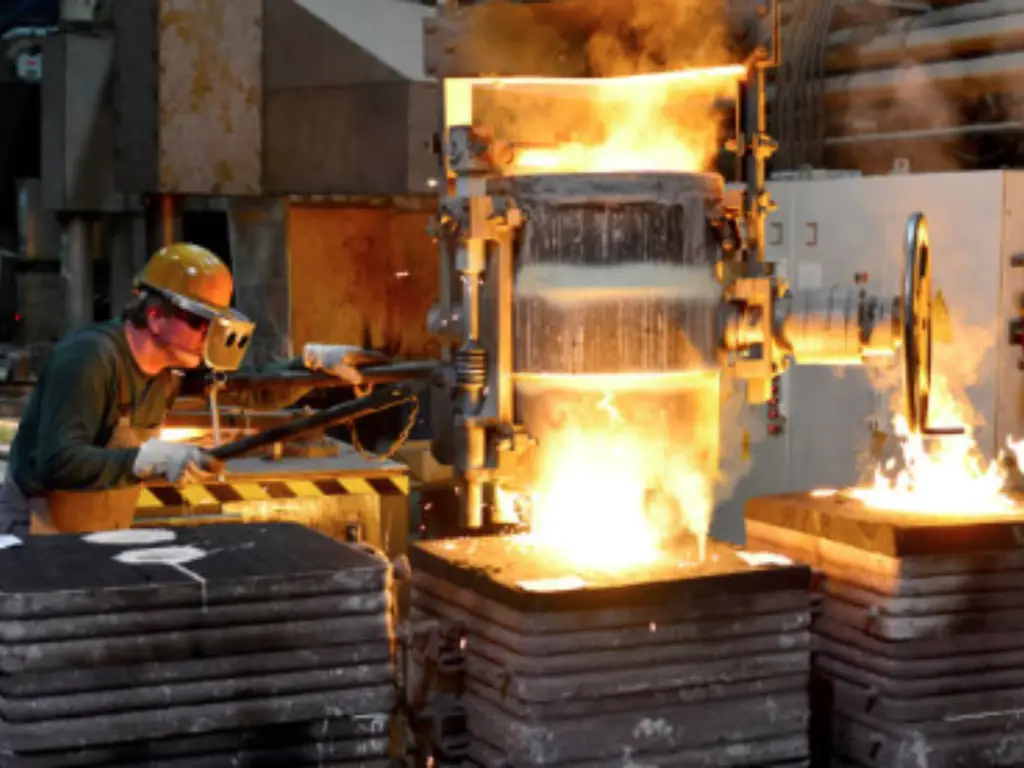
Surface Defects and Shell-Related Issues: What the Eye Can See
Surface quality is the first thing a customer notices and the first trigger for rejection. Unlike internal porosity, surface defects are visible immediately at knockout.
- Rough or grainy surfaces trace to primary slurry issues. If silica sol viscosity drifts outside 25–35 seconds (Flow Cup #4) or first-layer zircon flour (200–325 mesh) is inconsistently applied, the metal replicates those surface irregularities.
- Finning and flash usually mean shell cracking during drying or dewaxing. Incomplete inter-layer drying (each layer needs 4+ hours at controlled humidity) or rapid autoclave pressurization (>0.5 MPa/s) creates micro-cracks that fill with metal.
- Nodules and surface bubbles come from air trapped in the slurry — insufficient vacuum degassing or poor wax pattern wetting by the primary coat.
The industry benchmark for a well-controlled silica sol process is Ra 3.2 µm surface finish. Achieving this consistently demands tight slurry management — not a one-time setup.
Melt Quality
Gas content, deoxidation, and charge material cleanliness determine internal integrity.
Solidification Behavior
Shrinkage, thermal stress, and directional feeding control crack and porosity formation.
Shell-Mold Interaction
Ceramic shell chemistry, permeability, and mechanical behavior govern surface and inclusion defects.
How to Identify Defects: A Practical Inspection Toolkit
Choosing the right inspection method depends on three questions: is the defect surface or internal? Do you need quantitative data or pass/fail? What is your batch size?
| Method | Depth | Best For | Limitation | Cost |
|---|---|---|---|---|
| Visual + Borescope | Surface | Cracks, gross porosity, finish | Operator-dependent | $ |
| Dye Penetrant (PT) | Surface (≥0.5µm) | Surface-breaking cracks | Surface only | $ |
| Magnetic Particle (MT) | Surface + ~2mm | Cracks in ferromagnetic alloys | Ferro materials only | $ |
| Digital Radiography (DR) | Full volume | Internal porosity, cracks, inclusions | Resolution 1-2% thickness | $$$ |
| Ultrasonic (UT) | Full volume | Large voids, thick sections | Poor on complex geometries | $$ |
| CT Scanning | Full volume, 3D | Defect mapping, verification | Highest cost; 5–50µm res. | $$$$ |
Non-Destructive Testing: The Production Workhorse
Most foundries combine two NDT methods: one for internal integrity and one for surface condition. Digital radiography is the workhorse — it handles complex geometries well and produces permanent, shareable images, with a detection limit around 1% to 2% of local section thickness. For critical applications, CT scanning provides three-dimensional defect mapping that distinguishes interconnected from isolated porosity at resolutions down to 5 µm.
Surface methods are cheaper but essential. Dye penetrant reveals cracks with openings as narrow as 0.5 µm — far below unaided visual detection. For ferromagnetic alloys, magnetic particle inspection adds near-surface detection up to ~2 mm depth.
When Destructive Testing Makes Sense
Destructive testing validates the process, not individual production parts. Metallographic cross-sectioning reveals true microstructure, inclusion distribution, and porosity morphology that NDT misses. Tensile and hardness testing confirm the process did not degrade material properties. For functional components like pump housings and valve bodies, pressure testing at 1.5× working pressure is standard and often mandatory.
The Investment Casting Institute recommends front-loading: 100% NDT on first-article and early production samples, tapering to AQL-based sampling once statistical stability is demonstrated.
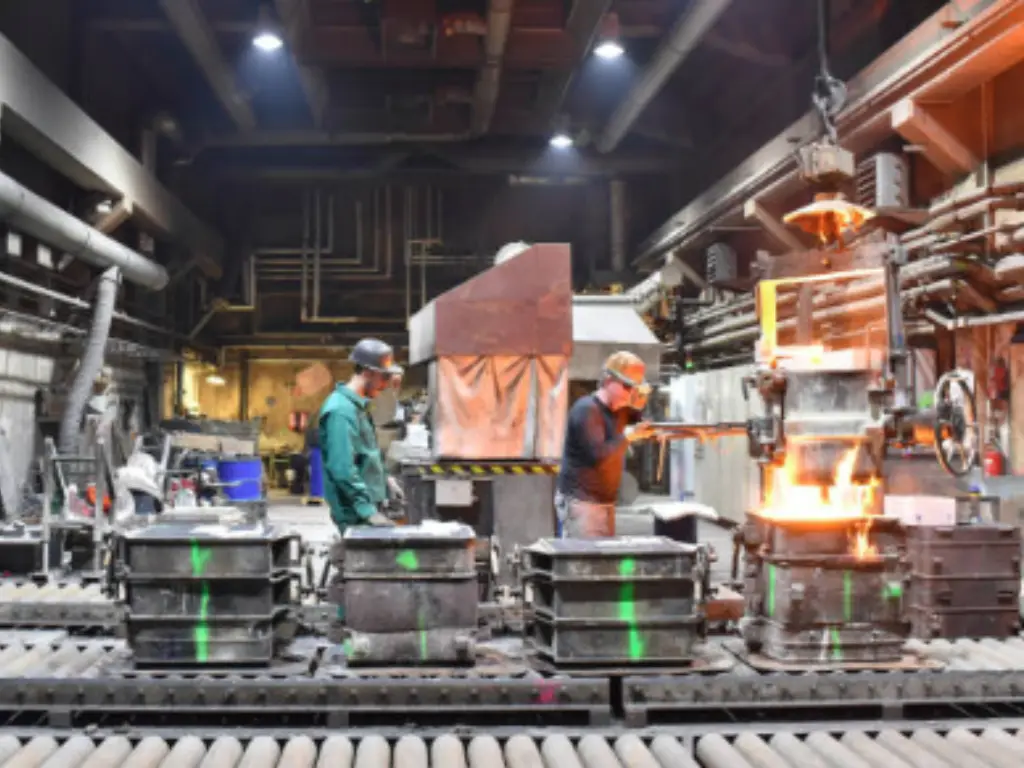
Preventing Defects at the Source: A Process-Level Approach
Roughly 70% of casting defects originate in decisions made before any metal is poured — in gating design, riser sizing, shell parameters, and melt preparation. If you are evaluating a foundry, focus attention on upstream engineering capability, not just final inspection.
Design-Led Prevention: Gating, Risering, and Simulation
A casting simulation run costs $200 to $500. Modifying tooling after a production defect costs $2,000 to $5,000 — before accounting for lost time and scrapped samples. The economics are decisive.
Directional solidification is the governing principle: the casting must freeze progressively from the thinnest section farthest from the gate toward the riser. The riser modulus (volume-to-surface-area ratio) must exceed the casting section modulus by at least 10% (Mc ≥ 1.1 × Mcasting for carbon steels). If the riser solidifies before the section it feeds, it is not a riser — it is decoration.
Modern simulation software — ProCAST and MAGMA — predicts shrinkage, hot tear risk, and filling defects before tooling is fabricated. But a simulation is only as accurate as the material property database behind it. A foundry that has built calibrated, alloy-specific databases will get predictive accuracy that default software settings cannot match.
$2,000–5,000
Tooling modification
after defect found
$200–500
Casting simulation
before tooling cut
10× Cost Difference
One hour of simulation engineering can prevent 100 hours of production rework. The economics favor simulation every time.
Process Control: Shell Building, Melting, and Pouring Discipline
Even the best design cannot compensate for process inconsistency on the foundry floor.
Shell building determines surface quality. The primary slurry must stay within a narrow viscosity window (25–35 seconds, Flow Cup #4) under controlled conditions: 22°C ±2°C, 50–70% relative humidity. Each backup layer needs 4+ hours of drying, and the completed shell must reach residual moisture below 0.3% before dewaxing. These are minimum thresholds, not aspirational targets. Manual shell lines — still dominant in the industry — struggle with shift-to-shift consistency. Automated lines eliminate operator variability: by mechanizing dip, stucco, and drying, they compress the full six-to-seven-layer build from roughly seven days to approximately 36 hours with uniform layer quality throughout.
BesserCast illustrates what this looks like at scale: two fully automated shell-making lines — a configuration found in fewer than 0.5% of Chinese investment casting foundries — complete all six to seven shell layers in 36 hours, versus the seven-day cycle typical of manual operations, while maintaining uniform layer thickness and controlled drying between coats. The production system operates under IATF 16949:2016 process controls with statistical monitoring across each batch, directly reducing the surface defects and dimensional variability that manual shell lines introduce through operator inconsistency.
Melt quality controls internal integrity. Pour temperature is alloy-specific: carbon steels at 50–100°C above liquidus, austenitic stainless at 80–150°C superheat. Deoxidation practice must be calibrated to the target oxygen content. A spectrometer check on every heat before pouring is the minimum standard.
Pouring discipline closes the loop. Shell preheat temperatures run 1,000–1,100°C for stainless steels and 800–950°C for carbon steels — hot enough for complete fill but below shell degradation thresholds. Pouring speed balances cavity fill time against air entrainment. Vacuum or inert-gas protection is mandatory for reactive alloys like nickel-based superalloys.
Seeing a defect pattern in your castings that matches one of these descriptions?
Get a technical assessment from a foundry engineering team that works with these defects every day.
What Defects Tell You About a Foundry: A Buyer’s Evaluation Checklist
Defect patterns are not random. The type, location, and frequency of defects in your shipment are a diagnostic readout of your foundry’s engineering capability and quality culture.
Red Flags in Defect Patterns
When you receive castings with quality issues, ask three questions: what defect type, at what location, with what pattern across the batch?
- Recurring shrinkage at thermal hot spots across batches: The foundry has not solved the gating and risering design. If they cannot show you a simulation report, they are designing by trial and error — and you are paying for the trials.
- Identical defects at the same location in every casting: Process drift — shell temperature, slurry viscosity, or drying time has shifted. A foundry with statistical process control catches this. One without it catches it when you do.
- Inconsistent surface roughness across the same order: Primary slurry is not being managed. Viscosity is drifting between shifts, or the tank is not being replenished on a disciplined schedule.
- Cracks at sharp internal corners: The foundry lacks casting process engineering review, or reviewed the design and did not push back. Either way, you are not getting design-for-manufacturability feedback.
- Randomly distributed slag or ceramic inclusions: Melt cleanliness and shell integrity controls are weak. Ceramic filters, disciplined crucible maintenance, and post-dewax shell inspection should catch these before they reach your incoming inspection.
World-class foundries operate at internal scrap rates below 3% for automotive-grade and below 5% for industrial-grade parts, with critical characteristics controlled to Cpk ≥ 1.33 (per IATF 16949). A foundry that cannot share internal defect rate data by product line and alloy is sending a signal through that silence.
World-Class Foundry Benchmarks
<3%
Automotive-grade internal scrap rate (IATF 16949)
<5%
Industrial-grade internal scrap rate
≥1.33
Process capability index (Cpk) for critical characteristics
10 Questions to Ask Your Investment Casting Supplier
| # | Question | What a Strong Answer Includes |
|---|---|---|
| 1 | What is your shell-making process? | Automated lines, documented drying parameters, ambient control |
| 2 | Do you use casting simulation software with calibrated databases? | Named software, alloy-specific parameters, simulation report for your part |
| 3 | Do you run spectrometer analysis on every heat? | Equipment brand, per-heat frequency, report with each shipment |
| 4 | What dimensional inspection equipment and frequency? | CMM brand/accuracy, inspection schedule, CT4-CT6 capability data |
| 5 | What is your internal scrap rate by product line and alloy? | Specific percentages, trending data, corrective action examples |
| 6 | Which quality certifications do you hold? | IATF 16949, ISO 9001, ISO 14001, ISO 45001 with current audit dates |
| 7 | Can you trace defects to batch, shift, and operator? | Lot numbering, ERP tracking, raw material to shipment traceability |
| 8 | What is your first-sample development pass rate? | Percentage (95%+ is strong), average turnaround time, R&D team size |
| 9 | What NDT capabilities are in-house vs. outsourced? | Equipment list, in-house scope, reference standards |
| 10 | What is your corrective action process for customer-reported defects? | 8D methodology, documented case examples, closed-loop verification |
These ten questions will tell you more about a foundry’s true capability than any brochure. A supplier that answers with specific data manages its processes. One that deflects hopes inspection at the end of the line will catch what the process failed to prevent.
For reference, BesserCast’s quality infrastructure provides a concrete benchmark against this checklist: a German Spectro spectrometer for per-heat chemistry verification, a Swedish Hexagon CMM for dimensional inspection, and in-house X-ray, ultrasonic, dye penetrant, magnetic particle, and salt-spray testing — meaning NDT feedback loops measured in hours rather than days. The foundry’s first-sample development pass rate exceeds 95%, backed by a 15-person R&D team and casting simulation software, with over 4,800 distinct part numbers developed across more than 200 material grades since 2002.
To discuss a specific defect pattern you are seeing or evaluate your current supplier’s quality against industry benchmarks, contact the engineering team at www.bessercast.com/contact.
Ready to Audit Your Casting Supplier?
Use this checklist with BesserCast’s engineering team — get benchmark answers for all 10 questions in one call.
Request Supplier AuditReferences
- Investment Casting Institute. Atlas of Casting Defects. 2018. investmentcasting.org.
- Campbell, John. Complete Casting Handbook: Metal Casting Processes, Metallurgy, Techniques and Design. 2nd ed., Butterworth-Heinemann, 2015. elsevier.com.
- ASTM International. “ASTM E446: Standard Reference Radiographs for Steel Castings Up to 2 in. (50.8 mm) in Thickness.” astm.org.
- ASM International. ASM Handbook, Volume 15: Casting. ASM International, 2008. asminternational.org.
 English
  Japanese
  German
  Italian