
What Are Globe Valves and Gate Valves? Internal Design at a Glance
At first glance, a globe valve and a gate valve can look frustratingly similar. Both are multi-turn valves with handwheels and bolted bonnets, both sit inline in industrial piping, and both can stop flow. But the resemblance ends at the casting surface. Inside, these two valves are fundamentally different machines built for fundamentally different jobs.
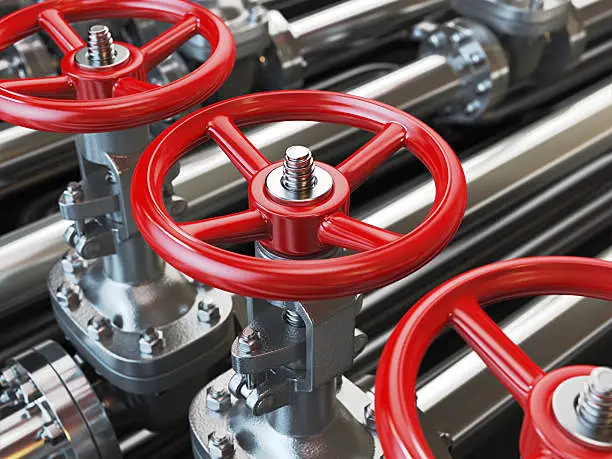
Here’s the three-second field identification trick: a globe valve has a spherical body with a flow-direction arrow permanently cast into the housing. A gate valve has a flatter, more compact body and no directional marking, because flow can go either way. The globe valve’s handwheel sits higher relative to the pipe centerline, while the gate valve’s stem rises through the handwheel as it opens (a visible rising stem in OS&Y designs).
Inside, a gate valve uses a wedge-shaped gate that slides perpendicular to flow, like a guillotine blade lifting out of the way. Fully open, the gate retracts completely into the bonnet, leaving a straight-through bore. A globe valve uses a plug or disc that moves parallel to flow, seating against an internal partition. Even when fully open, fluid must navigate an S-shaped path around the internal baffle. This internal geometry is the root of every performance difference between the two. It is also the reason one wrong choice can destroy a valve in weeks.
Globe Valve vs Gate Valve: The Core Functional Difference
If you remember exactly one thing from this article, make it this: a gate valve is a binary device — fully open or fully closed. A globe valve is an analog device. It can hold any intermediate position and control flow with precision. Using them interchangeably isn’t suboptimal; it’s destructive.
Pressure Drop, Flow Direction, and Fluid Dynamics
Here is what the numbers say. A fully open gate valve has a resistance coefficient (ζ) of approximately 0.1–0.3, meaning it behaves almost like a straight section of pipe. A fully open globe valve, by contrast, has a ζ of 4.0 to 10.0 for standard cast-body designs. That is 20 to 100 times more resistance — even when the valve is wide open.
The reason is the flow path. In a gate valve, the wedge retracts completely; fluid travels straight through an unobstructed bore. In a globe valve, fluid must make two 90-degree turns around the internal partition and squeeze through the annular gap between the disc and seat. This tortuous geometry is a deliberate design choice: it gives the globe valve its throttling capability, but it imposes a permanent pressure-drop penalty.
Flow direction adds another practical constraint. Globe valves are unidirectional: the body carries a cast-in flow arrow, and the valve must be installed with flow entering from below the disc (flow-to-open orientation). Installing a globe valve backward increases operating torque, compromises control response, and accelerates seat wear. Gate valves are bidirectional and can be installed in either orientation. If your piping layout makes directional discipline difficult, this alone may push you toward a gate valve, or toward redesigning the spool.
On the standards side, API 600 governs cast-steel gate valves. API 623, published in 2013 as the first API standard dedicated to globe valves, specifies heavier wall thicknesses and larger minimum stem diameters than ASME B16.34 minimums. This reflects the higher closing forces globe valves must handle.
Sealing Performance and Operating Mechanics
For shutoff integrity, the globe valve has a clear mechanical advantage. Its disc compresses perpendicularly onto the seat ring, applying force directly against the sealing surface. The result is the tightest shutoff of any multi-turn valve design, capable of achieving Class VI leakage rates under API 598. A gate valve seals by wedging a tapered gate between two seat surfaces. The seal depends on lateral contact pressure, which degrades as the seats wear.
Maintenance tells a similar story. Globe valves commonly feature renewable seat rings that can be replaced without cutting the valve out of the line. Gate valve seats, by contrast, are typically integral to the body casting or seal-welded in place. When a gate valve seat erodes — and it will, if anyone ever throttled with it — the entire valve often needs replacement, not repair.
Operationally, globe valves cycle faster: their disc travel is roughly one-quarter of the nominal pipe diameter. A gate valve’s wedge must travel the full diameter to open or close, requiring more turns of the handwheel and more time. For valves that cycle daily, globe valves save operator hours. For valves that sit open for months and close only during annual shutdowns, the gate valve’s slow operation is irrelevant.
When to Use Which Valve: Application Scenarios and Decision Matrix
There is no universally “better” valve. There is only the valve that matches the service conditions your system actually imposes. The starting question is not “which valve type?” but rather: what flows through this pipe, at what pressure and temperature, and how often does the valve need to move?
| Application Scenario | Recommended Valve | Why |
|---|---|---|
| Mainline pipeline isolation | Gate Valve | Minimal pressure loss, bidirectional flow, available up to 60″ |
| Steam system flow control | Globe Valve | Designed for throttling, maintains tight shutoff under thermal cycling |
| Cooling water bypass regulation | Globe Valve | Precise modulation; handles frequent adjustment without seat damage |
| Slurry or suspended solids service | Gate Valve | Straight-through bore passes solids; globe’s S-path traps and accumulates particles |
| High-pressure chemical dosing | Globe Valve | Fine flow control with corrosion-resistant trim options |
| Fire protection / emergency shutdown | Gate Valve | Full-open/full-close only, rarely cycled, OS&Y design visual position indication |
| Frequent daily cycling | Globe Valve | Shorter stem travel, less seat wear per cycle than gate |
| Cryogenic or extreme temperature | Both (material-dependent) | Valve type matters less than material grade and bonnet extension |
One more dimension that spec sheets rarely address: if your valve only moves twice a year, buy a gate valve and benefit from the negligible pressure drop. If operators adjust it every shift, buy a globe valve. The gate valve’s seats will not survive six months of daily partial opening. Which brings us to the single most expensive mistake in industrial valve selection.
The Hidden Cost of Wrong Valve Selection: Why Throttling a Gate Valve Destroys It
Using a gate valve to throttle flow is not “getting by with what you have.” It is using your fluid as a cutting tool against your own valve seats.
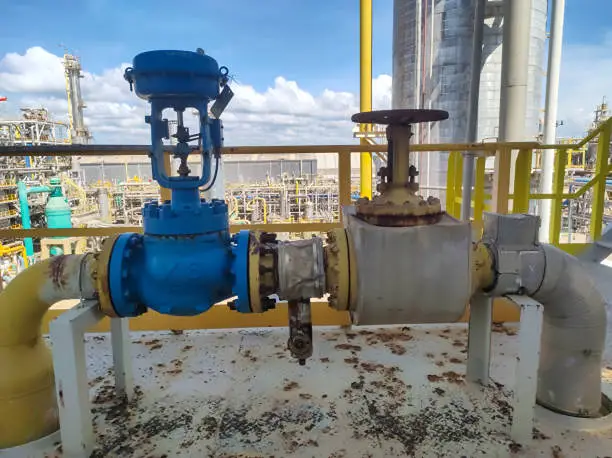
Here is what happens. When a gate valve is cracked partially open, the entire flow is forced through a narrow gap between the gate and the seat. Fluid velocity in that gap spikes. In liquid service, velocities exceeding 4.5 m/s begin causing measurable erosion. The high-velocity jet, often carrying entrained particles or cavitation bubbles, scours the seating surfaces. Over days and weeks, microscopic scratches deepen into visible grooves. This phenomenon is called wire-drawing, and its endpoint is a valve that can never again achieve a tight shutoff.
The timeline is alarmingly short. A Class 150 carbon steel gate valve used for continuous throttling on a process water line can lose its sealing capability within four to eight weeks. The repair is not a simple seat touch-up: gate valve seats are integral to the body casting. Replacement means cutting the valve out of the line, procuring a new unit, and incurring downtime whose cost typically exceeds the valve purchase price by a factor of three to five. Multiply that across a plant with dozens of misapplied valves, and the annual maintenance budget hemorrhage becomes a number worth taking seriously.
But here is the twist that no valve comparison article covers: even if you select the correct valve type (say, a globe valve for your steam bypass), the quality of the casting itself determines whether that valve delivers five years of reliable service or fails in its first thermal cycle. And casting quality is a topic the valve industry has been conspicuously silent about.
Beyond the Spec Sheet: How Casting Quality Determines Valve Performance
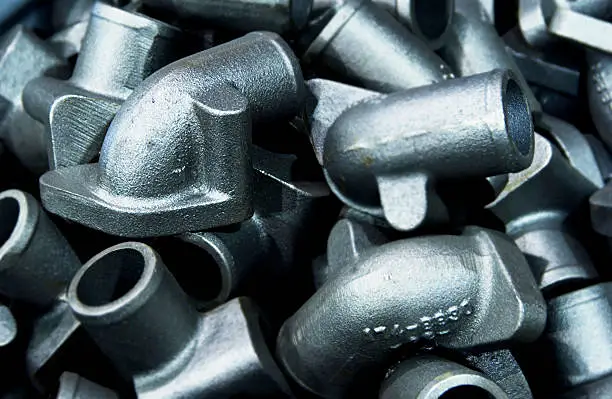
Valve selection guides end at “choose globe for throttling, gate for isolation.” But that advice assumes both valves are manufactured to the same standard, and they rarely are. Two globe valves stamped with the same API 623 designation, made from the same ASTM A216 WCB carbon steel, can perform dramatically differently depending on how their bodies were cast, what quality controls were applied, and whether the foundry invested in process automation or relied on manual craftsmanship alone. The difference is not on the data sheet. The difference is inside the metal.
Casting Processes: Why the Method Shapes the Metal
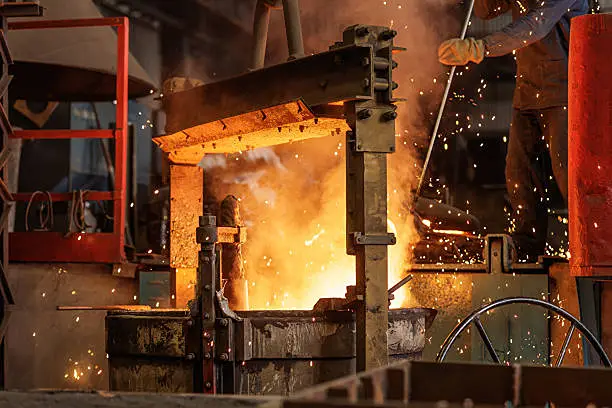
The most widely used process for precision valve body castings is silica sol investment casting, also known as the lost wax process. In this method, a wax pattern of the valve body is repeatedly dipped in ceramic slurry and coated with refractory sand to build a shell, layer by layer. After the wax is melted out, molten metal is poured into the ceramic cavity. The result is a casting with surface finish as fine as Ra 3.2 µm and dimensional tolerances in the CT4–CT6 range.
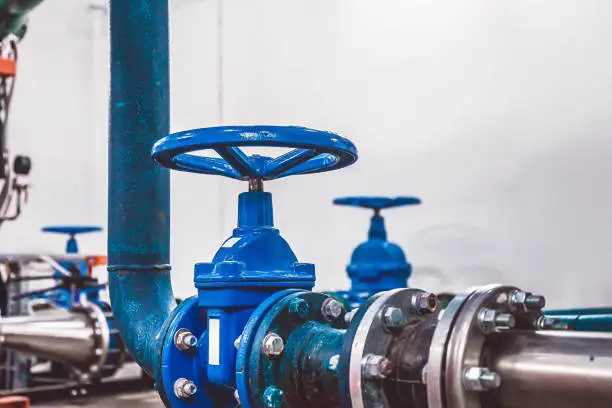
Compare this to sand casting, the lower-cost alternative. Sand-cast valve bodies typically achieve Ra 12.5–25 µm surface finish and CT8–CT10 tolerances. That is a four- to eight-fold gap in both surface quality and precision. For a globe valve with its complex S-shaped internal passage, rough internal surfaces create additional turbulence and deviate actual Cv values from the design specification. For a gate valve, imprecise seat pockets mean the wedge may never seat squarely.
The process control layer matters equally. Automated shell-building lines, which dip and coat each layer under controlled temperature and humidity, complete all six to seven shell layers in approximately 36 hours with consistent thickness. Manual shell-building, still common in smaller foundries, takes up to seven days and produces batch-to-batch variation that no amount of post-casting inspection can fully compensate for. Valve bodies are pressure-retaining components. You cannot afford “artisanal variation.”
Material Quality: 200+ Alloys and the Right One for Your Media
The same globe valve design, cast in different materials, survives entirely different environments:
| Material Grade | Standard | Suitable For |
|---|---|---|
| Carbon Steel WCB | ASTM A216 | General water, oil, steam (non-corrosive) |
| 316 Stainless CF8M | ASTM A351 | Corrosive chemicals, marine environments, chlorides |
| Chrome-Moly WC9 | ASTM A217 | High-temperature steam (>500°C), refinery service |
| Hastelloy C-276 | Nickel alloy | Strong acids, extreme temperatures, oxidizing media |
The material capability of a foundry matters because not every casting shop can produce every alloy. Nickel-based alloys like Hastelloy C-276 and Inconel 625 require vacuum melting and vacuum casting. In a non-vacuum environment, reactive elements oxidize before they reach the mold, and the alloy’s composition drifts out of specification. If your valve supplier does not operate its own vacuum casting capability, the nickel-alloy valve body you receive has passed through multiple hands, through multiple quality gaps, before reaching your purchase order.
Quality Testing: What Separates a Reliable Valve Casting from a Time Bomb
The three layers of testing that every pressure-retaining valve casting should undergo are not optional. They are the difference between a casting you can trust and one you hope is fine:
Layer 1 — Chemistry. Before every pour, a sample of molten metal should be analyzed by optical emission spectrometry. A German SPECTRO-class spectrometer can resolve alloying elements to parts-per-million (0.0001%) precision, confirming that the melt chemistry matches the specified grade before it enters the mold. A batch-specific chemistry report should accompany every shipment.
Layer 2 — Dimensions. Critical sealing surfaces and flange faces should be inspected on a coordinate measuring machine (CMM). A Hexagon-class CMM with 0.001 mm resolution can verify that seat pockets, flange bolt circles, and bonnet mating surfaces are within tolerance. For globe valves, the disc-to-seat alignment is particularly unforgiving: a misalignment of even 0.05 mm degrades shutoff performance.
Layer 3 — Internal Integrity. Casting defects (porosity, shrinkage cavities, cracks) are invisible from the outside and catastrophic under pressure. X-ray radiography, per ASTM E94 and E1742, and ultrasonic testing detect subsurface flaws that would otherwise pass visual inspection. For pressure-containing valve bodies, internal defect acceptance criteria should be specified in the purchase order. Level 2 per ASTM E446 and E186 is a common minimum for industrial valves.
In practice, the foundries that consistently pass these three layers of testing are those that have embedded quality control into their process rather than relying on final inspection to catch defects. Facilities running automated shell-building lines, performing in-house spectrometer analysis before every pour, and operating under IATF 16949-certified process control — such as Besser Casting’s operation in Ningbo, China — achieve first-pass yield rates that manual workshops cannot replicate. They control variables at the source rather than sorting rejects at the end. When evaluating suppliers, the decisive question is not “do you have testing equipment on your website?” but “can you provide batch-level chemistry, mechanical, and dimensional reports for every shipment?” If the answer is anything less than an immediate yes, keep looking.
±0.0001% precision
±0.001mm resolution
ASTM E94/E1742
What to Look for in a Valve Casting Supplier: A Practical Checklist
You do not need to be a casting engineer to evaluate a supplier. You need to ask the right questions, and then require documented evidence, not verbal assurances.
| What to Check | Why It Matters | What to Ask For |
|---|---|---|
| Certifications | Proves the factory operates under internationally recognized quality management systems | IATF 16949, ISO 9001, ISO 14001, ISO 45001, PED — request current copies with scope statements |
| Casting Process | Determines surface finish, dimensional accuracy, and internal integrity | “Do you use silica sol investment casting? How many automated shell-building lines?” |
| Material Capability | More alloys developed and produced = broader application experience | “How many material grades have you produced? Can you cast nickel alloys and duplex stainless?” |
| Testing Equipment | In-house spectrometer + CMM + X-ray/UT means quality issues caught before shipping, not after installation | “Can you provide batch-level chemical, mechanical, and dimensional reports with every order?” |
| Machining Capability | One-stop casting + CNC machining eliminates handoffs where quality gaps creep in | “Do you have in-house CNC machining? What precision on critical sealing surfaces?” |
| Track Record | Part count and export geography are honest proxies for experience | “How many different parts have you produced? Which industries and countries do you regularly ship to?” |
If a supplier’s answer to any question above is vague, evasive, or begins with “we can arrange that through a partner,” move on. A qualified valve casting supplier answers these questions with spec sheets, certificates, and batch reports.
Making the Right Choice: From Valve Type to Valve Quality
Choosing the right valve is a three-step logic chain, and most buyers stop after step one.
Step 1: Valve type. Gate or globe? This is the question every article answers. Gate = isolation, minimal pressure drop, infrequent operation. Globe = throttling, precise control, frequent cycling. If you got this far, you know the framework.
Step 2: Material. What flows through this valve, at what temperature and pressure? WCB carbon steel covers general industrial service. CF8M stainless handles corrosion. WC9 chrome-moly survives high-temperature steam. Nickel alloys tackle the extremes. Match the material to the media, not to the budget line item.
Step 3: Supplier quality. This is the step nobody talks about, and the one that determines whether your correctly specified valve lasts five years or fails in its first season. Use the six-dimension checklist above. Demand batch-specific testing reports. Verify that the foundry operates its own casting, machining, and testing under one roof. A valve is a pressure-retaining component. Its quality is only as good as the casting it is built from.
If you are sourcing precision valve body castings and need to verify a supplier’s process capabilities, quality certifications, and material expertise, review the technical specifications and testing documentation available through established casting manufacturers with IATF 16949-certified facilities. A thorough pre-qualification review costs an afternoon. A casting failure discovered after installation costs months.
References
- API Standard 600. “Steel Gate Valves — Flanged and Butt-Welding Ends, Bolted Bonnets.” American Petroleum Institute. api.org.
- API Standard 623. “Steel Globe Valves — Flanged and Butt-Welding Ends, Bolted Bonnets.” American Petroleum Institute, 2013.
- ASTM A216/A216M. “Standard Specification for Steel Castings, Carbon, Suitable for Fusion Welding, for High-Temperature Service.” ASTM International.
- ASTM A351/A351M. “Standard Specification for Castings, Austenitic, for Pressure-Containing Parts.” ASTM International.
- Idel’chik, I. E. Handbook of Hydraulic Resistance. 4th Edition, Begell House, 2008.
 English
  Japanese
  German
  Italian