
What Sets Carbon Steel and Stainless Steel Apart
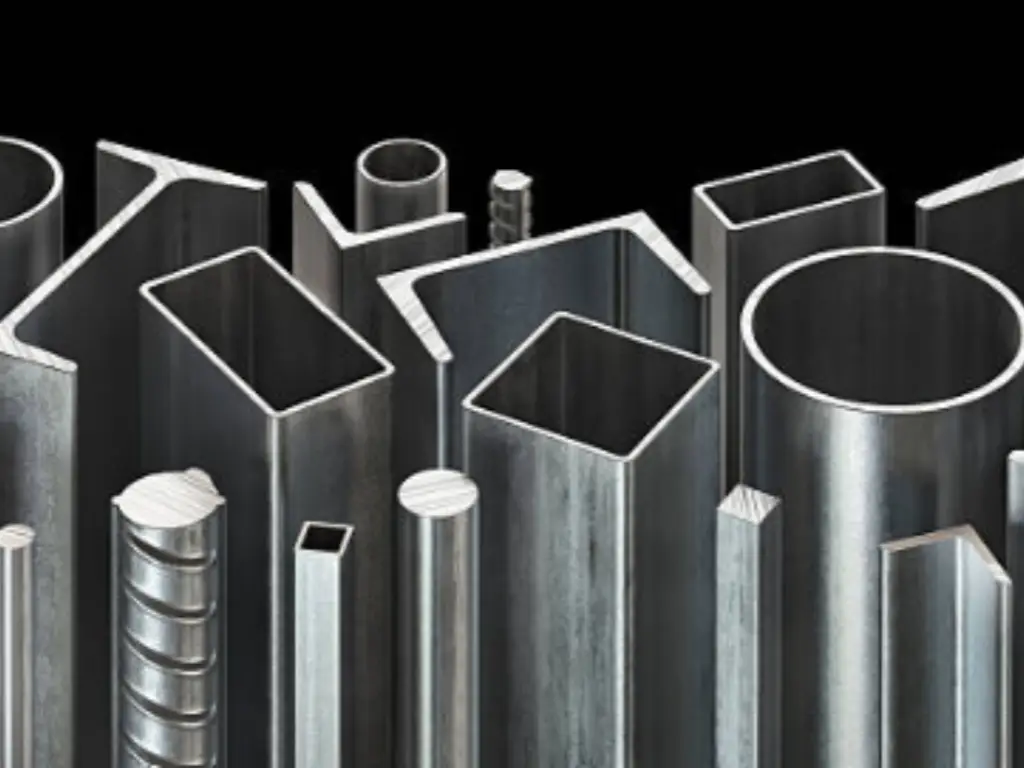
At first glance, carbon steel and stainless steel look like close cousins — both are iron-based alloys shaped by the same metallurgical principles. But the moment you introduce moisture, chemicals, or extreme temperatures, their paths diverge sharply. The difference comes down to one element: chromium.
Carbon steel is fundamentally iron plus carbon, with the carbon content ranging from 0.05% in mild steel to 2.1% in ultra-high-carbon tool steel. That carbon is what gives the material its strength and hardenability — more carbon means a harder, stronger steel, but also a more brittle one.
Stainless steel takes the same iron-carbon base and adds at least 10.5% chromium. That threshold isn’t arbitrary — it’s the point at which chromium forms a continuous, self-healing chromium oxide (Cr₂O₃) layer on the surface. This layer is only 1 to 5 nanometers thick — invisible to the naked eye — yet it blocks oxygen and moisture from reaching the iron beneath. Think of it like the difference between a cut apple turning brown within minutes and a stainless steel fork that stays bright after decades of use. The chromium oxide layer does for steel what the fork’s polish does for the metal: it seals the surface.
Within each family, grades vary widely. Carbon steels range from low-carbon (mild steel, under 0.3% carbon) through medium-carbon (0.3–0.6%, used for shafts and gears) to high-carbon (above 0.6%, for cutting tools and springs). Stainless steels fall into four families — austenitic (304, 316, representing about 70% of all stainless steel produced), ferritic (430), martensitic (410, 440C), and duplex — each with distinct properties. Understanding these categories matters because “stainless steel” is no more a single material than “fruit” is a single food.
Corrosion Resistance — The Deciding Factor
If you remember only one thing from this comparison, make it this: stainless steel resists corrosion on its own. Carbon steel does not. That single sentence drives more material selection decisions than any other factor, and it’s worth understanding exactly why.
The chromium oxide layer on stainless steel doesn’t just sit there passively — it actively repairs itself. Scratch the surface, and the exposed chromium immediately reacts with oxygen in the air to re-form the protective film. No paint, no oil, no galvanizing needed. This is fundamentally different from any applied coating, which fails the moment it’s breached.
But the self-healing has limits, and knowing them is what separates a reliable material choice from an expensive failure.
How Chromium Creates Rust-Free Steel
When chromium meets oxygen, it forms Cr₂O₃ — a dense, chemically inert ceramic layer that adheres tightly to the steel surface. At just 1–5 nanometers thick, it’s far thinner than a human hair, but it’s impenetrable to both oxygen and water molecules. In clean freshwater at room temperature, Type 304 stainless steel corrodes at less than 0.1 mm per year — effectively zero for most engineering applications. Carbon steel under the same conditions loses roughly 0.5 mm per year, and the rust layer that forms is porous, accelerating further corrosion rather than stopping it.
The self-repair mechanism is what makes stainless steel unique among structural metals. Scratch through the oxide layer, and the bare chromium atoms exposed at the surface instantly react with atmospheric oxygen. Within seconds, the protective film is restored. An applied coating — paint, zinc galvanizing, epoxy — cannot do this. Once breached, the underlying steel is exposed and corrosion begins at the breach point, often spreading underneath the surrounding coating.
However, chloride ions (Cl⁻) are the Achilles’ heel of this system. At concentrations above roughly 200 ppm, chloride can penetrate the Cr₂O₃ layer and trigger pitting corrosion — tiny, deep holes that grow into structurally threatening cavities. This is why marine environments demand Type 316 stainless steel, where 2–3% molybdenum is added specifically to resist chloride attack. The metric used to quantify this is the Pitting Resistance Equivalent Number: PREN = %Cr + 3.3 × %Mo + 16 × %N. For seawater service, a PREN above 35 is typically required — a bar that standard 304 (PREN ~19) cannot clear.
Real-World Environmental Performance
The table below maps common operating environments to practical material recommendations:
| Environment | Carbon Steel | Stainless Steel Recommendation |
|---|---|---|
| Dry indoor air | No protection needed — performs well indefinitely | 304 — unnecessary but harmless |
| Humid / condensation-prone | Requires paint or oil coating; inspect annually | 304 — standard choice |
| Continuous freshwater contact | Galvanizing or epoxy required; 10–15 year coating life | 304 — lifetime performance expected |
| Marine atmosphere / salt spray | Not recommended even with coatings; will rust within 1–3 years | 316 minimum; duplex (2205) for immersed service |
| Mild acidic environment (pH 4–6) | Rapid corrosion; not recommended | 316 or 316L |
| High-temperature oxidation (>500°C) | Scales heavily; carbon steel degrades rapidly | 310 or nickel-based alloy |
The key takeaway: carbon steel can be made corrosion-resistant, but only through applied protection that requires maintenance and periodic renewal. Stainless steel is corrosion-resistant by nature. If your application involves moisture, chemicals, or outdoor exposure, the material choice question is less “which steel?” and more “can I afford not to use stainless?”
Strength, Hardness, and Temperature Limits
Here’s a common misconception: stainless steel is stronger than carbon steel. In reality, the answer depends entirely on which grades you’re comparing — and in many cases, carbon steel wins on raw strength while stainless steel takes the prize on toughness and temperature extremes.
Tensile Strength, Yield, and Ductility at Room Temperature
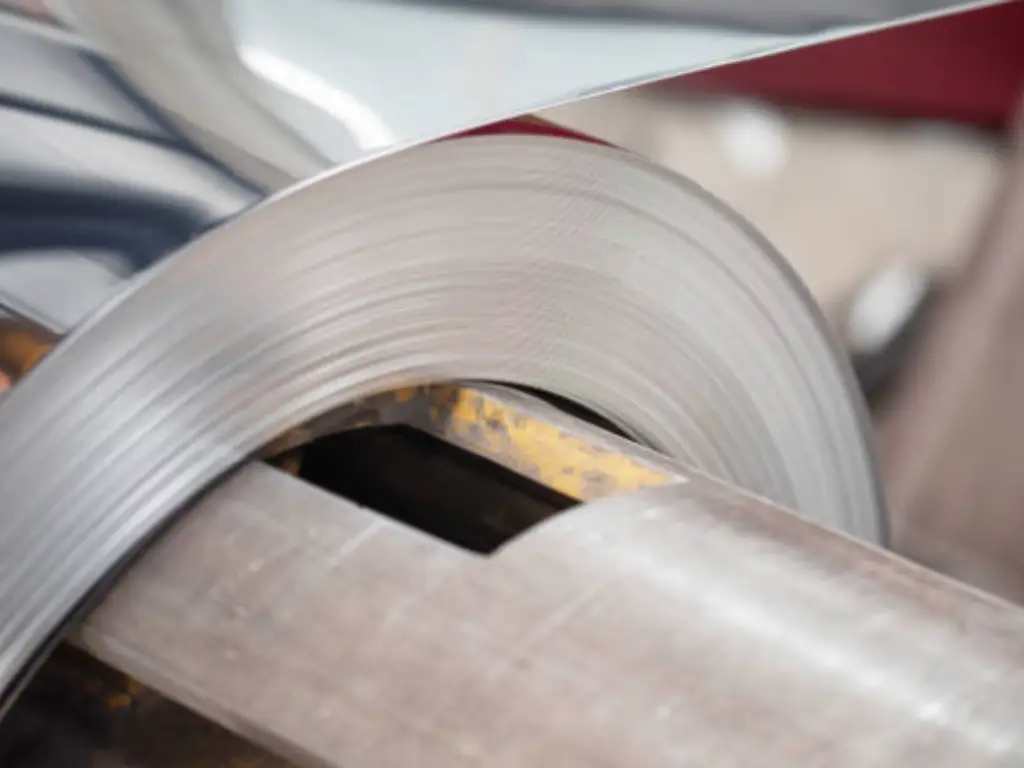
Carbon steel’s mechanical properties span an enormous range, driven almost entirely by carbon content. Each 0.1% increase in carbon adds roughly 50–70 MPa of tensile strength — but at the cost of ductility:
| Grade | Type | Tensile Strength (MPa) | Yield Strength (MPa) | Elongation (%) | Hardness |
|---|---|---|---|---|---|
| 1018 | Low-carbon steel | ~440 | ~370 | ~25 | HRB 71 |
| 1045 | Medium-carbon steel | ~630 | ~450 | ~16 | HRB 90 |
| 1095 | High-carbon steel | ~965 | ~570 | ~10 | HRC 28 |
| 304 | Austenitic stainless | ~515 | ~205 | ~40 | HRB 70 |
| 440C | Martensitic stainless | ~1,970 (quenched) | ~1,860 | ~2 | HRC 58–60 |
The pattern is clear: carbon steel at the high end (1095) handily beats 304 stainless on tensile and yield strength. But look at elongation — 304 stainless can stretch 40% before breaking, compared to 10% for 1095. This is the ductility trade-off. Austenitic stainless steels like 304 and 316 cannot be hardened by heat treatment — they strengthen only through cold working. Cold-roll 304 by 30% and its tensile strength jumps to roughly 1,000 MPa while retaining useful ductility.
For applications requiring both high hardness and corrosion resistance, martensitic grades like 440C offer a solution — capable of reaching HRC 58–60 after quenching, approaching tool-steel territory. But they sacrifice the corrosion resistance and weldability of austenitic grades in exchange.
Performance at High Temperatures and in Cryogenic Conditions
Temperature extremes separate these materials even more decisively than room-temperature mechanics.
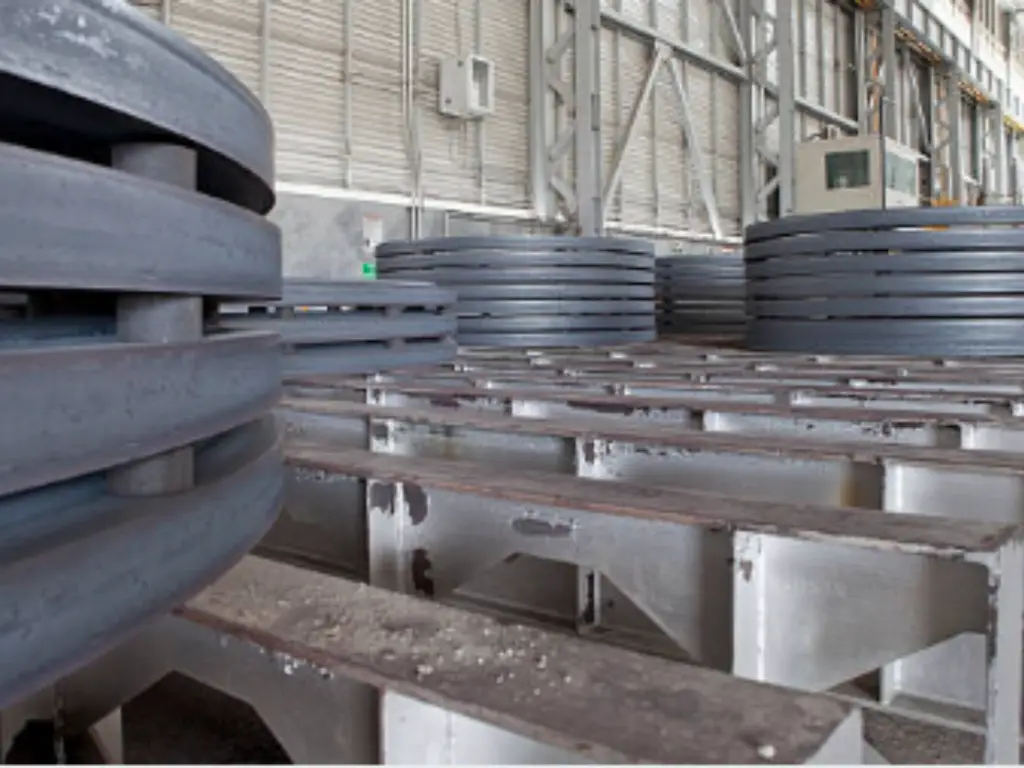
Carbon steel begins losing strength above 350°C and is generally limited to 425°C in continuous service — beyond that, oxidation accelerates and the steel surface scales and spalls. In contrast, Type 304 stainless can operate continuously at 870°C, and Type 310 extends that to 1,150°C. For furnace components, exhaust systems, and heat exchangers, stainless steel is often the only viable choice without stepping up to nickel-based superalloys.
At the cold end, the story flips. Carbon steel undergoes a ductile-to-brittle transition between -20°C and -40°C — below that threshold, it can fracture without warning under impact loads. This rules it out for cryogenic storage, LNG piping, and cold-climate structural applications. Austenitic stainless steels (304L, 316L) remain tough down to -196°C, with Charpy V-notch impact values exceeding 100 J at liquid nitrogen temperature. This is why LNG tankers, cryogenic valves, and liquid oxygen storage systems are built from stainless steel — not because it’s stronger in the conventional sense, but because it stays ductile when carbon steel turns glass-brittle.
Cost Reality — Beyond the Price Tag
Every procurement manager asks the same first question: how much more does stainless steel cost? On a raw material basis, carbon steel (e.g., 1020 grade) runs roughly $0.60–0.80 per kilogram, while Type 304 stainless sits at $2.50–3.50 per kilogram — a 3–5× premium. Type 316 with its molybdenum content pushes that to $3.50–5.00/kg. And stainless steel prices swing with nickel: every $1,000 per ton increase in nickel prices adds about $80 per ton to the cost of 304.
But the purchase price of the raw material tells only part of the story. Stainless steel is harder to machine — it work-hardens during cutting, requiring slower feeds, sharper tooling, and more frequent tool changes. Machining costs for stainless parts typically run 30–50% higher than equivalent carbon steel parts. In casting, stainless steel’s higher pouring temperature (roughly 1,620°C for 304 vs. 1,560°C for WCB carbon steel) means higher energy costs and greater mold shell wear.
The real comparison needs a lifecycle lens. In a corrosive or outdoor environment, a carbon steel valve body might need replacement every 3–5 years due to rust degradation, even with protective coatings. The same component in 316 stainless could serve for 20+ years without maintenance. When you factor in the cost of downtime, labor for replacement, and lost production — maintenance and downtime costs often run 3–5× the original equipment purchase price annually — the total cost of ownership frequently favors stainless steel, even at a 4× upfront premium.
Think of it like choosing between a cheap car and a durable one. If you drive 5,000 km a year in a dry climate, the cheap car makes sense. If you drive 50,000 km a year on salty coastal roads, the durable car pays for itself in avoided repairs within the first two years. Stainless steel follows the same economics, applied to metal.
Need a cost comparison for your specific part? Our engineering team runs free casting feasibility simulations — get a material + process cost breakdown before you commit to a grade.
Request a Casting Cost Analysis →Casting and Manufacturing — Where Material Choice Meets Production Reality
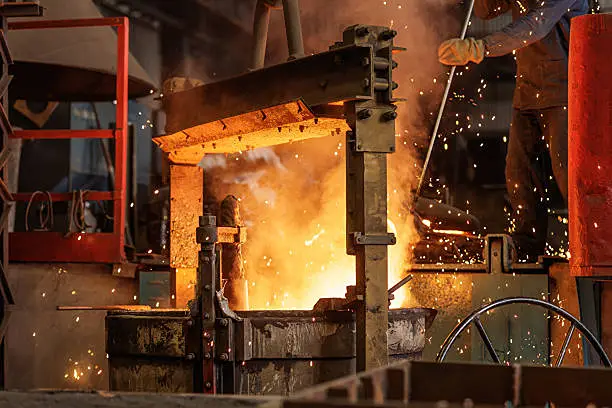
Material selection is never an isolated engineering decision. It determines your casting process parameters, mold design, heat treatment route, machining allowance, and ultimately the landed cost of every part. A foundry that routinely casts carbon steel to CT5–CT7 tolerances may struggle to deliver the same part in stainless steel to CT4–CT6 — not because of a lack of skill, but because the materials behave fundamentally differently in the mold. Before you lock in a grade, understand what happens when molten metal meets the casting tree.
How Carbon Steel and Stainless Steel Behave in the Casting Process
The casting behavior of these two material families diverges on nearly every dimension that matters to a foundry engineer:
| Casting Parameter | Carbon Steel (WCB/1020) | Stainless Steel (304/316) |
|---|---|---|
| Pouring temperature | ~1,560°C | ~1,600–1,620°C |
| Linear shrinkage | 2.0–2.4% | 2.4–2.8% (austenitic) |
| Mold shell face coat | Quartz flour sufficient | Zircon flour required (refractory >1,800°C) |
| As-cast surface finish | Ra 6.3–12.5 µm | Ra 3.2–6.3 µm |
| Achievable tolerance (silica sol) | CT5–CT7 | CT4–CT6 |
| Common casting defects | Gas porosity, shrinkage cavities | Hot tearing, oxide inclusions |
| Heat treatment required | Normalizing or annealing | Solution annealing (1,040–1,120°C) + water quench |
The higher pouring temperature of stainless steel — roughly 60°C hotter than carbon steel — demands more from the ceramic shell. Where carbon steel can work with a quartz flour face coat (refractory rating ~1,700°C), stainless steel typically requires zircon flour (rated above 1,800°C) to prevent mold-metal reaction and surface defects. This is one reason stainless steel castings carry a meaningful cost premium beyond raw material price: the consumables are more expensive, and the process window is narrower.
Stainless steel holds an edge on as-cast quality. Its higher fluidity at pouring temperature lets it fill thinner sections and capture finer surface detail. That’s why silica sol investment casting routinely achieves CT4–CT6 tolerances and Ra 3.2 µm surface finish on stainless parts straight from the mold. Carbon steel, with its lower pouring temperature and higher viscosity, typically lands at Ra 6.3–12.5 µm and CT5–CT7 in the same process. For components where as-cast surface appearance matters — visible-grade pump housings, architectural fittings, food-processing equipment — stainless steel delivers without secondary finishing.
What This Means for Your Sourcing Decision
When you’re ready to send an RFQ, the right questions make all the difference. Asking a foundry “can you cast stainless steel?” will almost always get a “yes.” The better question is: “How many tons of 304/316 stainless did you pour last year, and can you share a typical as-cast surface finish result from a recent job?” Volume tells you whether this is core business or a side offering.
If your application tolerates carbon steel — dry environment, no food contact, routine maintenance acceptable — specifying WCB or 1020 in a silica sol investment casting process can reduce your per-part cost by 30–50% compared to the equivalent CF8 or CF8M stainless casting. The savings come from three directions: cheaper material, faster shell building, and lower energy input.
But there’s an often-overlooked factor: supplier integration. When your casting foundry also handles heat treatment, CNC machining, and surface finishing in-house, you eliminate the coordination gaps where delays and finger-pointing live. For example, a fully integrated precision casting operation — with automated shell-making lines capable of completing 6–7 ceramic layers in 36 hours instead of the week-long manual cycle, supported by in-house CNC machining centers and multiple surface finishing options — can compress total lead time by 15–25% compared to coordinating across three or four separate vendors. Companies like Ningbo Besser Casting, with 200+ material grades developed and a one-stop workflow spanning casting, heat treatment, machining, and 16 types of surface finishing under one roof, have demonstrated this integration model at scale across 4,800+ part designs for customers in over 12 countries.
Regardless of which supplier you choose, insist on a first-article inspection with full dimensional reporting before signing off on production tooling. Different materials shrink and warp differently during solidification and heat treatment, and even experienced foundries need at least one production-representative trial to dial in the process for a new part number. A 3–5 day FAI cycle at the start can prevent a 12-week rework loop later.
Making the Right Choice — A Decision Framework
By now, one thing should be clear: there is no universal “better” steel. There is only the steel that matches your application’s specific demands. The table below distills everything we’ve covered into a decision shortcut:
| Your Primary Concern | Recommended Direction | Why |
|---|---|---|
| Corrosion resistance | Stainless steel (304 or 316) | Self-healing chromium oxide layer — no coatings needed |
| Maximum strength or hardness | High-carbon steel or 440C stainless | Carbon steel wins on raw strength; 440C adds corrosion resistance at tool-steel hardness |
| Lowest initial cost | Carbon steel + protective coating | Material cost 60–80% lower; coating bridges the corrosion gap in mild environments |
| High-temperature service (>500°C) | Stainless steel (304 or 310) | Carbon steel scales and loses strength above 425°C |
| Cryogenic / sub-zero service | Stainless steel (304L or 316L) | Carbon steel turns brittle below -29°C |
| Casting precision + one-stop delivery | Consult an experienced investment casting foundry | Silica sol process achieves CT4–CT6 on stainless, CT5–CT7 on carbon; integrated casting + machining + finishing shortens lead times |
The most expensive mistake in material selection isn’t choosing the wrong steel. It’s choosing without understanding your real operating conditions. Before you commit to a grade, define your environment: temperature range, chemical exposure, mechanical loads, and regulatory requirements. Then find a manufacturing partner who can execute that material to the tolerance and surface finish your design demands. The right foundry will tell you not just what they can cast, but what they’d recommend based on what they’ve seen work — and fail — across thousands of similar applications.
References
- ASTM International. “ASTM A216/A216M: Standard Specification for Steel Castings, Carbon, Suitable for Fusion Welding, for High-Temperature Service.” astm.org.
- ASTM International. “ASTM A351/A351M: Standard Specification for Castings, Austenitic, for Pressure-Containing Parts.” astm.org.
- ASTM International. “ASTM B117: Standard Practice for Operating Salt Spray (Fog) Apparatus.” astm.org.
- International Organization for Standardization. “ISO 8062-3:2023: Geometrical Product Specifications—Dimensional and Geometrical Tolerances for Moulded Parts.” iso.org.
- Steel Founders’ Society of America. Steel Castings Handbook, Supplement 8: High Alloy Data Sheets—Corrosion Series. sfsa.org.
 English
  Japanese
  German
  Italian