
What Is Silica Sol Investment Casting?
If your company sources precision metal components — whether for automotive assemblies, pump bodies, or marine hardware — you have probably heard the term “silica sol casting” attached to premium quotes and tighter tolerance promises. Beneath the jargon, it is a straightforward process with a clear value proposition.
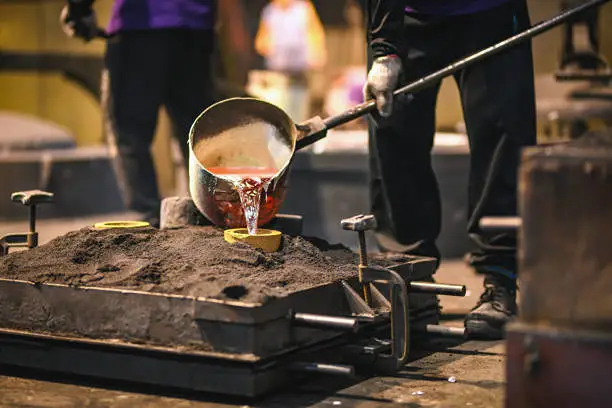
Silica sol investment casting uses colloidal silica — a suspension of nano-scale silicon dioxide particles in water — as the binding agent to build ceramic shell molds around wax patterns. It is the highest-precision variant of the lost-wax casting family, capable of producing parts with surface finishes and dimensional accuracy that sand casting and even water glass investment casting cannot match.
The process follows six core steps. First, a wax pattern of the desired part is injection-molded and attached to a central gating system, forming what foundry engineers call a “pattern tree.” Second comes shell building: the tree is dipped into a silica sol slurry mixed with fine refractory powder, then stuccoed with refractory sand. This dip-and-stucco cycle repeats six to eight times, with each layer dried under controlled temperature and humidity before the next is applied. The silica sol binder works through a physical mechanism — as water evaporates, the nano-silica particles pack together into a dense, crack-resistant network — unlike the chemical hardening used in older processes.
Third, the dried shell is flash-fired to melt out the wax (dewaxing). Fourth, the empty shell is sintered at 650–980 °C to develop full ceramic strength. Fifth, molten metal is poured into the preheated cavity. Finally, after solidification, the ceramic shell is broken away and the cast parts are cut from the tree for finishing.
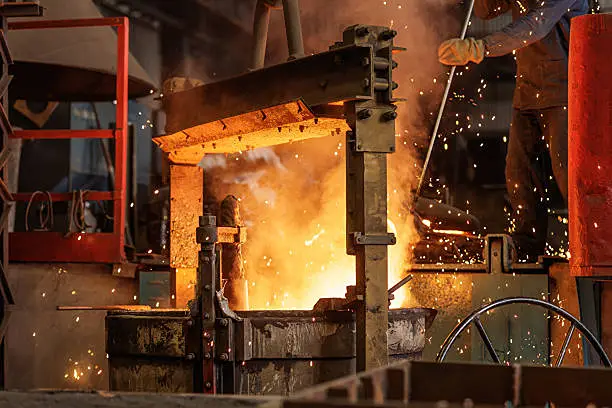
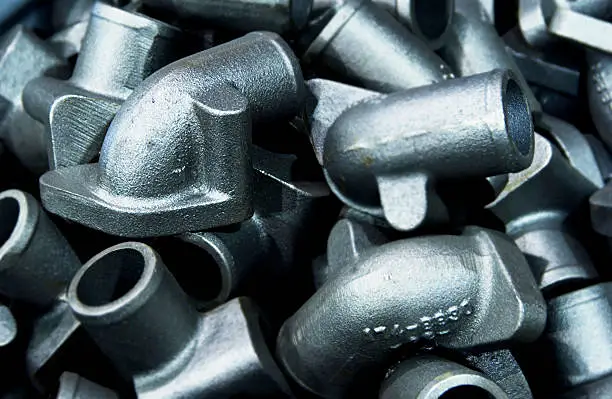
The entire process builds toward one outcome: a metal part that emerges from the mold with surfaces smooth enough for direct use and dimensions tight enough to eliminate secondary machining on critical features. This is why silica sol casting serves industries where “good enough” isn’t — aerospace turbine components, surgical instruments, automotive safety parts, and marine hardware exposed to corrosive environments.
Silica Sol vs Water Glass Casting: How They Compare
Every engineer evaluating investment casting eventually faces the same question: silica sol or water glass? Both are lost-wax processes, but the binder choice creates a cascade of downstream differences in quality, cost, and application fit.
| Factor | Silica Sol | Water Glass |
|---|---|---|
| Binder | Colloidal silica (SiO₂ suspension) | Sodium silicate (Na₂SiO₃) |
| Shell hardening | Physical drying (evaporation) | Chemical (CO₂ or NH₄Cl cure) |
| Surface finish (Ra) | 1.6–3.2 μm | 6.3–12.5 μm |
| Dimensional tolerance | CT4–CT6 (ISO 8062) | CT7–CT9 (ISO 8062) |
| Minimum wall thickness | 0.6–1.0 mm | ≥3 mm |
| Dewaxing method | Flash-fire | High-temperature water/steam |
| Material cost per kg | Higher (~20–30% above water glass) | Lower |
| Best for | Stainless steels, nickel alloys, thin-walled complex parts | Carbon steels, large structural parts |
The table tells the technical story, but the procurement reality is more nuanced. Choose silica sol when your part demands tolerances tighter than CT6, when the as-cast surface must be Ra 3.2 μm or better without post-machining, or when you are working with stainless steel, duplex, or nickel-based alloys that demand a high-refractoriness shell. Choose water glass when your part is carbon steel, over 5 kg, and most critical surfaces will be CNC-machined anyway.
There is also a middle path: the composite shell process. Some foundries apply a silica sol prime coat (for surface quality) followed by water glass backup layers (for cost savings). The result lands somewhere between the two — better surface finish than pure water glass at a price closer to it. But know this: a composite shell is never quite as good as a full silica sol shell on the tightest tolerance features, because the water glass backup layers are more prone to thermal distortion during pouring.
Think of silica sol as the precision instrument: you pay more upfront for what you save in downstream processing. Water glass is the workhorse — buy it cheap, but budget for the machining and finishing you will need afterward. The total cost of ownership, not the per-kilogram quote, should drive the final choice.
Surface Finish, Tolerances & Material Range
Silica sol casting delivers on three engineering promises: smooth surfaces, tight dimensions, and broad material compatibility. But each promise has a boundary condition — the process is capable, not magical. Understanding where those boundaries sit is the difference between a part that works on arrival and one that needs rework.
Surface Finish: What “As-Cast” Really Means
The as-cast surface of a silica sol part typically measures Ra 1.6–3.2 μm — comparable to a fine machined finish and dramatically smoother than the Ra 6.3–12.5 μm typical of water glass castings. In practical terms, Ra 3.2 μm means a surface that feels smooth to the touch, requires no grinding for most mechanical applications, and can serve as a visible external surface on consumer or industrial equipment.
This quality traces directly to the prime coat. The first dip uses zircon flour (325–400 mesh) suspended in silica sol, not quartz sand. Zircon’s thermal expansion coefficient is roughly one-third that of quartz, meaning the shell does not micro-crack as the molten metal hits it. Zircon is also chemically less reactive with molten steel — fewer surface inclusions, fewer pits. The trade-off: zircon flour costs substantially more than quartz, and it is only used where the surface truly matters. The backup layers switch to coarser, cheaper refractories like mullite because they only need to provide shell strength, not surface quality.
Only about 5% of Chinese investment casting factories can reliably produce cast surfaces that need zero cosmetic finishing. It demands tight control over every dip cycle, drying interval, and humidity parameter in the shell room — not a one-time setup, but a discipline maintained across every shift.
Dimensional Accuracy: Understanding CT4–CT6 Tolerances
ISO 8062 classifies casting dimensional tolerances from CT1 (tightest) to CT16 (loosest). Silica sol investment casting consistently achieves CT4–CT6. On a 25 mm dimension, CT6 translates to approximately ±0.1 mm. Key assembly features can be held to CT4–CT5 (around ±0.05 mm at the same size), matching what many designers expect from rough machining.
The limiting variable is not the shell — it is the wax. Wax shrinks as it cools after injection, and different geometries shrink at different rates. The foundry’s mold designer compensates by building “reverse distortion” into the die cavity. If the wax shrinkage rate can be held within 0.1% (which requires precise injection temperature control, consistent wax formulation, and ambient stability), CT4 becomes achievable on critical features. If not, the part drifts toward CT6 or worse.
Experienced buyers know this and communicate accordingly: they specify CT4–CT5 only on the dimensions that genuinely need it — mating surfaces, bearing seats, seal grooves — and accept CT6 elsewhere. They also use go/no-go gauges rather than full CMM layouts for production QC, because a gauge is faster, cheaper, and directly answers the question that matters: “Will this part assemble correctly?”
Materials: From Carbon Steel to Nickel Superalloys
Silica sol casting handles one of the widest material ranges in metal forming. The standard portfolio spans five families:
| Material Family | Typical Grades | Common Applications |
|---|---|---|
| Stainless steels | 304, 316, 316L, duplex 2205 | Pump bodies, valve components, marine hardware, food equipment |
| Carbon & low-alloy steels | 1020, 1045, 4130, 4140, 8620 | Structural brackets, machinery components, automotive parts |
| Tool steels | H13, D2, M2 | Die components, wear parts, cutting tools |
| Nickel-based alloys | Inconel 625/718, Hastelloy C-276/X | Turbine components, chemical processing equipment, aerospace |
| Cobalt-based alloys | Stellite 6/21 | Wear-resistant surfaces, high-temperature applications |
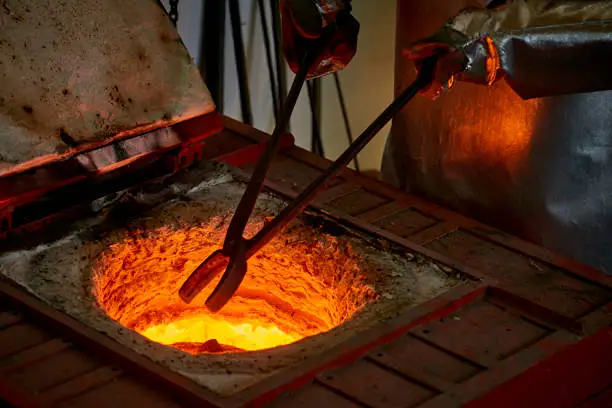
The material capability ceiling is set by the melting and pouring infrastructure. Standard atmospheric pouring handles the stainless and carbon steel families without issue. But nickel-based superalloys and certain tool steels demand vacuum casting — the entire melt and pour sequence happens in a vacuum chamber to prevent oxidation of reactive elements like aluminum and titanium in the alloy. Vacuum-capable foundries can pour Hastelloy C-276, Incoloy 901, and proprietary aerospace grades like K418 and IN657 — materials that simply cannot be cast to specification in open air. Vacuum casting also pushes the minimum wall thickness down to 0.5 mm, compared to 1.8–2.2 mm for non-vacuum, because the lower oxygen environment produces a cleaner metal flow with fewer inclusions to block thin sections.
The Real Cost of Silica Sol Casting
Ask most procurement teams what silica sol casting costs, and the answer starts and ends with “about 20–30% more per kilogram than water glass.” That number is correct. It is also misleading. The price difference on a quote line hides a much larger story about total cost of ownership — a story that, when fully told, often reverses the apparent economics.
Beyond the Binder Price: Understanding Cost Drivers
The per-kilogram premium has five main components. First, shell materials: silica sol binder, zircon flour, and zircon sand are imported materials in most markets — domestic alternatives exist but their particle size consistency and purity lag behind, forcing quality-focused foundries to use imported refractories. Shell materials alone account for 25–30% of total production cost in silica sol casting.
Second, shell building time: each of those six to eight layers requires controlled drying — typically three to four hours for the prime coat, two to three hours for each backup layer. A manual shell room takes roughly seven days to complete one tree. An automated shell line completes the same work in about 36 hours. These are multi-million-dollar robotic systems that control dip speed, withdrawal angle, stucco application, and drying environment with precision no manual line can match. The investment is enormous, but it reduces labor cost, improves consistency, and shrinks lead time. Fewer than 0.5% of investment casting foundries globally operate a fully automated shell line.
Third, tooling amortization: the wax injection die is a one-time cost, typically owned by the buyer. Spread across 5,000 units, the per-piece tooling cost is negligible; across 50 units, it dominates.
Fourth, post-casting processing: a part with Ra 3.2 μm as-cast surface and CT5 tolerances on key features may need zero additional machining. The same part cast in water glass at Ra 12.5 μm and CT8 will require CNC time on every mating surface. At $60–100/hour for precision machining, those savings compound quickly.
Fifth, scrap: roughly 70% of casting quality defects trace back to the shell-building stage — shell cracking during pouring, veining on surfaces, dimensional distortion from uneven drying. A well-run silica sol shell room with automated climate control produces fewer of these defects than a water glass line, especially on complex geometries.
When Paying More for Silica Sol Actually Saves Money
Consider a typical stainless steel valve body, roughly 2 kg finished weight, with two flange faces requiring flatness and a stem bore requiring concentricity. A water glass foundry quotes $5/kg ($10/part) but the rough surface demands 20 minutes of CNC time on the flange faces, the stem bore needs boring and honing, and the scrap rate on first-article runs is 12% because the shell distorted during pouring. Total cost per good part: approximately $10 + $22 (machining) + $1.50 (scrap amortization) = $33.50.
A silica sol foundry quotes $6.50/kg ($13/part). The flange faces are flat within tolerance as-cast. The stem bore needs only a light honing pass — 5 minutes of machine time. The scrap rate on first articles is 3% because automated shell drying eliminated the distortion variable. Total cost: $13 + $5.50 (light machining) + $0.40 (scrap) = $18.90. The “more expensive” casting is 44% cheaper in total.
This math holds for any part where tight tolerances or smooth surfaces currently consume machining hours. It breaks down on large, simple carbon steel parts where the as-cast surface barely matters because everything gets machined anyway. The procurement strategy, then, is not “always buy silica sol” or “always buy water glass” — it is “calculate TCO per part family and assign the process accordingly.”
How to Evaluate a Silica Sol Casting Foundry
Finding a foundry that lists “silica sol casting” on its website is easy — there are hundreds in Zhejiang and Shandong alone. Finding one that consistently delivers CT5 tolerances, Ra 3.2 μm surfaces, and on-time shipments across production runs is a different exercise entirely. The difference lies in three evaluation dimensions: technical capability, quality systems, and operational maturity.
Technical Capability: More Than a Certificate on the Wall
A foundry’s technical depth reveals itself in its equipment list — not the marketing version, but the audit version. Five items separate serious operations from the rest.
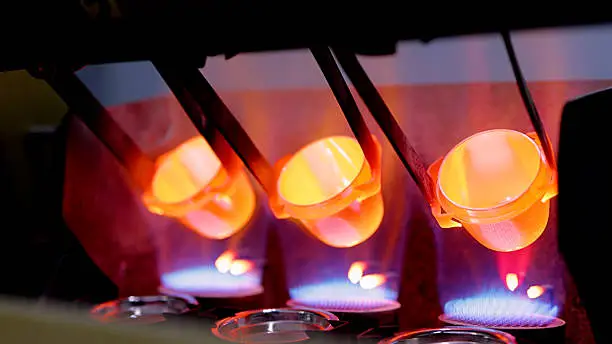
First, the shell room. Ask directly: is shell building manual or automated? A manual line can produce good parts, but consistency varies with operator fatigue, shift changes, and humidity swings. An automated line controls every parameter — dip speed, dwell time, stucco distribution, drying temperature, and humidity — identically across every tree, every shift. If a foundry invested in automation, they will be eager to show it. If they change the subject, they probably have not.
Second, chemistry control. A German SPECTRO spectrometer in the lab means the foundry can verify alloy composition before pouring — not after, when the part is already cast and the heat is wasted. Pre-furnace alloy blending (mixing base metal with alloying elements to specification before the melt) combined with post-blend spectrometry is the gold standard. In-furnace alloy adjustment, where elements are tossed into the melt and hoped to distribute evenly, is the budget approach.
Third, dimensional verification. A Hexagon CMM on-site means the foundry can measure complex geometries in three dimensions and generate inspection reports per batch. If they outsource dimensional inspection to a third-party lab, you have found a bottleneck — every batch waits for an external schedule, and if the lab finds an issue, communication lag costs days.
Fourth, casting simulation. Software like ProCAST or MAGMASOFT allows the foundry to model metal flow, solidification, and potential defect locations before cutting a mold. A foundry that simulates first and pours second avoids the trial-and-error loop that burns tooling budget and delays samples. Foundries with 4,500+ products developed and 400+ new projects per year typically have this capability embedded in their workflow — they cannot sustain that volume without it.
Fifth, vacuum capability. If your part requires nickel or cobalt alloys — Hastelloy, Inconel, Stellite — confirm the foundry has in-house vacuum casting. Sending these materials to a third party for vacuum pouring breaks process continuity and quality traceability.
Quality Systems: What Certifications Actually Mean
Certifications are not decorations. Each one addresses a specific risk in the supply chain. ISO 9001 is the baseline — it says the foundry has documented procedures and follows them, but it does not guarantee automotive-grade traceability or pressure equipment safety. IATF 16949 goes further: it requires production part approval process (PPAP) documentation, failure mode and effects analysis (FMEA) for every process step, statistical process control (SPC) data, and full batch-level material traceability. If your parts go into a vehicle, IATF 16949 should be non-negotiable.
PED (Pressure Equipment Directive 2014/68/EU) and AD 2000 are European pressure vessel certifications. They matter for valve bodies, pump housings, and any casting that holds pressurized fluid in service. Without PED, a foundry cannot legally supply pressure-containing parts to the EU market.
ISO 14001 (environmental management) and ISO 45001 (occupational health and safety) are less about the part and more about the factory’s long-term survival. In China, casting is classified as a high-pollution industry. The government has effectively frozen environmental permits for new foundries and is progressively revoking permits from existing ones that fail upgraded standards. During periods of power rationing, factories are tiered A through D based on their environmental and economic performance — A-grade factories receive uninterrupted power, while D-grade factories may receive as little as two days of electricity per week. A foundry with valid ISO 14001 and a high government tier rating is a foundry that will still be operating when your next purchase order lands.
To illustrate: a foundry holding IATF 16949:2016, ISO 9001:2015, ISO 14001:2015, and ISO 45001:2018 — a full certification stack — demonstrates not just quality capability but supply chain reliability. A growing number of industrial buyers now verify this directly by reviewing a foundry’s quality certifications page before even sending an RFQ. When you find a supplier whose factory profile confirms this full certification stack alongside two decades of operation, you are looking at a partner whose production continuity is backed by regulatory standing, not luck.
Operational Maturity: The Things RFQs Can’t Tell You
The sharpest procurement teams supplement technical audits with operational signals that no certification covers. Lead time is the most obvious: standard silica sol delivery runs 30–50 days from order confirmation to shipment, with samples at 25–35 days. But the real question is what happens when your customer moves up a deadline and you need parts in 25 days instead of 45. Foundries with automated shell lines can compress their internal cycle because the shell room — typically the longest bottleneck — runs at roughly one-fifth the manual time. Ask for a specific example of a rush order the foundry fulfilled and what they changed internally to accommodate it.
English capability matters more than it seems. A foundry that can put a process engineer directly on a video call with your design team eliminates the triangulation through a sales agent or trading company — and the 15–30% margin and information distortion that come with it. Direct factory communication means the person answering your technical question is the person who will oversee production of your parts.
Finally, the response to a quality issue reveals more than the absence of issues ever could. Ask for a documented case of a quality problem and what the foundry did about it. A credible answer includes root cause analysis, corrective action, and compensation for the customer’s losses — not a deflection. A foundry that has handled a 90,000-piece quality incident by replacing the entire lot at its own cost while simultaneously fixing the root cause has demonstrated the resilience you want in a long-term manufacturing partner.
Quality Certifications & Environmental Responsibility
Quality and environmental compliance are often managed as separate functions — by different departments, with different audits and different metrics. In casting, they converge on a single question: will this foundry still be qualified, permitted, and operational when I need my next production run?
The Certification Stack: What Each Standard Guards Against
Think of certifications as a defense-in-depth system, each layer protecting against a different failure mode. ISO 9001 guards against process drift — the gradual deviation from defined procedures that produces inconsistent parts. IATF 16949 guards against traceability failures — the nightmare scenario where a defective batch reaches the assembly line and nobody can identify which heat, which shift, or which process step caused it. PED and AD 2000 guard against catastrophic pressure boundary failures — burst valve bodies and ruptured pump housings. ROHS and REACH guard against regulatory non-compliance in European markets — 248 substances restricted under REACH, 10 under ROHS, and the list grows each year. ISO 14001 guards against environmental shutdown — the government inspection that finds unpermitted emissions and padlocks the gate. ISO 45001 guards against workplace safety incidents that halt production and trigger liability.
A buyer evaluating a new foundry should map their own risk profile onto this stack. An automotive OEM needs IATF 16949. A pump manufacturer shipping to Germany needs PED. Any company with ESG commitments or European customers needs REACH compliance. And anyone who values production continuity should verify the factory’s environmental standing in its local regulatory framework — because in an industry where governments are actively shrinking the pool of permitted foundries, a missing environmental certification is not a paperwork gap. It is a future supply interruption waiting to happen.
Why Environmental Compliance Is a Hidden Supply Chain Risk
Here is a reality that most sourcing guides overlook: casting is one of the most environmentally regulated manufacturing sectors in China, and the regulatory pressure is increasing, not easing. The government has adopted a dual strategy — freeze new permits while progressively revoking existing ones from facilities that fail upgraded emissions and waste treatment standards. During periods of peak electricity demand, factories are assigned tiers based on their environmental and economic performance. A-grade factories receive continuous power. B-grade get five days per week. C-grade get four. D-grade get two. The tier assignment is not negotiable and not appealable in the short term.
Silica sol casting carries an inherent environmental advantage in this regulatory climate. The water glass process relies on chemical hardening agents — typically ammonium chloride or aluminum chloride — that produce acid mist during shell curing and leave chloride salt residue in wastewater. Silica sol, by contrast, hardens through physical water evaporation. No chemical curing agents, no acid mist, no chloride discharge. A silica sol foundry with ISO 14001 certification operates at a fundamentally lower environmental risk profile than a water glass foundry with the same certificate, because the process itself generates fewer regulated emissions.
For procurement teams managing multi-year supplier relationships, this is worth factoring into the sourcing decision. A foundry that passes today’s environmental audit but uses a chemically hardened process may not pass tomorrow’s tighter standards. A silica sol foundry with demonstrated ISO 14001 compliance and a high government environmental tier rating is positioned to remain operational and permitted through the next regulatory cycle. In a supply market where foundry closures are accelerating, that continuity is worth more than a few percentage points on the unit price.
References
- ISO 8062-3:2007. “Geometrical product specifications (GPS) — Dimensional and geometrical tolerances for moulded parts.” International Organization for Standardization. iso.org.
- Investment Casting Institute. “Investment Casting Process Overview.” investmentcasting.org.
- Campbell, John. Complete Casting Handbook: Metal Casting Processes, Metallurgy, Techniques and Design. 2nd Edition, Elsevier/Butterworth-Heinemann, 2015. sciencedirect.com.
 English
  Japanese
  German
  Italian