
What Makes Gate Valves and Ball Valves Different
At first glance, a gate valve and a ball valve serve the same purpose: they stop flow. But the way each one does it reflects a fundamentally different design philosophy, and that philosophy shapes everything from how fast the valve closes to how much it costs to maintain over a decade of service.
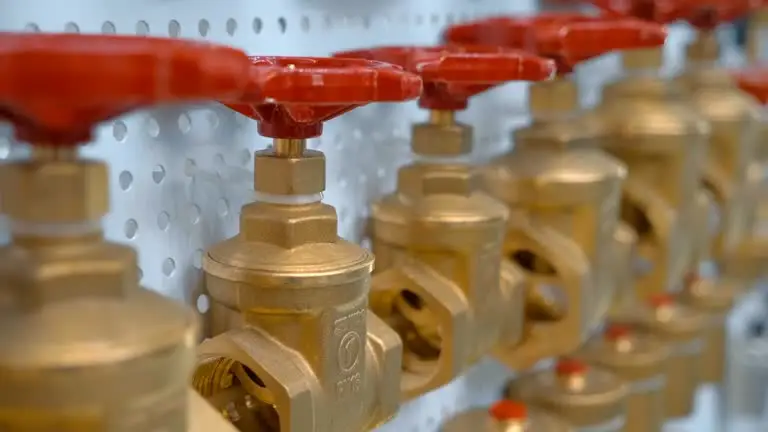
A gate valve uses a flat wedge-shaped disc — the “gate” — that slides up and down perpendicular to the flow path. When fully open, the gate retracts completely into the bonnet, leaving an unobstructed straight-line passage for the fluid. It belongs to the linear-motion valve family, alongside globe valves and knife gate valves.
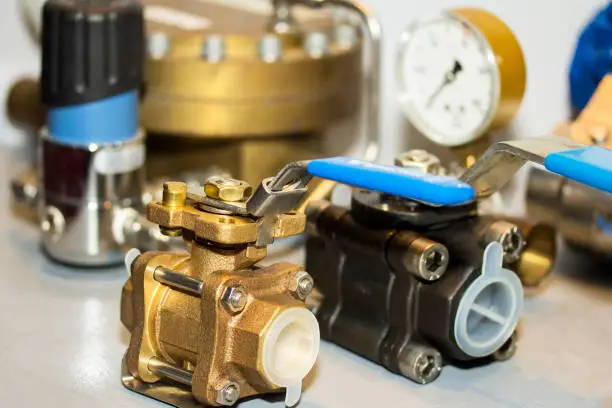
A ball valve works differently. Inside the body, a hollow metal ball with a bore drilled through it rotates 90 degrees. Turn the handle a quarter-turn, and the bore aligns with the pipe; flow passes straight through. Turn it back, and the solid wall of the ball blocks the path completely. Ball valves belong to the quarter-turn family, sharing their DNA with butterfly valves and plug valves.
Think of it this way: a gate valve is like a sliding door. When it’s open, the door disappears entirely, but opening and closing it takes effort. A ball valve is like a revolving door — fast to pass through, but the frame is always there. Neither design is better in the abstract. The question is which one matches what you’re asking your piping system to do.
Performance Comparison: Where Each Valve Wins
Before comparing numbers, it helps to have a mental framework. An isolation valve can be judged on five dimensions: sealing tightness, flow resistance when fully open, operating speed, maintenance burden, and how it fails when something goes wrong.
Sealing, Flow, and Pressure Drop — The Static Performance Picture
When both valves are in their normal positions — fully open or fully closed — the differences are clear and measurable.
| Dimension | Gate Valve | Ball Valve |
|---|---|---|
| Sealing Class | Class IV–V (metal-to-metal) per ANSI/FCI 70-2 | Class VI (soft seat, “bubble-tight”) per ANSI/FCI 70-2 |
| Full-Open Flow Resistance | Unobstructed straight path; extremely low ΔP | Full-bore design; very low ΔP; reduced-bore imposes slight restriction |
| Throttling Capability | Not recommended; causes wire-drawing and seat erosion | Not recommended; partial opening damages soft seats |
| Bidirectional Sealing | Inherent (symmetrical wedge design) | Depends on design; trunnion-mounted ball valves are bidirectional |
| Fire Safety | Inherently fire-safe (all-metal construction) | Requires API 607 fire-safe certification |
The sealing contrast is the most consequential difference. A gate valve seals by forcing a metal wedge against metal seats. At best, it achieves Class IV or V leakage (0.01% of rated flow capacity, or 0.0005 mL per minute per inch of port diameter per psi differential, per the ANSI/FCI 70-2 standard). A ball valve with PTFE or similar soft seats achieves Class VI: so close to zero that leakage is measured in bubbles per minute rather than milliliters (ANSI/FCI 70-2-2006).
This isn’t because ball valves are better engineered. PTFE can micro-deform into the microscopic grooves on the metal ball surface, creating a gapless seal. Metal-to-metal seats, no matter how precisely ground, cannot do this.
On flow, the story flips. A fully open gate valve has no internal obstruction; the gate retracts completely. A full-bore ball valve comes close, but the ball’s bore is always slightly narrower than the pipe’s full cross-section, and the ball body itself occupies space inside the valve cavity. For most applications, the difference is negligible. But for long-distance transmission pipelines where every psi of pressure drop translates into real pumping energy costs, gate valves hold a measurable edge.
| Feature | Gate Valve | Ball Valve |
|---|---|---|
| Operation | Multi-turn handwheel | Quarter-turn (90°) |
| Mechanism | Rising/falling wedge gate | Rotating bored ball |
| Seal Type | Metal-to-metal (Class IV–V) | Soft seat (Class VI, bubble-tight) |
| Flow Path (Full Open) | Unobstructed straight-through | Full or reduced bore |
| Best Use | Infrequent isolation, large diameter, high temp | Frequent operation, tight shut-off, automation |
Actuation Speed, Maintenance, and Real-World Reliability
The static numbers tell half the story. The other half is how the valve behaves over time and under actual operating conditions.
A ball valve opens or closes in roughly one second: a single 90-degree wrist turn. A gate valve requires anywhere from 15 to 30 seconds of continuous handwheel spinning, depending on size. This speed difference creates a cascade of practical consequences.
Actuation cost. If you’re automating the valve, a rotary actuator for a ball valve is smaller, simpler, and typically 30–50% cheaper than the multi-turn actuator a gate valve needs. For a plant with hundreds of automated valves, this difference alone can swing a capital budget by tens of thousands of dollars.
In-line maintenance. A three-piece ball valve allows you to unbolt the body, swing out the center section, and replace the seats and seals without cutting the valve out of the pipeline. The whole job can take under an hour. A gate valve typically requires removal from the line for any seat or wedge repair. The maintenance team notices this difference every time.
Water hammer. The fast closure that makes ball valves convenient also creates risk. In liquid-filled lines, slamming a ball valve shut can generate pressure surges 4 to 10 times the normal operating pressure — enough to rupture pipe or damage equipment. Gate valves, by their slow multi-turn nature, dissipate this surge naturally. This isn’t a design flaw; it’s a system integration consideration that too many spec sheets ignore.
Failure mode. Gate valves most commonly fail through stem packing leaks or seat wire-drawing: grooves carved into the seat by high-velocity flow when the valve is used partially open. Ball valves tend to fail through seat wear or, in high-cycle applications, stem seal fatigue. Neither is immune to problems, but the problems are different. Knowing which one your application is more vulnerable to helps you plan maintenance budgets realistically.
Matching Valves to Real-World Applications
Here is the framework that most comparison articles skip: the right valve depends on what’s flowing through the pipe, at what temperature and pressure, and what happens if it leaks. Work through these factors in that order, and the choice usually becomes clear.
Water, HVAC, and General Industrial Service
For the broadest category of applications — water distribution, HVAC systems, cooling water, low-pressure industrial fluids — the decision often comes down to duty cycle.
Branch lines that get isolated frequently for maintenance or process changes benefit from ball valves. The quarter-turn speed, reliable shut-off, and low maintenance make them the default choice for pipe sizes up to about 12 inches.
Main headers and transmission lines that stay open for months or years are where gate valves still make sense, especially above DN300 (12 inches). At 16 inches and above, a gate valve can cost 40–60% less than an equivalent ball valve and weigh about 30% less. For a municipal water main that gets operated twice a year, the cost difference is hard to justify in the other direction.
One nuance worth noting: in this size range, butterfly valves are also a strong competitor. If you’re specifying above DN400, compare all three options rather than defaulting to a gate-vs-ball binary.
Steam, High-Temperature, and High-Pressure Systems
Steam is where many ball valves hit their ceiling. Standard PTFE seats begin to soften around 200°C (392°F). At 220°C saturated steam, the seat can deform enough to cause leakage within months. PEEK seats buy you another 60 degrees or so — up to about 260°C — but at a significant price premium. Metal-seated ball valves exist and can handle 500°C or more, but their leakage rate degrades to Class IV, erasing the ball valve’s main advantage.
Gate valves, with their all-metal construction, handle high temperature natively. A standard WCB cast carbon steel gate valve operates comfortably from -29°C to 425°C. A CF8M stainless steel body extends that to 538°C. For steam isolation in power plants, refineries, and district heating systems, gate valves remain the default. Not out of tradition, but because the physics of soft-seat materials hasn’t changed.
There is an exception: if your steam system requires frequent cycling, a metal-seated ball valve may be worth the premium. The maintenance savings from avoiding gate valve stem packing replacements can offset the higher upfront cost over 3–5 years. But if the valve stays open except during annual shutdowns, the gate valve is almost certainly the better economic choice.
Natural Gas, Chemicals, and Hazardous Fluids
When the consequence of leakage is a safety incident, environmental violation, or production shutdown, the decision framework flips. Zero visible leakage becomes the first priority, and everything else — cost, speed, maintenance convenience — becomes secondary.
This is ball valve territory. The bubble-tight Class VI seal, combined with API 607 fire-safe certification (which ensures the valve maintains an acceptable leak rate even after exposure to fire), makes ball valves the industry standard for natural gas isolation, chemical feed lines, and emergency shutdown systems. The quarter-turn speed is not just convenient here; it’s a safety feature. An ESD valve that takes 20 seconds to close versus 1 second is the difference between a controlled shutdown and an incident report.
For corrosive chemicals, ball valves offer another advantage: material flexibility. The body can be lined with PFA for strong acid service up to about 200°C. The ball and stem can be made from Hastelloy, duplex stainless, or titanium. Gate valves can be built from these materials too, but the design complexity and cost increase faster than for ball valves.
The one exception worth noting: dirty gases containing particulates, such as raw syngas or unpurified biogas. In these services, particulates can pack into the ball valve body cavity and interfere with seal movement. A through-conduit gate valve, where the gate scrapes the seats clean with every stroke, can actually be more reliable. This is a niche case, but in the industries where it applies, it’s the difference between a valve that works and one that seizes.
The Hidden Variable — Why Casting Quality Matters in Valve Performance
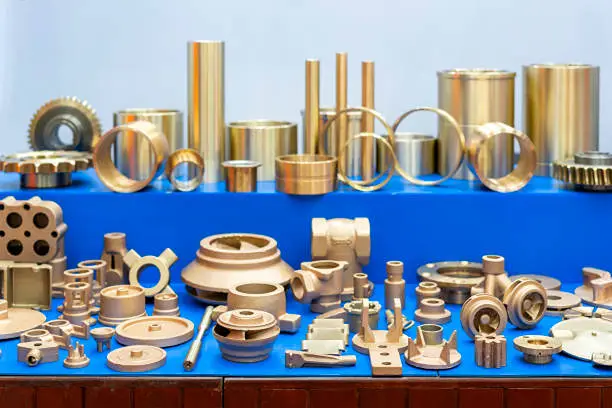
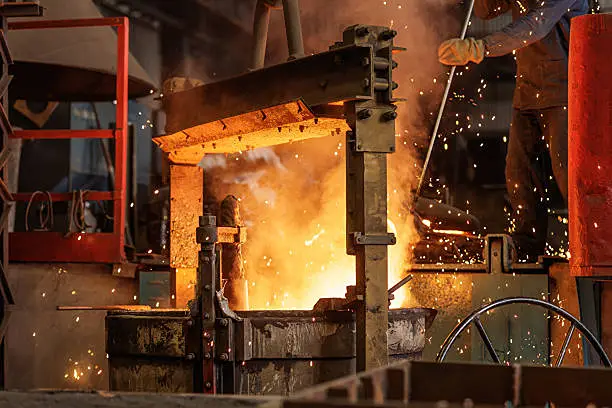
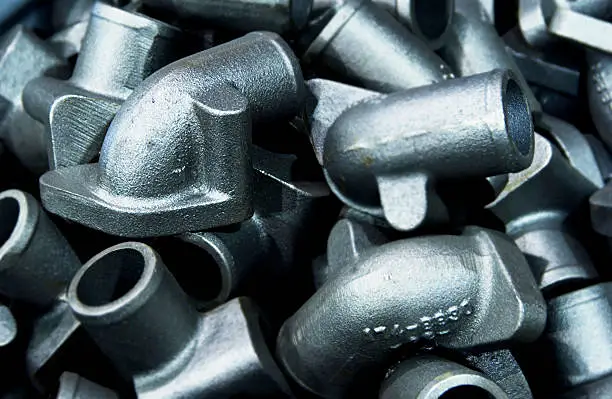
Here is something no other gate-valve-vs-ball-valve comparison will tell you: roughly 80% of a valve’s performance is determined by its design — gate versus ball, seat material, port configuration. But the remaining 20%, the quality of the metal body itself, can destroy the other 80. A casting defect that survives inspection can hold pressure for three years and then crack on year four. When that happens, it doesn’t matter whether you chose a gate or a ball.
Sand Casting vs Investment Casting — Two Valve Bodies, Two Quality Levels
The manufacturing process behind a valve body creates quality differences that spec sheets reveal if you know what to look for.
| Dimension | Sand Casting | Investment Casting (Silica Sol) |
|---|---|---|
| Dimensional Tolerance (ISO 8062) | CT9–CT12 | CT4–CT6 |
| Surface Finish (Ra) | 12.5–25 μm | 3.2–6.3 μm |
| Minimum Wall Thickness | 5–6 mm | 1.5–2 mm |
| Internal Porosity | Higher (sand mold permeability limits) | Lower (ceramic shell, denser solidification) |
| Design Complexity | Simple geometries; added machining stock | Complex internal passages; near-net-shape |
| Typical Service | General industrial, low-pressure | High-pressure, critical service, fugitive emission control |
For a 100 mm bore dimension, a CT4 investment casting holds ±0.22 mm. That’s roughly seven times tighter than the ±1.6 mm of a typical CT10 sand casting (ISO 8062-3:2023). That precision translates directly into better seat alignment, more consistent sealing, and less reliance on gaskets to compensate for dimensional variation.
More importantly, the denser metal structure of an investment casting means fewer internal voids: the kind that can go undetected by a standard hydrostatic test but fail under thermal cycling or vibration. This is why API 6D and API 608 standards for critical-service ball and gate valves assume investment-cast or forged bodies, and why a growing number of end-users now specify the casting process alongside the valve type.
What to Look for in a Quality Valve Body — 5 Questions for Your Supplier
If you’re responsible for valve procurement or specification, add these five questions to your supplier evaluation checklist. Most buyers never ask them, and that’s exactly why you should.
- What casting process produces the valve body? Sand casting, investment casting, or forging? The answer tells you more about potential quality than any marketing brochure.
- What dimensional tolerance grade can the foundry hold? Ask for CT-grade per ISO 8062. CT4–CT6 is the benchmark for precision casting. If the supplier can’t quote a tolerance grade, that is itself an answer.
- Is every batch NDT-tested and accompanied by a Material Test Report (MTR)? An MTR should include the heat number, full chemical composition (verified by spectrometer), and mechanical properties (tensile, yield, elongation, impact). If you’re not getting this, you’re not getting traceability.
- What quality management certifications does the foundry hold? ISO 9001 is the baseline. IATF 16949, originally developed for the automotive supply chain, indicates a significantly higher level of process control, defect prevention, and continuous improvement discipline.
- Does the foundry handle machining and finishing in-house, or does it outsource? When casting, machining, and surface treatment happen under one roof, quality accountability is unambiguous. When they’re split across three suppliers, a defect discovered at final inspection becomes a blame game, and you’re the one waiting for parts.
These aren’t theoretical questions. Foundries that invest in silica sol investment casting lines, hold IATF 16949 certification, and offer in-house CNC machining with CMM dimensional reporting — like Ningbo Besser Casting, which has been producing precision valve body castings to CT4–CT6 tolerance since 2002 — represent a quality tier that standard commodity foundries cannot match. When your valve body carries a 300-psi pressure rating, the difference between “probably good enough” and “verifiably good” matters.
What Most Buyers Miss — The Real Cost of Ownership
Most gate-valve-vs-ball-valve articles end by noting that ball valves cost more upfront and gate valves cost more to maintain. That’s true but incomplete. Here is how to think about total cost of ownership in a way that actually helps you make a decision.
TCO for an isolation valve has four components: purchase price, installation cost, energy cost (pressure drop translating into pump work), and maintenance and downtime cost. The purchase price is the most visible but often the least significant.
A gate valve costs less to buy — sometimes half the price of an equivalent ball valve in larger sizes — but it costs more to install (heavier, needs more vertical clearance), and its maintenance burden is higher: stem packing replacements, potential seat regrinding, and the labor of removing the valve from the line to do any of this work.
A ball valve costs more upfront but typically requires less maintenance over its service life. Industry experience suggests that, in comparable service conditions, a ball valve’s mean time between failures is roughly 2–3 times that of a gate valve. The single biggest TCO variable, however, is downtime. If your process cannot afford an unplanned shutdown, the valve that fails less often wins, regardless of purchase price.
Here is a practical rule of thumb: if the valve cycles more than 50 times per year, the ball valve’s lower maintenance burden almost always produces lower TCO over a 5–10 year horizon. If the valve stays open except during annual shutdowns, the gate valve may deliver better lifetime economics. But in both cases, the quality of the casting behind the valve body shifts the baseline. A well-cast gate valve will outperform a poorly cast ball valve every time, and vice versa.
≥ 50 cycles/year → Ball valve wins on TCO.
Your Valve Selection Checklist — Making the Final Call
You have walked through performance data, application-specific guidance, and the hidden variables most buyers never consider. Here is the seven-question checklist that turns all of that into a decision.
- What is the media? Water? Steam? Natural gas? Corrosive chemical? Slurry? The media determines the sealing requirement and material compatibility before anything else.
- What are the operating temperature and pressure? If temperature exceeds 200°C, cross standard PTFE-seated ball valves off your list unless you’re budgeting for metal or PEEK seats.
- How often will this valve be operated? Frequent cycling favors ball valves. Long-open, rare-operation service keeps gate valves in contention.
- What happens if it leaks? Safety hazard, environmental release, or production loss? If any of these apply, the decision tilts toward the bubble-tight seal of a ball valve.
- Will this valve be automated? If yes, factor in actuator cost. Rotary actuators for ball valves are simpler and cheaper.
- What is the pipe size? Above DN300 (12 inches), gate valves become significantly more economical. Above DN400, also evaluate butterfly valves.
- Do you know the casting process behind the valve body? Investment casting produces tighter tolerances, denser metal, and fewer internal defects than sand casting. For critical service, specify the casting process, not just the valve type.
If you can answer all seven questions, you will know whether a gate valve or a ball valve is right for your application. More importantly, you will know what to look for in the valve you choose, because the nameplate on the outside means far less than the quality of the metal inside. When you need valve body castings manufactured to CT4–CT6 tolerance with full material traceability, partnering with a certified investment casting foundry ensures your specifications are met before the valve ever enters service. A foundry with IATF 16949 certification, in-house CNC machining, and two decades of valve-component casting experience brings a level of quality assurance that commodity suppliers simply cannot replicate.
Partner with a certified investment casting foundry. IATF 16949, ISO 9001, CT4–CT6 tolerance, full MTR traceability.
 English
  Japanese
  German
  Italian