
Introduction
In the rigorous domain of metallurgy and industrial production, the stainless steel casting process represents a sophisticated synthesis of ancient principles and modern material science. Selecting the optimal fabrication route is not merely a technical preference but a strategic decision that dictates the economic viability and functional integrity of the final component. This guide provides a comprehensive analytical framework for understanding the mechanisms, material behaviors, and sourcing criteria essential for high-performance stainless steel casting.
Overview of Stainless Steel Casting in Modern Engineering
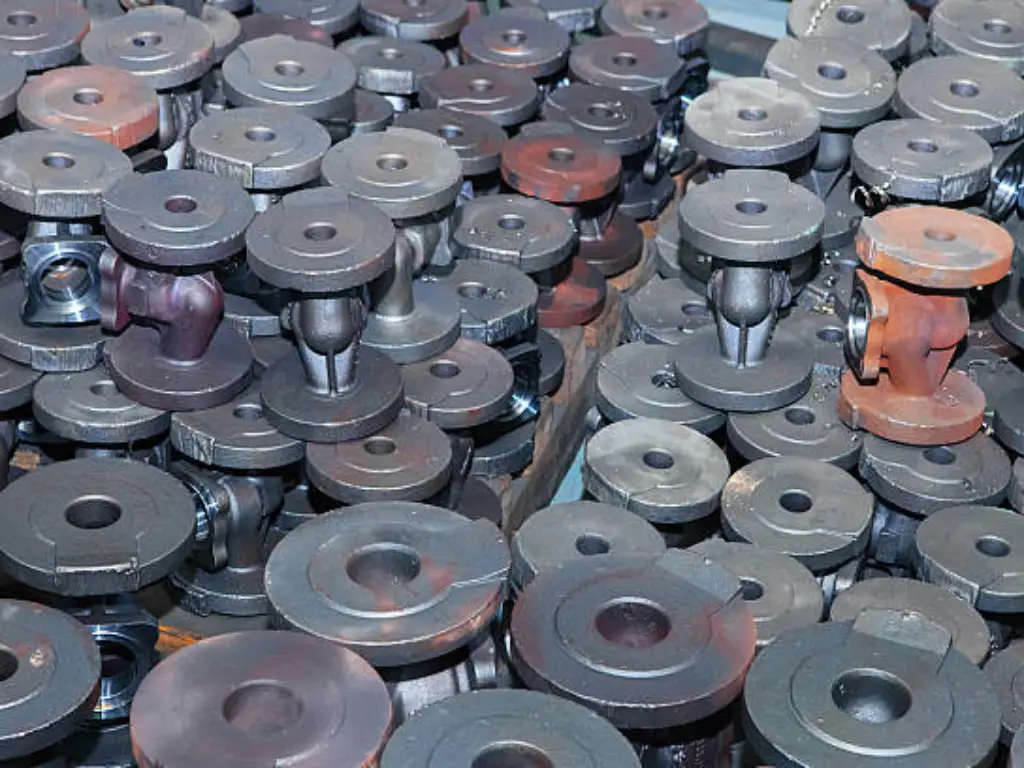
The use of stainless steel in industry has recorded a steady pattern of development, which has been necessitated by the need to have materials that are not only very strong but also have high corrosion resistance. In contrast to carbon steels, the chemical structure of stainless steel, which is defined by the minimum chromium content, requires a very controlled production process in order to preserve the integrity of the passive layer of the material during thermal transitions.
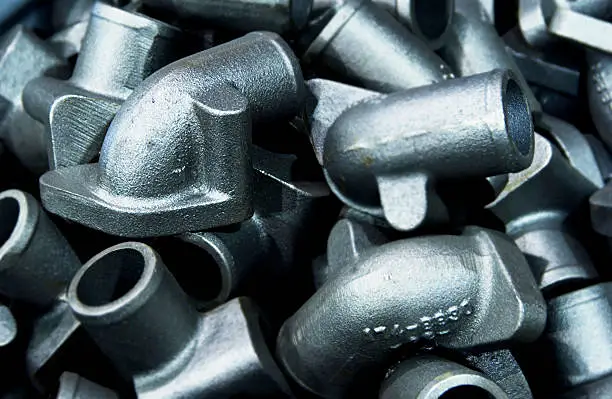
Stainless steel components are used in the current engineering as a backbone to industries where failure is not an option. The capability to manufacture complex metal components with high structural integrity is of utmost importance in the sterile requirements of medical equipment and food processing as well as the harsh conditions of chemical plants. The casting process enables the production of geometries that would be prohibitively expensive or physically difficult to produce using subtractive machining. When changing a liquid state into a solid replica of the part they want, engineers can combine several parts into one casting, which will decrease the internal stresses and remove the weak points of the welded joints.
4 Primary Stainless Steel Casting Processes Compared
In order to maximize procurement and design, it is necessary to differentiate the four main casting methods that are used in the industry. Both techniques are characterized by the mold material and thermal characteristics of the molten metal during solidification.
Investment Casting (Lost Wax)
Investment casting, often referred to as precision casting, is the best technique to use when making complex designs with high dimensional accuracy. It is done by developing a wax pattern and applying a ceramic slurry to it to develop a strong ceramic shell. After the wax has been removed, the resulting mold cavity is filled with the molten stainless steel. The technique is used in complex components where the amount of excess material is required to be minimal.
| Process Step | Technical Action | Key Indicators (KPIs) | Procurement/Design Impact |
| Pattern Injection | Wax injection into metal dies. | Linear Tolerance: ±0.125 mm per 25mm | High repeatability for complex parts. |
| Tree Assembly | Mounting patterns to runner. | Max Part Size: Up to 1000mm | Can cast multiple parts at once. |
| Shell Building | Slurry dipping & stuccoing. | Shell Layers: 5 to 9 layers | Determines the mold’s pressure resistance. |
| Dewaxing/Firing | Removing wax at 1000℃. | Mold Permeability: High | Reduces gas defects in the final steel. |
| Metal Pouring | Gravity or Vacuum pouring. | Wall Thickness: Min 1.5mm | Ideal for lightweight, thin-walled parts. |
| Finishing | Shot blasting & Gate grinding. | Surface Finish: Ra 1.6 – 3.2 μm | Near-Net Shape: Minimal machining. |
Sand Casting
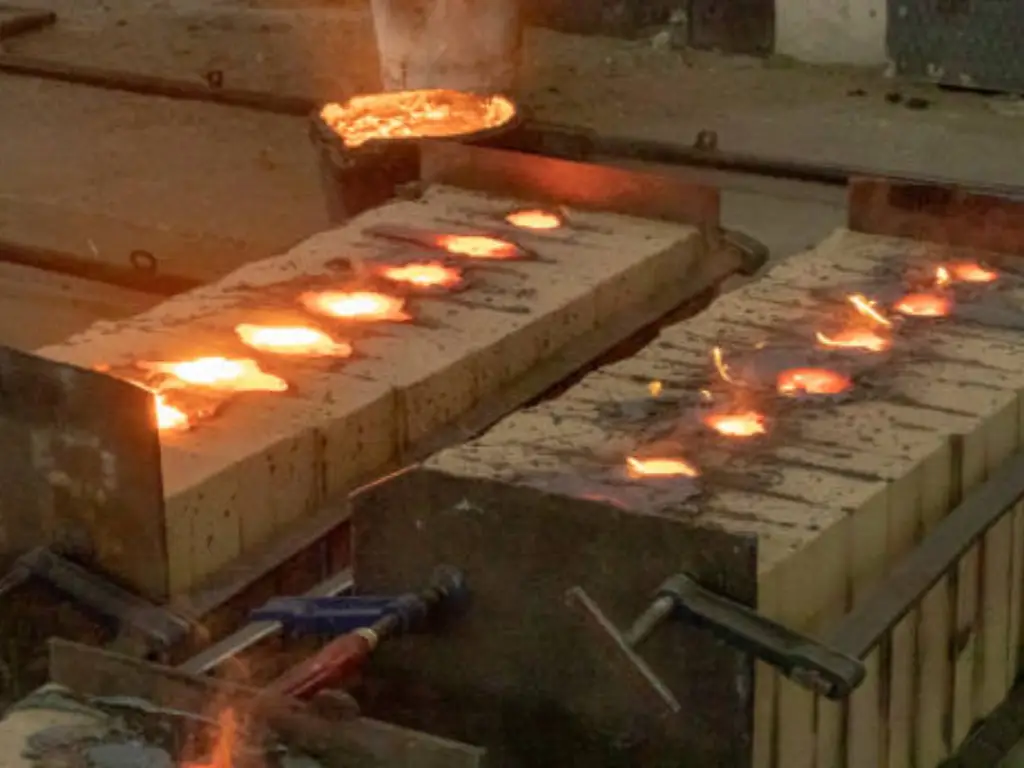
The most ancient method is the sand casting method, which involves the use of sand and binders to form the mold. Although sand is cheap to use in large-scale components, the surface finish is much coarser than other techniques. It is still used as the standard of heavy steel casting in which the mass of the component alone is sufficient to justify the extra work of secondary machining.
| Process Step | Technical Action | Key Indicators (KPIs) | Procurement/Design Impact |
| Pattern Making | Wood/Resin/Metal patterns. | Draft Angle: 1°-5° | Low-cost tooling for prototypes. |
| Sand Molding | Compacting sand + binders. | Sand Strength: 100-200 kPa | Supports massive steel weights. |
| Core Setting | Inserting internal sand shapes. | Position Accuracy: ±1.5mm to 3mm | Allows for large hollow internal cavities. |
| Steel Pouring | Ladle pouring into gravity mold. | Pouring Temp: 1550℃ – 1650℃ | High volume pouring for heavy parts. |
| Cooling | Slow cooling in the sand. | Cooling Time: Hours to Days | Prevents cracking in thick sections. |
| Shakeout/Cleanup | Mechanical sand removal. | Surface Finish: Ra 12.5 – 25 μm | Post-Processing: Heavy machining required. |
Centrifugal Casting
This process involves the use of a rotating permanent mold to force the molten metal through centrifugal force. It is highly efficient in cylindrical industrial use, whereby the grain structure is dense and purity is high as the impurities are pushed to the inner diameter, which is then machined off.
| Process Step | Technical Action | Key Indicators (KPIs) | Procurement/Design Impact |
| Die Prep | Ceramic coating of steel die. | Die Speed: 300 – 3000 RPM | Determines the G-force ($G \approx 60-100$). |
| Centrifugal Pour | Liquid steel into rotating die. | Material Yield: >90% | Very little waste (no risers/gates). |
| Solidification | Outside-in cooling. | Grain Structure: Equiaxed/Columnar | High density; no internal gas holes. |
| Extraction | Pulling part from permanent die. | Straightness: 1mm per 1000mm | Excellent for long shafts/tubes. |
| ID Machining | Boring internal diameter. | Machining Allowance: 3mm – 5mm | Removes all slag/impurities forced to center. |
| Final Inspection | X-Ray / Ultrasonic testing. | Defect Rate: <1% | Forging-level quality for pressure parts. |
Die Casting
Although die casting is common in non-ferrous alloys, it is not commonly used in stainless steel casting. Stainless steel alloy has a high melting point that causes severe thermal fatigue on the cold chamber machine and the tool steel dies. As a result, it has high production speeds but the maintenance costs are usually higher than the benefits as compared to the stainless steel investment methods.
| Process Step | Technical Action | Key Indicators (KPIs) | Procurement/Design Impact |
| Die Spray | Automated lubrication. | Cycle Time: 30 – 90 seconds | Highest production rate per hour. |
| Metal Charge | Dosing steel into shot sleeve. | Shot Pressure: 10 – 100 MPa | Forces metal into tiny details. |
| Injection | High-speed plunger stroke. | Fill Time: <0.1 seconds | Prevents the high-temp steel from freezing. |
| Cooling | Water-cooled die circulation. | Die Life: 500 – 2,000 shots | Very high tool replacement cost for steel. |
| Ejection | Mechanical pin ejection. | Linear Tolerance: ±0.08mm | Highest precision among all 4 types. |
| Trimming | Secondary press trim. | Surface Finish: Ra 0.8 – 1.6 μm | Best aesthetic finish; “Ready to Use.” |
Choosing the Right Process for Your Design
The technical selection of a casting process requires a comparative analysis of physical outputs. The following matrix delineates the performance boundaries of these methods:
| Selection Criteria | Investment Casting | Sand Casting | Centrifugal Casting | Die Casting (SS) |
| Ideal Geometry | Intricate & Complex | Large & Heavy | Cylindrical / Tubular | Thin-walled / Simple |
| Dimensional Accuracy | Highest (±0.127 mm) | Low (±0.5 mm to 1 mm) | Medium | High |
| Surface Finish (Ra) | 3.2 μm (Smooth) | 12.5 – 25 μm (Rough) | 6.3 – 12.5 μm | 1.6 – 3.2 μm |
| Wall Thickness | Thinnest (down to 1.5mm) | Thick (min 5-8mm) | Medium | Thin |
| Tooling Cost | Moderate | Lowest | Moderate | Extremely High |
| Production Volume | Low to High | Low to Medium | Medium | Very High Only |
| Typical Part Weight | 0.1kg – 50kg | 10kg – 5000kg+ | 5kg – 1000kg | 0.1kg – 5kg |
Engineering Recommendations for Process Selection:
- Choose Investment Casting if: Your design has complex designs, needs high dimensional accuracy, or needs a high quality surface finish to reduce secondary machining. It is the gold standard of medical equipment and food processing components.
- Choose Sand Casting if: You are manufacturing huge structural elements where dimensional precision is not as important as structural volume and the sand as a molding material is required to provide the required cost-effectiveness.
- Choose Centrifugal Casting if: You need only symmetrical hollow components such as bushings or pipes and a high-density grain structure is needed to survive in extreme environments.
- Choose Die Casting if: You are producing a large quantity (typically 50,000+ units) of parts and the geometry of the part is simple enough to compensate the severe thermal wear on the cold chamber machine dies.
In the case of engineers, the investment casting process is always the most flexible in terms of complex metal components that demand high degrees of accuracy and aesthetic appeal without the tooling cost prohibitions of die casting.
The 8-Step Silica Sol Investment Casting Process
The most sophisticated form of investment casting process is the silica sol investment casting route. It employs a certain binder that increases the stability of the ceramic mold.
| Step | Phase | Technical Description | Impact on Quality |
| 1 | Wax Pattern Creation | A precise wax pattern is injected into a metal die to create a replica of the desired part. | Dictates the final dimensional accuracy of the part. |
| 2 | Tree Assembly | Multiple wax patterns are welded onto a central runner to create a “casting tree.” | Optimizes the flow of molten metal and production efficiency. |
| 3 | Shell Building | The tree is dipped in ceramic slurry (silica sol) and coated with stucco. Repeated 5-7 times. | Determines the strength of the ceramic shell and the final surface finish. |
| 4 | Dewaxing | The shell is placed in a steam autoclave to melt out the wax, leaving a mold cavity. | Ensures no residue is left, preventing gas defects during pouring. |
| 5 | Preheating | The ceramic mold is fired (up to 1000°C) to remove moisture and strengthen the shell. | Prevents thermal shock and ensures the molten stainless steel fills thin sections. |
| 6 | Pouring | The specific stainless steel alloy is melted and poured into the preheated shell. | Critical for controlling the chemical composition and grain structure. |
| 7 | Knockout | Once cooled, the ceramic shell is removed via vibration or mechanical blasting. | Reveals the stainless steel investment castings for initial inspection. |
| 8 | Finishing & Cutting | Parts are cut from the runner, and gates are ground down to eliminate excess material. | Achieves the final Ra 3.2 surface finish and aesthetic standards. |
Although the theoretical flow of the investment casting process is standardized, the actual implementation is usually faced with serious metallurgical challenges. Dimensional drift and surface decarburization is a problem in most foundries, especially with austenitic stainless steel or complicated geometries. In most industrial processes, the standard investment techniques can only reach CT7 or CT8 tolerances, and engineers have to spend a lot of money on secondary CNC grinding to eliminate the surplus material.
Engineering Excellence: Achieving CT4-CT6 Dimensional Accuracy
To overcome these precision gaps, the technical strategy at BesserCast is aimed at improving the natural stability of the silica sol investment medium. With strict control of the ceramic slurry viscosity and environmental conditions, BesserCast is always able to attain dimensional accuracy of CT4 to CT6. This is a high level of accuracy that allows the stainless steel components to move out of the ceramic mold to the final assembly with minimum intervention.
In components that demand very high structural density or have very thin sections, BesserCast incorporates vacuum casting. It is done in a controlled environment to remove gas porosity and provide a precise chemical composition, even in the most complex designs. Through the combination of vacuum casting and special heat treatment procedures, the final stainless steel investment castings are of high strength and smooth surfaces required by the medical equipment and aerospace industries.
Material Insights: Strategic Stainless Steel Alloy Selection
The selection of the stainless steel alloy represents the secondary pillar of component performance. Investment casting process is compatible with a wide variety of metallurgical grades, each having its own benefits in particular harsh conditions.
In order to simplify the specification process, the following matrix is a comparison of the most common alloys in stainless steel investment castings:
| Alloy Group | Representative Grade | Key Characteristics | Primary Applications |
| Austenitic | 304 / 304L | Excellent weldability; standard corrosion resistance. | Food processing, architectural trim, general industrial hardware. |
| Austenitic | 316 / 316L | High molybdenum content; superior resistance to chlorides. | Marine hardware, medical equipment, chemical processing. |
| Martensitic | 410 / 440C | High carbon content; excellent response to heat treatment. | Pump shafts, valve components, cutlery, high-wear tools. |
| Precipitation Hardening | 17-4 PH | Combines high strength with moderate corrosion resistance. | Aerospace structural parts, high-pressure hydraulic valves. |
| Duplex | 2205 | High resistance to stress corrosion cracking; dual-phase structure. | Oil and gas equipment, desalination plants, heat exchangers. |
Engineering Guidelines for Grade Selection:
- Corrosion vs. Strength: If your application involves acidic or saline environments (e.g., offshore or food processing), the austenitic series (316L) is the default choice. However, if the component must also sustain high mechanical loads, 17-4 PH allows for “aging” treatments to reach high levels of tensile strength without losing its stainless properties.
- Wear Resistance: In parts that are exposed to friction, martensitic stainless steel (440C) is desirable. It is able to reach high hardness tests ratings (HRC 58+) after a thorough heat treatment cycle, which makes it abrasive media-suited.
- Weldability and Intergranular Corrosion: When specifying stainless steel parts that will undergo post-casting welding, “L” grades (low carbon, such as 304L or 316L) should be prioritized to prevent chromium carbide precipitation in the heat-affected zone.
Design for Manufacturing (DFM) Rules for Stainless Steel
In order to achieve the maximum efficiency of the stainless steel casting process, engineers are to follow certain Design for Manufacturing (DFM) principles. A good design minimizes the chances of defects and minimizes the overall cost of ownership.
- Uniform Wall Thickness: Rapid changes between thick and thin walls cause disproportionate cooling and internal stress. In case of transition, it should be tapered.
- Fillets and Radii: Sharp corners are stress concentrators and block the flow of molten metal. Radii are generous to enhance the integrity of the ceramic mold and the final part.
- Draft Angles: Investment casting needs less draft than sand casting, but a small angle (0.5 to 1 degree) allows the wax pattern to be removed easily out of its injection die without deformation.
- Controlling Shrinkage: The stainless steel investment process is characterized by a large volumetric shrinkage in solidification. Simulation software is used in high-tier foundries such as BesserCast to predict this and modify the dimensions of the mold cavity.
Sourcing Checklist: Finding a Reliable Stainless Steel Foundry
The last phase of the stainless steel casting process is the audit of possible manufacturing partners. A good foundry should be competent in a number of technical and administrative areas.
- Technical Verification: Does the foundry possess in-house hardness tests, tensile testing, and non-destructive testing (NDT) like X-ray or ultrasonic inspection?
- Material Certification: Can they provide a mill test report (MTR) verifying the chemical composition of the molten metal for every heat?
- Process Transparency: For complex parts, will the foundry provide a detailed investment casting process plan, including the heat treatment parameters?
- Quality Management: Are they certified to ISO 9001 or IATF 16949? This is non-negotiable for high-stakes industrial applications.
Conclusion
To move through the intricacies of the stainless steel casting process, a very fine coordination of metallurgical skills, design, and sourcing strategy is needed. The goal is the same, regardless of whether it is taking advantage of the sheer size of sand casting or the fineness of dimensional detail of silica sol investment casting: to achieve structural integrity at the lowest possible total cost of ownership. Engineers can make sure that their complex metal components can perform in the most demanding environment of the world by following strict DFM regulations and choosing a partner that can provide high-level CT4-CT6 accuracy. Finally, it is the ability to turn liquid metal into a high-performance asset by means of controlled, data-driven production that will determine the success of your project.
 English
  Japanese
  German
  Italian