Introduction
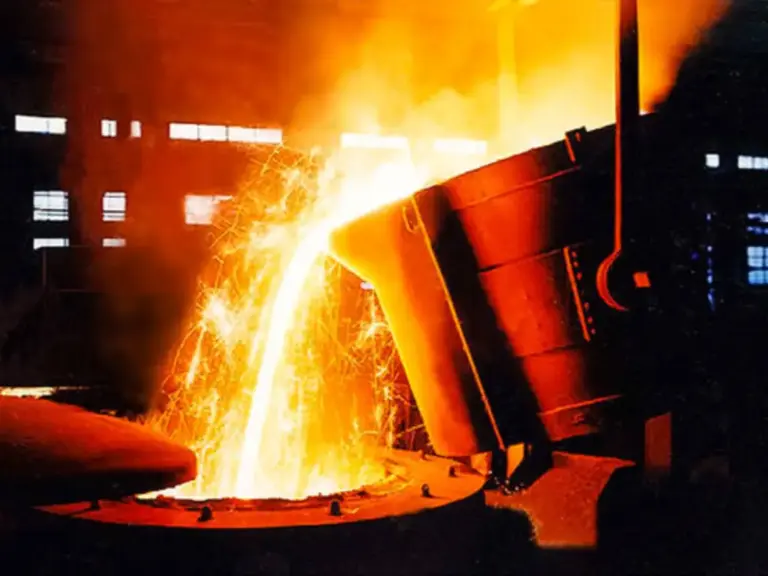
Metal casting is a manufacturing process that is fundamental and connects the ancient art with the modern engineering, incorporating modern methods. Casting enables the production of components of all sizes, including huge engine blocks and delicate medical implants, by the precise thermodynamic control of molten alloys into complex shapes. This guide discusses the basic concepts of phase transformation, compares the key processes such as sand, die, and investment casting, and explains how Design for Manufacturability (DFM) can streamline the process of liquid metal to high-performance solid components. Regardless of the use of conventional ferrous alloys or the innovative trends of Gigacasting, control of these techniques is crucial in the attainment of excellent mechanical characteristics and cost-effectiveness in the contemporary industry.
Fundamental Principles and History of Metal Casting
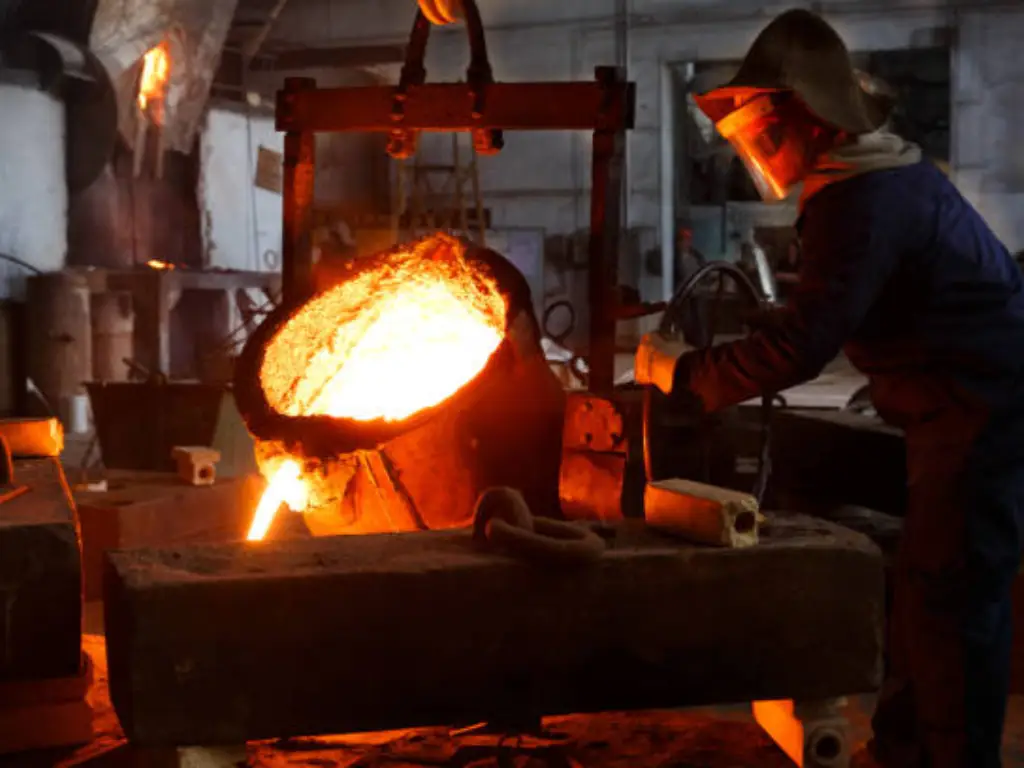
Metal casting is all about the thermodynamic change of state of materials. In its simplest form, the metal casting process entails heating a metallic material to a temperature that is above its melting point and then pouring it into a pre-shaped mold cavity. The metal cools down, and it changes its phase, returning to a solid metal, provided that the internal structure of the container is taken into account.
This manufacturing process has been the foundation of human development over millennia. Archaeological records, including the well-known copper frog of 3200 BC, show that ancient civilizations had mastered the fundamentals of solid metal casting way before the emergence of formal material science. Although we have now moved to modern techniques of computer-aided design and computer-aided simulation, the Newtonian physics of heat transfer and fluid dynamics are the variables that do not change. The fact that we now have rudimentary iron casting giving way to the manufacture of high-performance ferrous alloys is indicative of our growing control over the mechanical properties of the end product.
Essential Steps in the Metal Casting Process Flow
The fundamental metal casting process is a methodical sequence of engineering occurrences. Although there are differences between the various methods of metal casting, the general procedure is a strict six-step process:
- Patternmaking and Mold Preparation: A pattern is made that is a representation of the final product. In expendable mold casting, the mold is destroyed to recover the part, but permanent molds are used in applications of high-volume, reusable molds.
- Melting: The raw material, which is usually a combination of virgin ingot and recycled scrap metal, is heated in a furnace (induction or electric arc) until it attains the optimum pouring temperature of that particular molten metal.
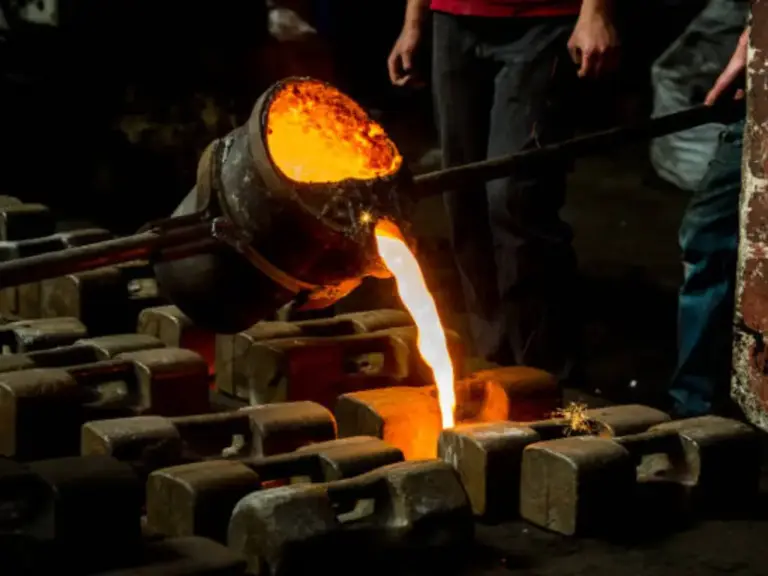
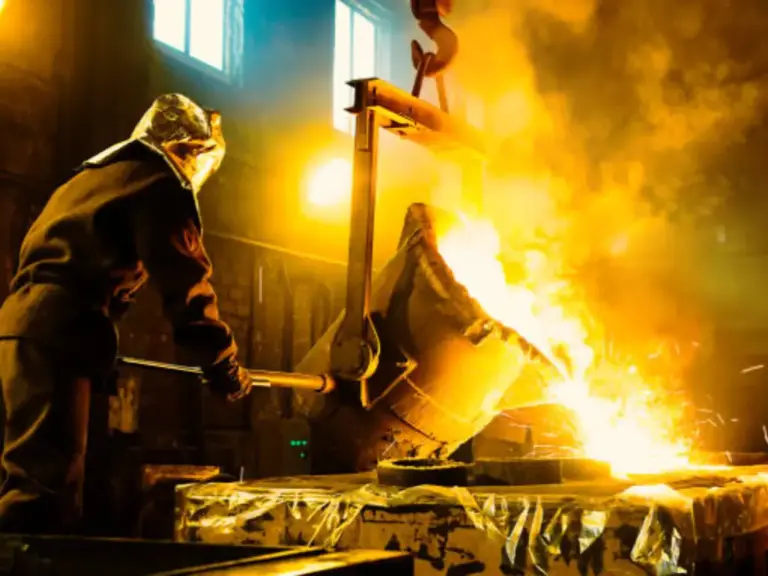
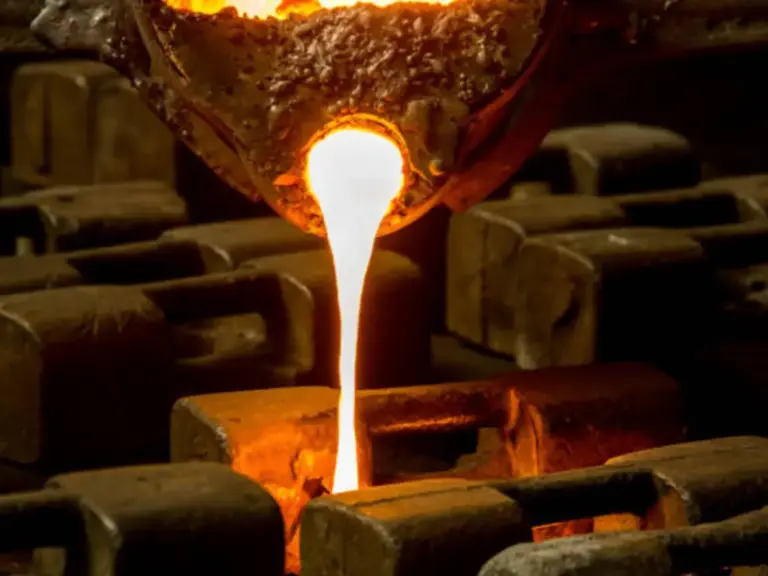
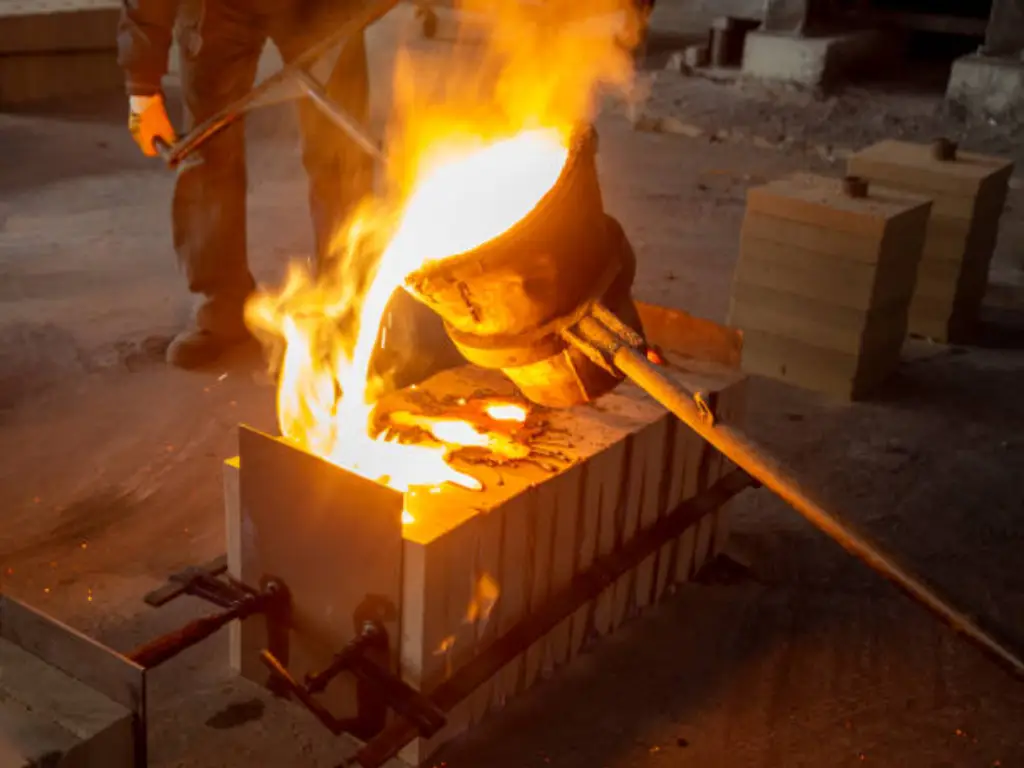
- Pouring: The molten metal is poured into the mold. This step involves accurate control of velocity to avoid turbulence and entrapment of gases.
- Solidification: The metal solidifies and contracts. This contraction has to be considered by engineers so that the final casting can be of the required dimensions.
- Shakeout/Decoring: When the part is solid metal, the mold material (sand or ceramic) is removed.
- Post-Processing: This involves fettling (removal of surplus material), heat treatment to increase mechanical properties and finishing to obtain the required surface finish.
Sand vs. Die vs. Investment Casting
A technical trade-off between volume, complexity, and cost is needed when choosing between the major types of metal casting. Although the fundamental metal casting process is the same, the type of mold material used, either expendable molds or reusable molds, has a drastic effect on the quality and cost structure of the final product.
| Feature / Method | Sand Casting | Die Casting | Investment Casting(lost wax casting) |
| Tooling Cost | Low (Minimal Initial Investment) | High (Precision Steel Dies) | Moderate (Wax Patterns & Ceramic) |
| Production Volume | Low to Medium | Very High (Mass Production) | Low to High (Flexible) |
| Complexity | Moderate | High | Extreme (Intricate Parts) |
| Surface Finish | Coarse (Requires Machining) | Good (Smooth) | Excellent (Fine Details) |
| Dimensional Accuracy | Low (Wide Tolerances) | High | Very High (CT4-CT6) |
| Wall Thickness | Thicker Sections (>5mm) | Very Thin Walls (0.5mm-3mm) | Thin to Moderate (1mm-5mm) |
| Material Range | All Metals (Ferrous Alloys & Non-Ferrous) | Non-Ferrous (Al, Zinc, Mg) | All Metals (High-Performance Steel) |
| Typical Lead Time | Short (1-2 Weeks) | Long (Setup Time) | Moderate (4-8 Weeks) |
| Ideal Industrial Applications | Heavy Machinery: Engine blocks, cylinder heads, large pump housings, and massive iron casting frames for construction equipment. | Automotive & Tech: Transmission cases, valve covers, brackets, and high-volume consumer electronics housing. | Precision Engineering: Intricate parts for fluid power, turbine blades, valve internals, and high-strength steel castings for industrial tools. |
Optimizing Designs for Manufacturability (DFM) in Casting
In order to have a successful metal casting, the design should not violate the physical limitations of the manufacturing process. Design for Manufacturability (DFM) refers to the process of designing a metal component in a way that lowers the number of defects and lowers the cost.
The draft angle is a critical consideration. In the absence of a slight taper on the vertical walls of the pattern, it is hard to extract the part out of the mold without destroying the mold cavity. Moreover, engineers should not make sudden transitions in the thickness of sections. When a section of the metal cools much quicker than the other, it may cause internal stress or hot tears.
To those who use investment casting, the capability to make complicated components without draft is a significant advantage, but the flow of the molten material still needs to be taken into account. The use of fillets and radii over sharp corners helps in the flow of metal more easily and minimizes the chances of turbulence, which will make the final part still have its structural integrity.
Selecting the Right Alloys for Performance and Cost
The choice of alloy dictates the mechanical properties and the eventual utility of the metal object.
- Ferrous Alloys: Iron casting (including cast iron) and steel castings are prized for their strength and wear resistance. They are ubiquitous in heavy industry and infrastructure.
- Aluminum Castings: Due to their low melting point and high strength-to-weight ratio, aluminum alloys dominate the automotive and portable electronics sectors.
- Copper Alloys: Bronze and brass are selected for their corrosion resistance and electrical conductivity. These copper alloys are frequently used in marine hardware and electrical components.
- Precious Metals: In specialized artistic or dental applications, investment casting is used to manipulate gold, silver, and platinum to capture fine details.
Precision Solutions: Your Strategic Partner
Bessercast offers engineered excellence when the dimensional accuracy of industrial projects is required that cannot be achieved by conventional casting methods. Our plant is a high-end investment casting facility with world-class CT6 tolerances in all dimensions, and can achieve CT5 or CT4 tolerances in critical functional features. With the help of advanced casting simulation software, we can find proactive process optimization at the design stage, which can save development lead times by a large margin and guarantee a high first-success rate even in the most complex geometries.
Having a successful history of creating more than 4,500 unique complex components and mastering 200+ different material grades, such as high-performance ferrous alloys and steel castings, we offer a strong end-to-end manufacturing ecosystem. Our 3,000 ton yearly capacity can comfortably handle large-volume industrial orders, but our adaptable management procedures are nimble enough to handle small-volume customization. Supported by an international presence in 12 countries and in-house machining and specialty surface finishes, BesserCast guarantees that your finished component is ready to assemble, and of the highest quality standards to the construction equipment, automotive, and heavy machinery industries.
Common Quality Challenges
Although the modern techniques are sophisticated, the process of converting liquid metal into solid metal is fraught with possible complications.
- Porosity: This is caused by the entrapment of gas in the molten metal or by the contraction of the metal during cooling. This can be countered by proper venting of the mold cavity and by the use of risers.
- Inclusions: Non-metallic particles may get stuck in the final casting. Strict filtration and clean scrap metal usage is necessary.
- Cold Shuts: This is a defect that occurs when two streams of molten material come together and do not fuse completely because of low temperature. The solution is to have precise thermal control of the melting point and pouring speed.
Through the knowledge of these issues, manufacturers such as BesserCast have put in place stringent quality control measures such as X-ray and dye penetrant inspection to make sure that all metal components shipped out have no internal defects.
FAQ: Navigating the Complexities of Metal Casting
- What casting technique is the most cost-effective and accurate?
Investment casting is the best option in case of complex components that need high dimensional accuracy and a fine surface finish. It reduces secondary machining expenses. Nevertheless, in high-volume non-ferrous aluminum castings, die casting can be more economical even though initial tooling costs are increased.
- What is the right draft angle to use in my design?
Part removal requires draft angles. Sand casting normally needs 1.5°–2° and die casting needs 0.5°–1.5°. One of the benefits of this technique in investment casting is that it can frequently be cast with zero draft, with perfectly vertical walls and complicated geometries.
- What is porosity and how can it be avoided?
Porosity is a result of trapped gas or shrinkage during the cooling of the metal. Prevention Prevention is proactive Design for Manufacturability (DFM) including keeping the wall thickness constant and simulation software to optimize the venting of the mold cavity and the location of the risers.
- Can heavy-duty steel castings be cast using investment?
Yes. Although commonly used with smaller components, investment casting is very efficient with steel castings and ferrous alloys. It is the manufacturing process of choice of high-stress parts in construction equipment where strength and complex parts are required.
- What is the impact of the cooling rate on the performance of the final part?
Grain structure is determined by the rate at which liquid metal is solidified into solid metal. Quick cooling (as in die casting) forms smaller grains, which increases mechanical properties such as strength. Reduced speed of cooling in sand casting leads to coarse grains, which can change the durability of the metal object.
Conclusion
The metal casting process has been one of the most flexible and essential manufacturing processes that can be offered to the contemporary engineer. The skill of forming molten metal into complex forms is the key to industrial development, whether it is the huge steel castings that propel the energy industry or the complex components that propel the automotive industry. The ability to understand the peculiarities of mechanical properties, choose the best casting techniques, and follow strict DFM principles will allow companies to reach unprecedented efficiency and part performance. With the industry becoming smarter and greener in terms of foundries, the collaboration between the traditional craftsmanship and the digital simulation will keep pushing the limits of what can be done in metalwork.
Are you willing to take your next project to the world-class level? Call Bessercast now to find out how our CT4-level investment casting and end-to-end manufacturing solutions can streamline your supply chain and provide high-performance components with a very good surface finish to your specifications.