Introduction
In the case of engineers and procurement departments that buy complex metal components, the choice of manufacturing process determines the viability of the components and their commercial success. Vacuum investment casting is the ultimate technique of making high-integrity components using reactive and high-temperature alloys. This guide outlines the technical specifications, business considerations, and precise applications where specifying a vacuum environment is not just a choice, but an engineering necessity to guarantee part performance.
What Is Vacuum Investment Casting?
Vacuum investment casting is a sophisticated production technique that is used to produce extremely accurate metal parts out of alloys that are extremely reactive to oxygen, nitrogen, and hydrogen at high temperatures. In contrast to the conventional casting techniques, in which the metal is melted and poured under normal atmospheric conditions, the vacuum casting technique performs the entire melting and pouring processes in a closed vacuum chamber.
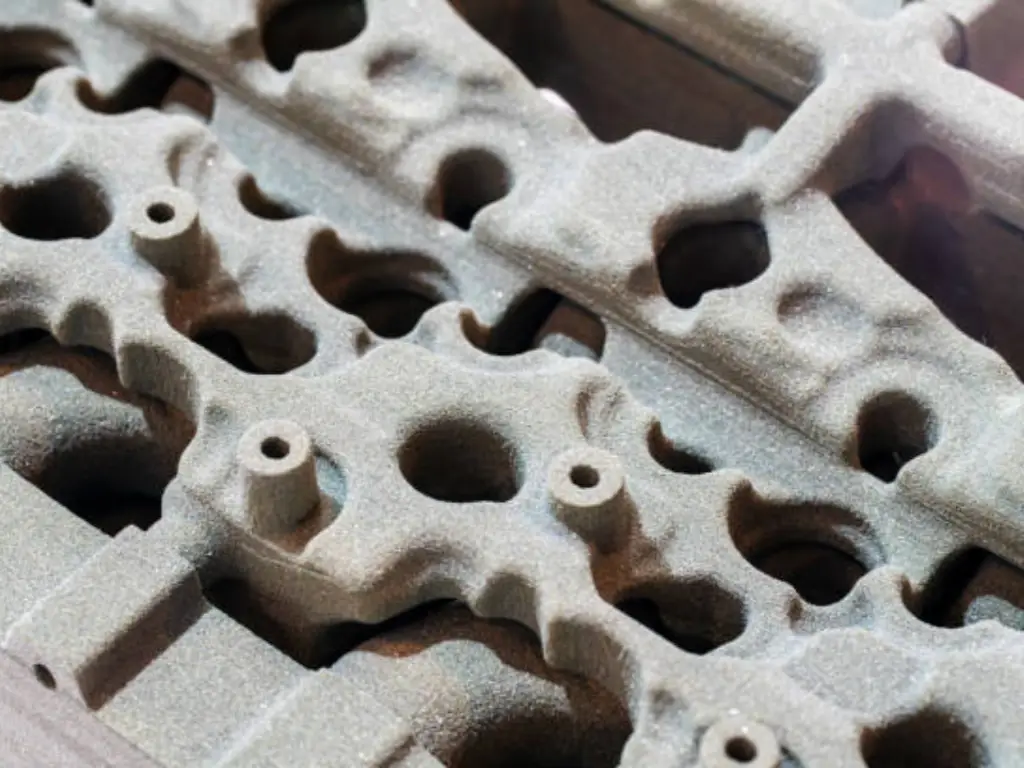
This casting process should be specified by engineers when dealing with high-performance superalloys, titanium, or certain grades of aluminium. Once these metals melt, they are exposed to the ambient atmosphere and oxidized, and gases are absorbed rapidly. The absorption causes serious metallurgical degradation, which causes gas porosity, non-metallic inclusions, and extreme embrittlement of the end product. The molten metal is pure by reducing the atmosphere to high vacuum levels within the furnace. You must use vacuum investment casting when you need high mechanical properties in your design, when you are in extreme operating conditions, or when you are producing complex shapes where internal flaws would cause disastrous structural failure.
Key Advantages and Limitations Evaluated
The assessment of vacuum investment casting must be done with a rigid examination of its engineering advantages as well as its commercial disadvantages.
Advantages:
- Superior Mechanical Properties: Oxygen and atmospheric gases are eliminated, which inhibits oxidation and gas porosity. This creates a finer, purer metal structure, providing optimum tensile strength, ductility, and fatigue resistance.
- High Dimensional Accuracy: The ability to control the pouring environment and cooling rates to a high degree enables foundries to attain high dimensional accuracy, maintaining tight tolerances across complex geometries.
- Excellent Surface Finish: The lack of atmospheric reactions between the molten metal and the ceramic shell provides an excellent surface finish and high-quality surface, which greatly minimizes or completely eliminates the secondary machining operations.
- Intricate Details and Thin Walls: The vacuum atmosphere helps to force the molten metal into the best areas of the mold, and complex details, thin walls, and complex shapes can be successfully cast that would not have been possible with conventional casting.
Limitations and Disadvantages:
- Increased Cost: Vacuum casting equipment is very expensive to capitalize on. Induction vacuum furnaces and heavy-duty vacuum pumps are very expensive to invest in, and this translates to a higher unit price of the cast components.
- Size Constraints: The physical size of the vacuum chamber is a strict limit to the size of the casting. Massive industrial parts may not be accommodated in the normal vacuum furnace designs.
- Lower Production Efficiency: It is required to pump the chamber to high vacuum levels each time a melt cycle is completed, which adds to the total processing time. This renders the process inappropriate for high-volume mass production of low-cost components as compared to highly automated conventional processes.
Best Superalloys and Metals for Vacuum Investment Casting
Not all metals require a vacuum environment. The decision to incur the higher cost of vacuum investment casting must be driven by the specific metallurgy of the alloy.
| Metal / Alloy Category | Specific Grades | Key Material Properties | Why Vacuum is Strictly Required |
| Nickel-Based Superalloys | Inconel 713C, 718, 738; Hastelloy X | High-temperature creep resistance, extreme corrosion resistance, thermal stability. | These alloys contain reactive elements like Titanium and Aluminum. In standard air melting, these elements oxidize rapidly, depleting the alloy of its strengthening agents and creating massive slag inclusions. |
| Titanium Alloys | Ti-6Al-4V, TiAl | High strength-to-weight ratio, excellent biocompatibility, corrosion resistance. | Titanium is highly reactive. At melting temperatures, it absorbs oxygen, nitrogen, and hydrogen, forming a brittle “alpha case” surface layer and internal porosity that destroys its mechanical integrity. |
| Cobalt-Based Superalloys | Stellite 31, X-40, CoCr | Superior wear resistance, high-temperature strength, galling resistance. | Similar to nickel superalloys, the high operating temperatures require absolute metallurgical purity. Vacuum ensures no gas entrapment occurs during the pour, maintaining wear resistance. |
| Specialty Aluminium Alloys | High-purity Al-Li alloys | Extreme lightweight characteristics, high stiffness. | Lithium is highly reactive. Vacuum melting prevents lithium from oxidizing and burning off, ensuring the precise chemical composition is maintained in the final casting. |
Vacuum Investment Casting Process
The accuracy of the investment casting production process demands the tight control of the environment and the dimensional check of each step.
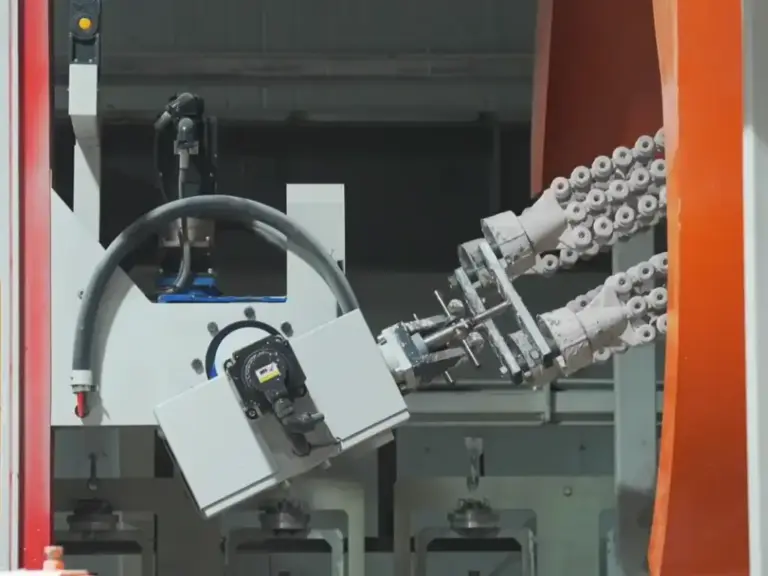
- Wax Pattern Production: This is done by injecting liquid wax into an aluminum mold (die) of a precision-machined mold to produce a very accurate wax pattern. These patterns are a replica of the final complex metal parts geometry, taking into consideration the metal shrinkage.
- Assembly: A tree-like assembly is made by attaching several wax patterns to a central wax sprue. This determines the direction of the flowing molten metal during the pour.
- Ceramic Shell Creation: The wax assembly is dipped into a fine ceramic slurry, and refractory sand is applied to it. This is done repeatedly for a number of days to create a strong, heat-resistant ceramic shell.
- Dewaxing: The shell is put in a high-pressure steam autoclave. The wax melts and drains out of the shell, leaving an exact internal cavity.
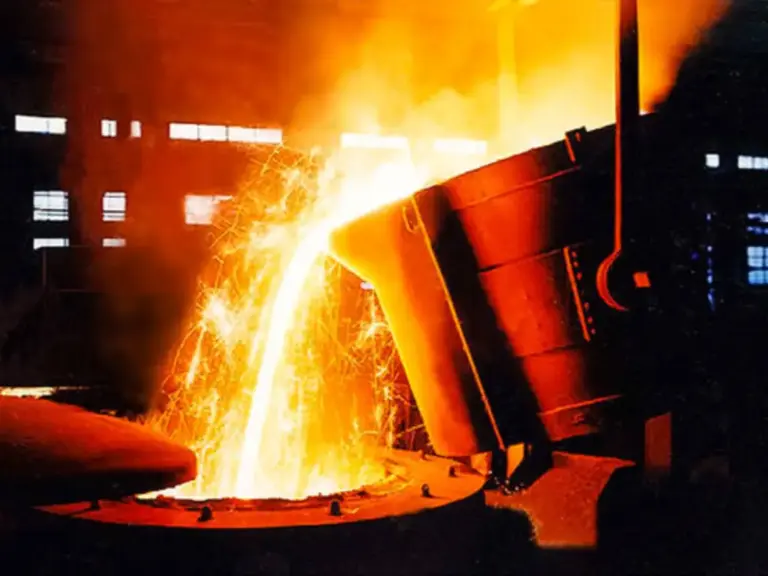
- Preheating and Vacuum Melting: The empty ceramic shell is preheated at high temperatures to avoid thermal shock. At the same time, the given alloy is introduced into an induction furnace that is situated in the vacuum chamber. The chamber is highly vacuumed and closed. Melting of the metal is done through induction heating.
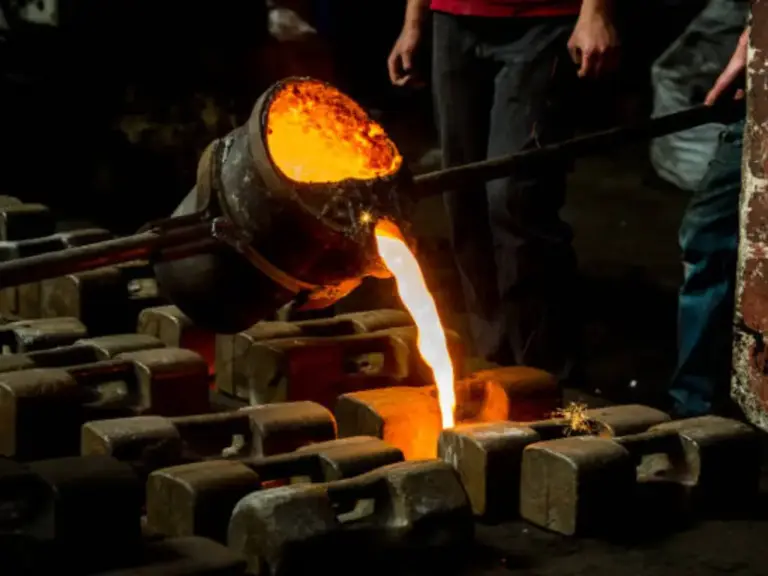
- Vacuum Pouring: The molten metal is poured into the preheated ceramic cavity under vacuum. The absence of air resistance enables the metal to fill complex shapes perfectly.
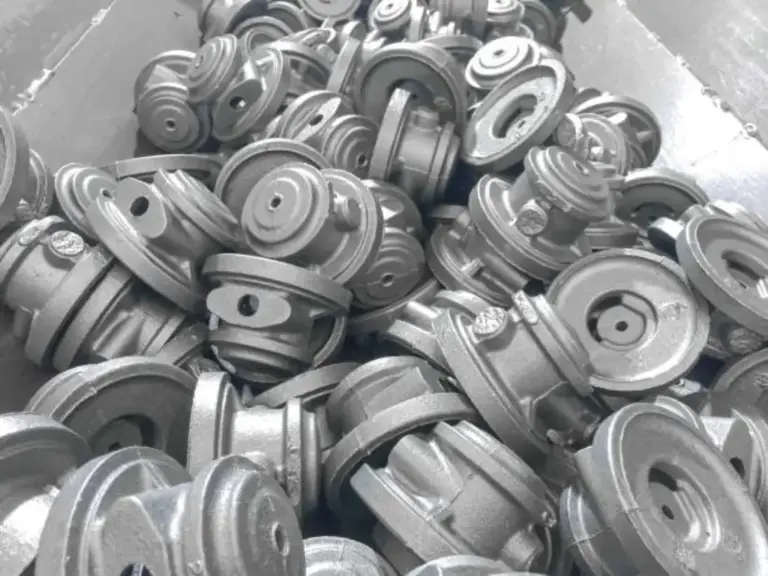
- Knockout and Finishing: Once cooled, the ceramic shell is broken away via mechanical vibration or water jetting. The individual metal parts are cut from the sprue, heat-treated, and subjected to final surface finishing and non-destructive testing (NDT).
Air Melt vs. Vacuum Melt: A Technical Comparison
Procurement professionals and engineers often debate whether to utilize standard air melt investment casting or upgrade to vacuum melting. Making an informed decision requires evaluating both technical performance and commercial metrics.
Technical and Quality Comparison
| Metric | Traditional Air Melt Casting | Vacuum Investment Casting |
| Defect Rate (Porosity) | Moderate to High. Gases are trapped during the turbulent pour. | Extremely Low. The absence of atmosphere eliminates gas porosity. |
| Mechanical Properties | Baseline. Suitable for standard structural loads. | Maximum potential achieved. Essential for high-stress applications. |
| Alloy Suitability | Carbon steels, stainless steels, standard brass, and bronze. | Titanium, Nickel superalloys, Cobalt superalloys, reactive metals. |
| Surface Quality | Good, but may show minor oxidation scale requiring finishing. | Pristine. Zero oxidation scale, capturing fine details accurately. |
Commercial and Procurement Comparison
| Commercial Metric | Traditional Air Melt Casting | Vacuum Investment Casting | B2B Procurement Impact |
| Tooling Cost | Moderate | Moderate to High | The wax mold costs are similar, but vacuum casting often requires tighter tooling tolerances to justify the expensive process. |
| Unit Price | Low to Moderate | High | Vacuum equipment operation, energy usage, and strict QA protocols drive up the per-part cost significantly. |
| Lead Time | Standard (4-8 weeks) | Extended (8-12 weeks) | Vacuum chamber processing is a bottleneck. Batch processing takes longer, requiring buyers to plan inventory further in advance. |
| Optimal Volume | Medium to High Volume | Low Volume to Medium Volume | Vacuum is ideal for high-value, critical components in smaller runs rather than commodity hardware. |
When to Choose Vacuum Vacuum Investment Casting
The choice of vacuum investment casting should be explained by the working conditions of the final part. This approach should be adopted when the failure of the part causes unacceptable safety hazards or severe financial downtime. Vacuum casting is required when a component is used in high-temperature conditions (above 1000 °C), experiences severe rotational forces, or is implanted into the human body.
In terms of cost analysis, engineers have to compute the Total Cost of Ownership (TCO). Although the unit cost of a vacuum-cast component is significantly more than that of a conventional casting, the payback period of the investment is long-term due to the elimination of secondary processing. Since vacuum casting offers high dimensional accuracy and a high surface finish after the mold, time spent in CNC machining hard-to-machine superalloys is significantly minimized. Moreover, the almost zero defect rate removes the expense of scrapped parts and quality control failures at the end of the production.
Top Industrial Applications of Vacuum Investment Casting
The demand for high-performance metallurgy restricts vacuum investment casting to industries where material limits are continuously pushed.
| Industry | Specific Component | Key Parameters / Requirements Addressed by Vacuum Casting |
| Aerospace | Turbine Blades, Vanes | Must withstand operating temperatures up to 1500°C. Requires single-crystal or directionally solidified Nickel superalloys cast without any porosity. |
| Medical Devices | Orthopedic Implants (Knees/Hips) | Requires absolute biocompatibility. Cast from Ti-6Al-4V in a vacuum to prevent alpha-case formation which would cause the implant to fail under load. |
| Energy & Power Gen | Industrial Gas Turbine Rotors | High creep resistance and fatigue life required. Large-scale Inconel castings that demand precise dimensional accuracy to maintain aerodynamic efficiency. |
| High-End Machinery | Centrifugal Casting Molds, Extrusion Dies | Requires extreme wear resistance and thermal stability. Vacuum ensures the dense, defect-free structure necessary for tooling that produces other parts. |
| Fluid Control | High-Pressure Industrial Valves | Handling corrosive chemicals at high pressures. Cast from specialty stainless or Hastelloy. Vacuum ensures zero internal micro-porosity, preventing dangerous fluid leaks. |
How to Choose a Reliable Precision Foundry Partner
Indicating vacuum investment casting is just the beginning, implementation needs a partner that can exercise complete metallurgical control. In auditing suppliers, go beyond simple equipment checklists and assess their dimensional stability strategy. A high-level partner should have in-house vacuum induction melting (VIM) and stringent NDT equipment, yet more to the point, they should show control over the variables of the wax shrinkage, which is the main factor of precision.
Bessercast is a clear standard of such technical rigor. Bessercast is operated under IATF16949 and PED systems, and can achieve CT6 tolerances as a matter of course, and can even achieve CT5 or even CT4 tolerances on critical assembly features by keeping the wax shrinkage within a 0.1% range. Their quality program is vertically aligned: SPECTRO chemical analysis and Hexagon CMM checks to 100 percent pass rates on custom-designed gauges that are specifically designed to fit your complex geometries. Bessercast uses a combination of internal X-ray and ultrasonic testing with 24/7 salt spray validation to make sure that all components are not cast, but designed to endure the most challenging industrial conditions.
Conclusion
The upper limit of the metallurgical processing capability of complex components is vacuum investment casting. Although it presents longer lead times and initial production costs than traditional processes, it is the only process that can be used to manufacture reactive metals and high-temperature superalloys. The ability to totally isolate the molten metal against atmospheric contamination enables engineers to attain unmatched mechanical properties, a high level of dimensional accuracy, and zero-defect structures. In the case of industries such as aerospace and medical machinery, the technical and commercial variables of this process are known to make procurement decisions based on long-term reliability and uncompromising component performance.
Are you willing to optimize your component performance? Today, contact the Bessercast engineering team to have a technical consultation on your vacuum investment casting needs and have a complete DFM (Design for Manufacturing) analysis of your project.