Introduction
In the industrial manufacturing industry where stakes are high, there is no room to make mistakes. The wrong choice of casting process or an unsuitable foundry partner can immediately add 50% to the cost of production in scrap waste and unsuccessful quality audit. In 2026, procurement leaders and engineers will no longer be faced with the challenge of finding a supplier, but ensuring that they have a strategic partner who can maneuver through unstable material markets and stringent certification requirements. This guide will be a clear roadmap, including a technical decision matrix and a refined analysis of the top 10 casting powerhouses in the world to make sure that your supply chain is resilient and cost-effective.
Core Process Analysis
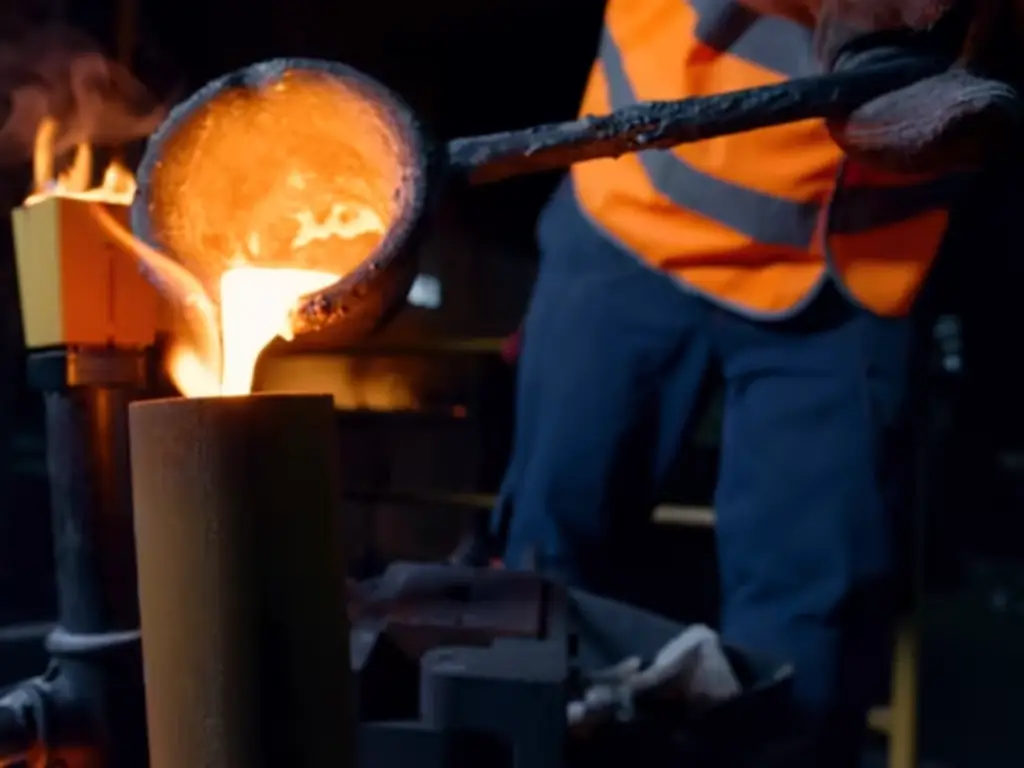
Understanding the fundamental physics and economics of manufacturing processes is the first step toward an optimized supply chain. Whether your application requires the immense scale of sand casting or the intricate detail of investment casting, each method presents a unique profile of trade-offs. The best casting process is not the one with the highest theoretical precision, but the one that aligns most closely with your specific volume, tolerance, and material requirements.
- Sand Casting: The workhorse of the metal casting industry. It is unmatched with large and heavy parts of iron or steel. Although the sand casting process has the least tooling investment, it has more post-cast machining as it has a rougher surface finish.
- Investment Casting: The investment casting process is also known as lost wax, and it is the most accurate. It is superior in making complicated geometries and thin-walled sections in stainless steel or titanium, which are common in the aerospace industry.
- Die Casting: This is the king of high volume efficiency and is driven by molten metal that is forced into steel molds under high pressure. It is the main option of aluminum and zinc alloy components where unit cost should be minimized.
| Dimensional Criteria | Sand Casting | Investment Casting | Die Casting | Permanent Mold |
| Tooling Cost | Low ($) | Moderate ($$) | Very High ($$$$$) | High ($$$) |
| Unit Cost | Moderate | High | Low (at Scale) | Moderate/Low |
| Dimensional Precision | Lower | Exceptional | High | Moderate/High |
| Surface Finish | Rough | Smooth | Good | Good |
| Alloy Versatility | Most (Iron/Steel/Al) | Broad (High Temp) | Limited (Al/Zn/Mg) | Non-Ferrous |
| Economic Batch Size | 1 – 1,000 | 100 – 10,000 | 5,000+ | 1,000+ |
Recommended Global Metal Casting Companies for 2026
Bessercast (China)

- Recommendation: ☆☆☆☆
- Website: www.bessercast.com
- Core process: Silica Sol Investment Casting & Vacuum Casting Industry
- Coverage: Rail Transport, Agricultural Machinery, Marine, Valve/Pump
Bessercast is a Ningbo-based company that has developed into a complex international engineering partner out of a traditional metal casting foundry. They are experts in silica sol investment casting process and they are good at making components with a high surface finish and tight tolerances. Their 45,000-square-meter plant has a vacuum casting technology that enables them to cast high-density and zero-defect parts to serve the high-pressure fluid systems and railway safety sectors. They have increased their production capacity to 250 tons per month in 2026 to satisfy the increasing demand in the world.
The company is especially skilled in the choice of materials, as it provides more than 200 types of stainless steel, carbon steel, and heat-resistant alloys. Bessercast offers in-house machining and a strong 5-step quality inspection procedure (including chemical testing and mechanical testing) to offer high-value-to-cost ratio to North American and European OEMs. Their Customer-First DFM service assists their clients to optimize designs in order to minimize weight and cost, which makes them a good option when it comes to long run industrial contracts.
| What We Love | Things to Consider |
| Excellent cost-to-quality ratio | Longer international shipping lead times |
| Wide variety of alloy grades supported | Geopolitical tariff risks for US customers |
| Strong DFM and engineering support | Communication across time zones |
Dynacast (United States / Global)
- Recommendation: ☆☆☆☆☆
- Website: www.dynacast.com
- Core process: High-Pressure Die Casting Industry
- Coverage: Automotive, Consumer Electronics, Healthcare
Dynacast is still a powerhouse in the high precision die-casting industry, especially with its own proprietary multi-slide technology. This dedicated method enables the production of extremely complicated, tiny-diameter parts with tolerances comparable to CNC machining, but at a fraction of the unit cost. They have also incorporated AI-based thermal monitoring in their casting processes in 2026, which has greatly minimized internal porosity and provided a degree of consistency that is critical to mission-critical medical equipment and telecommunications equipment.
Moreover, the international presence of Dynacast enables them to overcome supply chain shocks by providing localized manufacturing in North America, Europe, and Asia. They are not just limited to the foundry floor, they are also involved in DFM (Design for Manufacturing) consultations, where engineers can simplify assemblies by consolidating many parts into one complex casting. This proactive engineering culture means that the clients do not have to face any possible issues even before the first drop of molten metal is cast, which makes them one of the best right suppliers of high-volume programs.
| What We Love | Things to Consider |
| Unmatched precision in small zinc/aluminum parts | High initial tooling investment |
| Global redundancy for supply chain security | Limited to non-ferrous alloys |
| Advanced multi-slide casting capabilities | Minimum order quantities are typically high |
Nemak (Mexico / Global)

- Recommendation: ☆☆☆☆☆
- Website: www.nemak.com
- Core process: Aluminum Die Casting & HPDC Industry
- Coverage: Automotive (EV & ICE Platforms), Industrial Power
Nemak has placed itself at the center of the electrification of the automotive industry. They are a Tier 1 supplier and deal with complex aluminum products such as battery housings, motor housings, and structural chassis parts. Their ability to produce high-pressure and vacuum die cast allows them to produce high-strength and thin-walled structures that are essential in reducing the weight of EVs. Nemak has made great strides in sustainable manufacturing by 2026, with a high percentage of recycled aluminum and renewable energy sources being used in their smelting processes.
Their functioning is a testimony to the experience that it takes to handle large volume automotive contracts. Nemak does not simply cast parts, but they offer fully machined and sub-assembled modules, which ease the logistical load on OEMs. Their strict compliance with ISO and IATF standards mean that each of their components, a cylinder head to a structural cross-member, is subjected to the uncompromising safety and performance standards of the modern road car. They are the solution to large-scale automotive aluminum.
| What We Love | Things to Consider |
| Leader in EV lightweighting components | Highly specialized toward the automotive sector |
| Vertical integration: casting to assembly | Lead times can be long for new tooling |
| Exceptional ESG and recycling initiatives | Focused primarily on aluminum alloys |
Signicast (United States)
- Recommendation: ☆☆☆☆☆
- Website: www.signicast.com
- Core process: Automated Investment Casting Industry
- Coverage: Defense, Mining, Fluid Power, Medical
Signicast has transformed the process of investment casting by being extremely automated. Whereas conventional investment casting is a labor-intensive process, Signicast has a fully automated, lights-out shell-building process that has cut lead times by weeks to days. This technological edge enables them to provide the accuracy of lost wax casting and the speed and consistency that is normally linked to far less complex production techniques. Their emphasis on high-performance stainless steel and exotic alloys in 2026 will make them a key collaborator to the aerospace and defense sectors.
The difference between Signicast and other companies is their one-stop-shop philosophy. Since the first prototyping through 3D-printed wax models to the final heat resistance and NDT (Non-Destructive Testing), the whole lifecycle is handled internally. This reduces the chances of defects and makes the process of supplier qualification easier for the customer. Their capability to manage small-scale specialty production and large-scale industrial production with the same technical skill makes them a flexible giant in the American manufacturing industry.
| What We Love | Things to Consider |
| Fastest lead times in the investment casting industry | Higher cost per part compared to die casting |
| Highly automated, consistent quality | Limited size envelope for very large parts |
| Extensive in-house secondary operations | Premium pricing for high-performance alloys |
GF Casting Solutions (Switzerland)

- Recommendation: ☆☆☆☆☆
- Website: www.gfcs.com
- Core process: Sand Casting & 3D Sand Printing Industry
- Coverage: Commercial Vehicles, Energy, Aerospace
Georg Fischer (GF) is an innovator in the field of combining digital technologies with conventional foundry. They are the pioneers in the use of 3D sand printing to produce complex cores and molds without using the conventional wooden patterns. This has been groundbreaking in the heavy machinery and energy industries, enabling quick prototyping of large parts and manufacture of impossible internal geometries. Their 2026 roadmap focuses on the Giga-casting capabilities, as the trend of integrated large-scale vehicle structures.
Their environmental and social governance standards are high, and this is a Swiss heritage of the company. They have some of the most energy efficient foundries in Europe and they pay a lot of attention to the CO2 footprint of iron and aluminum casting. To a procurement team in Germany or the rest of Europe, GF can provide a localized, technologically better option to offshore sourcing, especially when durability and complicated engineering are the main needs of the particular application.
| What We Love | Things to Consider |
| Cutting-edge 3D sand printing technology | Higher labor costs reflected in pricing |
| Experts in large-scale structural components | Strict compliance/contractual requirements |
| Strong focus on carbon-neutral manufacturing | Best suited for complex, high-value parts |
Arconic (United States)
- Recommendation: ☆☆☆☆☆
- Website: www.arconic.com
- Core process: Advanced Aluminum-Lithium & Titanium Casting Industry
- Coverage: Aerospace, Defense, Ground Transportation
Arconic is equated with high-performance metallurgy. They are concentrated on the leading edge of the aerospace industry specializing in advanced aluminum-lithium alloys and titanium casting. These are the materials that are needed by the modern aircraft that demand extreme strength and low weight. The Lafayette plant of Arconic hosts some of the largest casting machines in the world, which can cast single-piece wing and fuselage components that require few fasteners and joints, which enhances structural integrity.
In 2026, Arconic continues to push the boundaries of heat resistance and corrosion protection in extreme environments. Their activities with the US Department of Defense and large aerospace OEMs demand the strictest certifications, such as PED and AS9100. In projects where material science is the key differentiator and failure is not an option, the technical expertise and strong R&D base of Arconic would make them the best choice of American-made, high-specification metal solutions.
| What We Love | Things to Consider |
| Market leader in aerospace-grade alloys | Extremely high cost of materials/processing |
| Unique large-scale casting capabilities | Highly regulated (ITAR/EAR compliance) |
| Deep focus on R&D and material science | Not suitable for general industrial parts |
Ryobi Limited (Japan)
- Recommendation: ☆☆☆☆☆
- Website: https://www.ryobi-group.co.jp/en/
- Core process: Large-Scale Aluminum Die Casting Industry
- Coverage: Automotive (Engine Blocks, Transmission Cases)
Ryobi is the ultimate of Japanese Monozukuri (craftsmanship) in mass production. They are known to have a vertically integrated system- everything including die design to final assembly. The ability of Ryobi to cast aluminum in large scale makes them the choice when it comes to complex automotive driveshaft parts. They are leading the giga-casting trend in 2026, with giant, single-piece chassis parts that substitute dozens of stamped steel parts, dramatically lowering the weight of the vehicle and the complexity of its assembly.
Ryobi is a company that values sustainability; they use recycled scrap to source a huge percentage of their aluminum, which is in line with the global trend of a circular economy. Their standards are high because they have a digitalized system of production that tracks all the castings in real-time to detect defects. In high-volume automotive applications where absolute reliability and accuracy in large aluminum components are needed, the years of experience and innovative spirit of Ryobi is a strong competitive edge.
| What We Love | Things to Consider |
| World-class giga-casting and large die-cast expertise | Heavily weighted toward the auto industry |
| Strong commitment to recycled materials | Corporate structure can be rigid to navigate |
| Vertically integrated “one-stop” production | Higher cost base than India or SE Asia |
Zetwerk (India / Global)
- Recommendation: ☆☆☆☆
- Website: www.zetwerk.com
- Core process: Managed Manufacturing Network (All Processes) Industry
- Coverage: Energy, Transportation, Consumer Goods, Infrastructure
Zetwerk is the future of the world metal casting business- the Manufacturing as a Service (MaaS) model. Instead of a single foundry, Zetwerk has a massive, technology-powered network of vetted suppliers in India and Vietnam. This enables them to be process agnostic, providing all the way up to sand casting of heavy iron counterweights to high-precision zinc die casting. Their online platform gives their customers real-time access to production status and logistics, addressing the traditional transparency challenges of offshore sourcing.
Zetwerk is the best partner to be considered in 2026 by companies that want to diversify their supply chain beyond a one-region dependency. They are good in handling mid-to-large volume orders where flexibility is paramount. They have their internal quality team that conducts stringent NDT (Non-Destructive Testing) and iso audits on all partner facilities to ensure that the end metal components are of Western quality. To the procurement manager, Zetwerk is a one-stop shop and responsibility in regards to a wide variety of casting requirements.
| What We Love | Things to Consider |
| High flexibility across all casting processes | Third-party management layer |
| Competitive pricing via an Indian supply base | Quality varies if oversight is not strict |
| Excellent digital tracking and transparency | Complexity in managing multi-site projects |
Reliance Foundry (Canada)
- Recommendation: ☆☆☆☆
- Website: www.reliance-foundry.com
- Core process: Sand Casting & Investment Casting Industry
- Coverage: Municipal Infrastructure, Architecture, Heavy Industry
Reliance Foundry has developed a reputation of durability and reliability in North America over a century. They are experts in the sand casting process of architectural and industrial use, including bollards, bike racks, and heavy-duty pump housings. They specialize in what is known as functional aesthetics, which is the ability to design components that are attractive and at the same time able to endure decades of outdoor conditions and mechanical forces. They have perfected their localized service model by 2026, offering expedited delivery and professional assistance to the US and Canadian markets.
As most firms are pursuing the high-tech aerospace market, Reliance is still on the foundation of infrastructure. They have a wide range of experience in steel casting and iron casting, and they can offer technical guidance on the grades of materials to withstand corrosion in municipal settings. Reliance Foundry is a reliable and dependable right supplier to use in case of public works projects or industrial equipment where durability and long-term support are the most important factors.
| What We Love | Things to Consider |
| Excellent reputation in North America | Less focus on high-tech/aerospace precision |
| High durability for outdoor/industrial use | Limited high-volume die-casting capacity |
| Simple, transparent procurement process | Higher unit costs for simple geometries |
Foundrion Group (North America / Network)
- Recommendation: ☆☆☆☆
- Website: www.foundrion.com
- Core process: Sand Casting Specialist Network Industry
- Coverage: Agriculture, Mining, Heavy Pump/Valve
Foundrion Group is a strategic alliance of specialized foundries in the United States and Canada. They are strong in the sand casting of heavy industries, agriculture and mining. They provide a production capacity and a range of alloys which could not be supplied by a single foundry, by networking several facilities. By 2026, they have already become a pioneer in the regionalization of the supply chain, enabling North American OEMs to source heavy iron and steel casting parts nearer to home, which lowers logistics expenses and carbon footprints.
The value proposition of Foundrion is based on the Capacity Insurance. In case of a failure of one of the facilities in the network, the project can be easily transferred to the other one, and the supply chain will not be disrupted. They are especially good at optimization of the sand casting process, and they can simulate the possible issues such as gas inclusions or shrinkage prior to casting. The outcome of this data-driven method is high-quality, heavy-duty components that are right the first time.
| What We Love | Things to Consider |
| Exceptional supply chain redundancy | Primarily focused on sand casting |
| Strong engineering-led design support | Network coordination can add lead time |
| Expertise in heavy, high-wear industrial parts | Higher cost than low-cost region imports |
Cost Breakdown and Risk Management
To negotiate the most significant aspect of the buying process, cost, one needs microscopic insight into the flow of money. Procurement managers have a tendency of focusing on the piece price, and not the Total Cost of Ownership (TCO). By 2026, a transparent cost breakdown must include:
- Raw Material & Surcharges: The cost of the right alloy (e.g., brass, aluminum, or stainless steel) can account for up to 50% of the part cost. Always verify how the supplier handles index-based pricing for volatile elements like Nickel or Chrome.
- Tooling Amortization: While die casting offers low unit costs, the $50k-$200k investment in molds must be amortized over the project’s life.
- Post-Processing: Machining, heat resistance treatments, and surface finishes (like plating or powder coating) can often double the cost of the raw casting.
- Logistics & Tariffs: With the rise of “Nearshoring,” calculating the landed cost from India versus Mexico or the United States is vital. Hidden costs in long-distance shipping—including port delays and inventory carrying costs—often negate the savings of cheaper labor.
ESG and Sustainable Casting
By 2026, sustainable manufacturing is no longer a corporate social responsibility program, but a compulsory procurement policy of global OEMs. Being an energy-intensive industry, the metal casting industry is under more scrutiny than ever before in terms of its carbon footprint and waste management. The state-of-the-art foundries are currently gauged by the fact that they are shifting away to the use of high efficiency electric induction furnaces, which have a much lower direct emission. To the strategic buyer, the audit of the energy source of a supplier is no longer a luxury, but a mandatory part of future-proofing the supply chain against the carbon taxes that are coming.
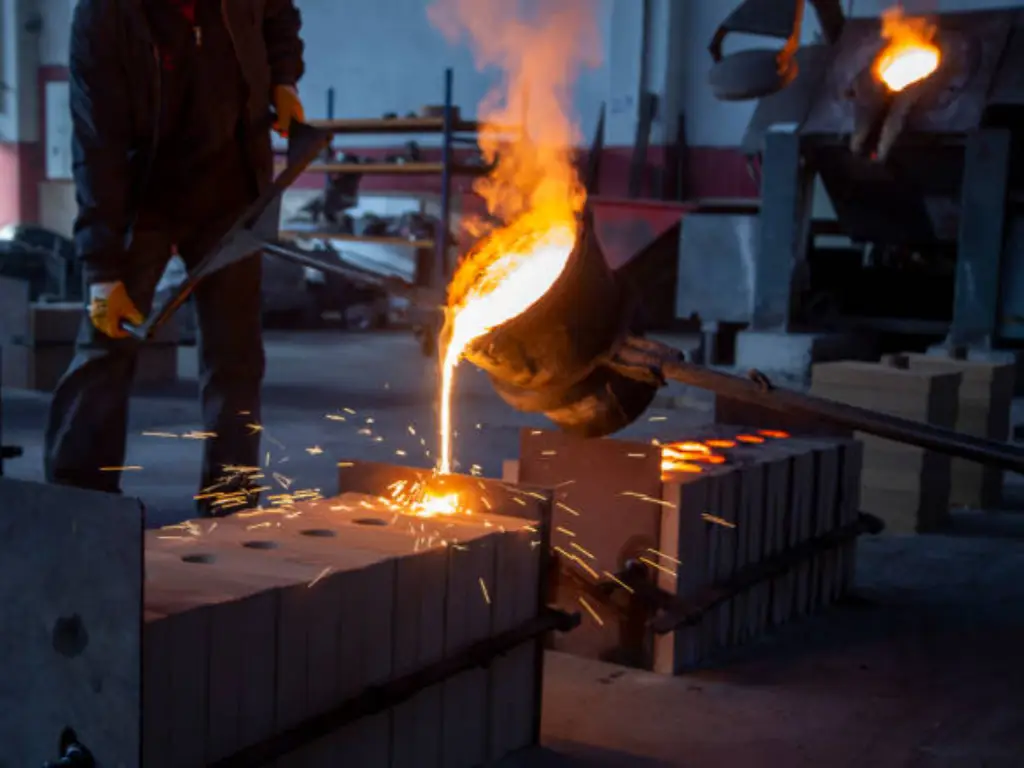
The second pillar of green casting is resource circularity. The advanced metal casting industries are now making the most of the secondary (recycled) metals that consume only a fraction of the energy used in primary smelting. When it comes to the sand casting process, the emphasis is on the more sophisticated Sand Reclamation systems that enable the recycling of more than 90 percent of the molding medium. In addition to iso 9001, the current supplier qualification requires compliance with ISO 14001 and ISO 50001. These certifications are objective indications that a partner can fulfill the high environmental standards demanded by the next generation of industrial manufacturing.
The Ultimate Supplier Audit Checklist
Risk reduction requires a strict physical or digital inspection of the metal casting foundry before signing a long-run production contract. The following checklist gives a guideline on how to assess technical competence and operational stability:
- Technical/Laboratory Audit: Does the facility have an in-house lab to perform chemical tests (spectroscopy) and mechanical tests (tensile and hardness)? The use of third-party labs may cause a high level of delay in quality feedback.
- Quality Assurance: Check their ability to perform ndt tests like X-ray, Magnetic Particle, or Ultrasonic tests to detect internal defects like porosity or inclusions that cannot be seen with the naked eye.
- Capacity Elasticity: Can they scale up by 20-30% on short notice? What is their “Plan B” for equipment failure?
- Financial Health: Casting is capital-intensive. Ensure the foundry has the cash flow to maintain equipment and purchase raw materials without delay.
FAQ
Q: What do I do to know whether I require investment casting or die casting?
A: When you require large quantities (5,000 and above units) of aluminum and you can afford the high tooling cost, then die casting is the choice. Investment casting is the best option when you require complex shapes in steel with high precision and reduced volumes.
Q: What is the significance of Design for Manufacturing (DFM)?
A: DFM detects the possible issues at an early stage, e.g. sharp edges resulting in cracks or uneven wall thickness resulting in shrinkage. It is free to correct them on paper, and very costly to correct them in a steel mold.
Conclusion
No best metal casting company exists, just the right supplier to your technical and commercial requirements. You may be more concerned with the accuracy of investment casting or the reduced price of high-volume die casting, but the most important thing is to start working with your foundry partner as soon as possible.