Introduction
The decision to cast or machining is a critical one that will affect the performance of your product and the bottom line of your company. Whether you are moving out of a prototype to mass production or you are trying to optimize an already existing component, it is important to know the trade-offs in precision, lead time and cost. In the contemporary industrial environment, when the production process should correspond to the economic limitations as well as to the strict technical standards, the choice of the most efficient production method presupposes the systematic study of the mechanical demands and financial reality. This guide will de-teach the technicalities of metal casting and CNC machining to enable you to choose the appropriate manufacturing route in your particular engineering requirements.
Casting vs Machining
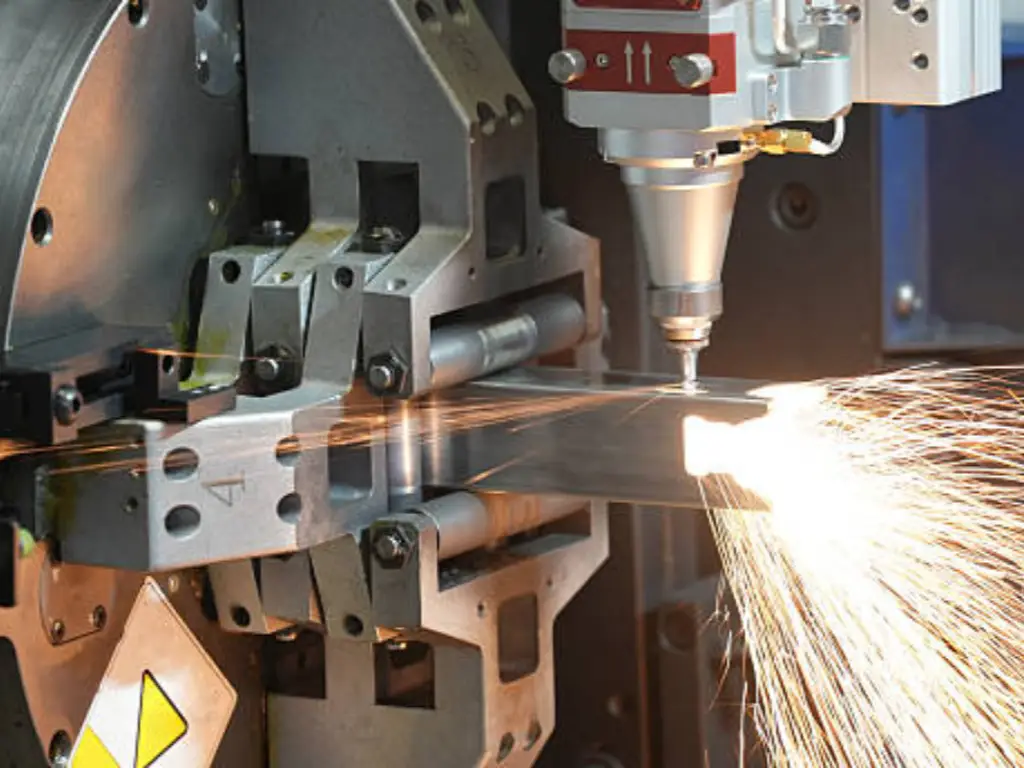
The basic difference between the two techniques is that they are physical in their method of attaining the final shape. CNC machining is a subtractive manufacturing. It starts with a solid mass of raw material, commonly known as a billet or workpiece, and employs a cutting tool, like a drill bit or end mill, to carry out material removal. The cnc machines are controlled by specific numerical control instructions to remove unwanted material through machining processes such as CNC milling and turning until the part is revealed out of the block. This is characterized by the fact that it depends on the mechanical integrity of the starting work material and the accuracy of the tool path.
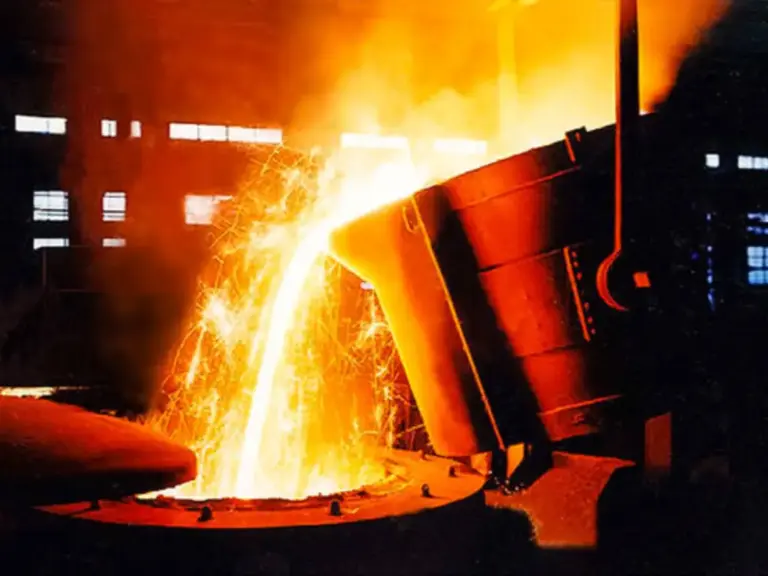
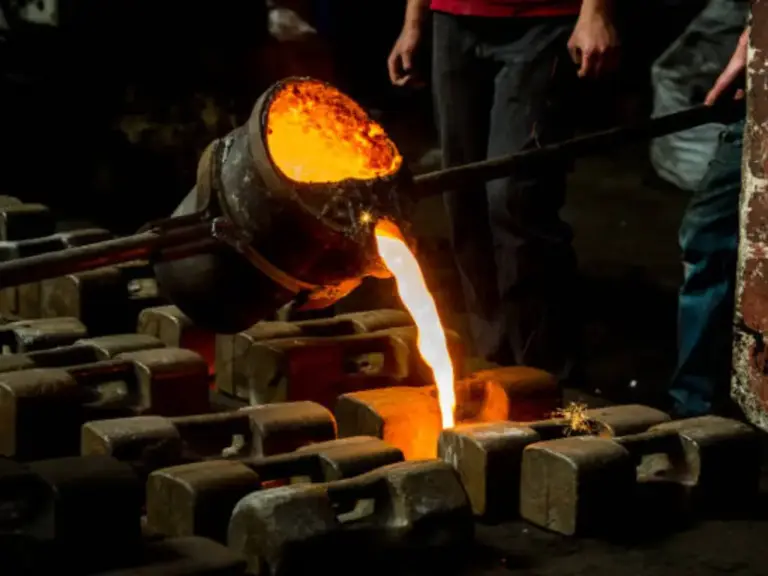
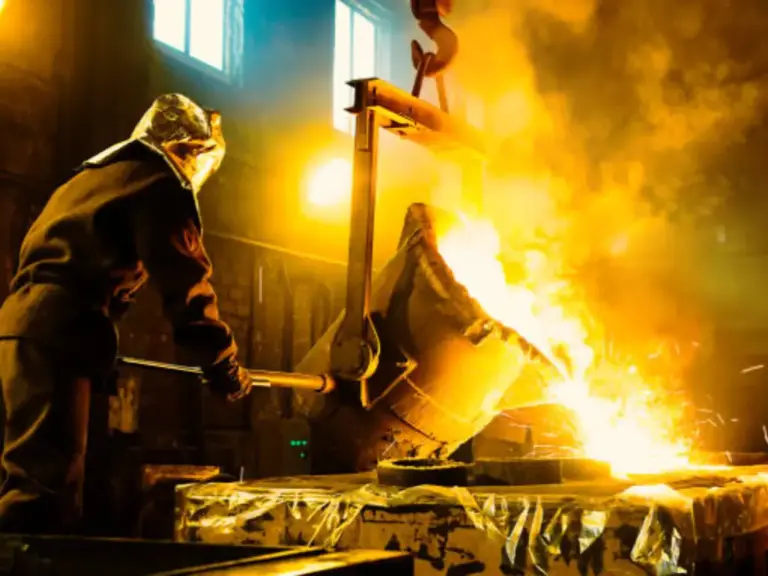
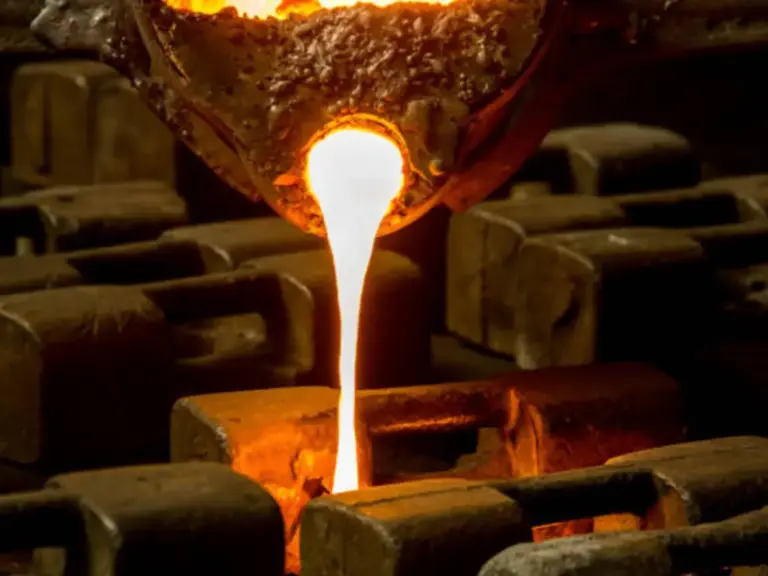
On the other hand, the casting process is formative. It is based on the pouring of molten metal or liquid metal into a hollow cavity of a mold. This type of mold is the opposite of the shape that is required. When the molten material is cooled and solidified, it assumes the shape of the mold. Casting methods are of various types, such as die casting, investment casting, and sand casting, which use various types of mold materials and pressures to control liquid-solid transition. Whereas machining removes the part in successive layers, casting fills the geometry by filling the pre-existing void, with the fluid properties of the material used to fill the geometry.
| Feature | CNC Machining (Subtractive) | Casting (Formative) |
| Physical Mechanism | Material removal from a solid mass. | Molten metal solidification in a cavity. |
| Starting State | Solid billet or workpiece. | Liquid metal or molten material. |
| Attainment of Shape | Carving/stripping successive layers via a cutting tool. | Filling a hollow cavity that is the inverse of the desired shape. |
| Core Technology | CNC machines & Numerical control instructions. | Mold design & fluid dynamics of the material. |
| Primary Advantage | High mechanical integrity of the work material. | Ability to fill complex geometries in one step. |
| Primary Disadvantage | Dependent on the reach/accuracy of the drill bit. | Requires the creation of a pre-existing mold/void. |
| Key Variants | CNC milling and turning. | Die casting, investment casting, and sand casting. |
Accuracy and Tolerances
CNC machining is better when a project requires high accuracy and close tolerances. Modern cnc machines have mechanical rigidity, which means that metal parts can be produced with dimensional variances of as little as ±0.0005 inches. Such precision is essential to components that need to fit flawlessly with other components, e.g. aerospace fasteners, high-speed bearings, or medical inserts. The machining process is stable, which means that all cuts can be repeated and checked against a digital twin.
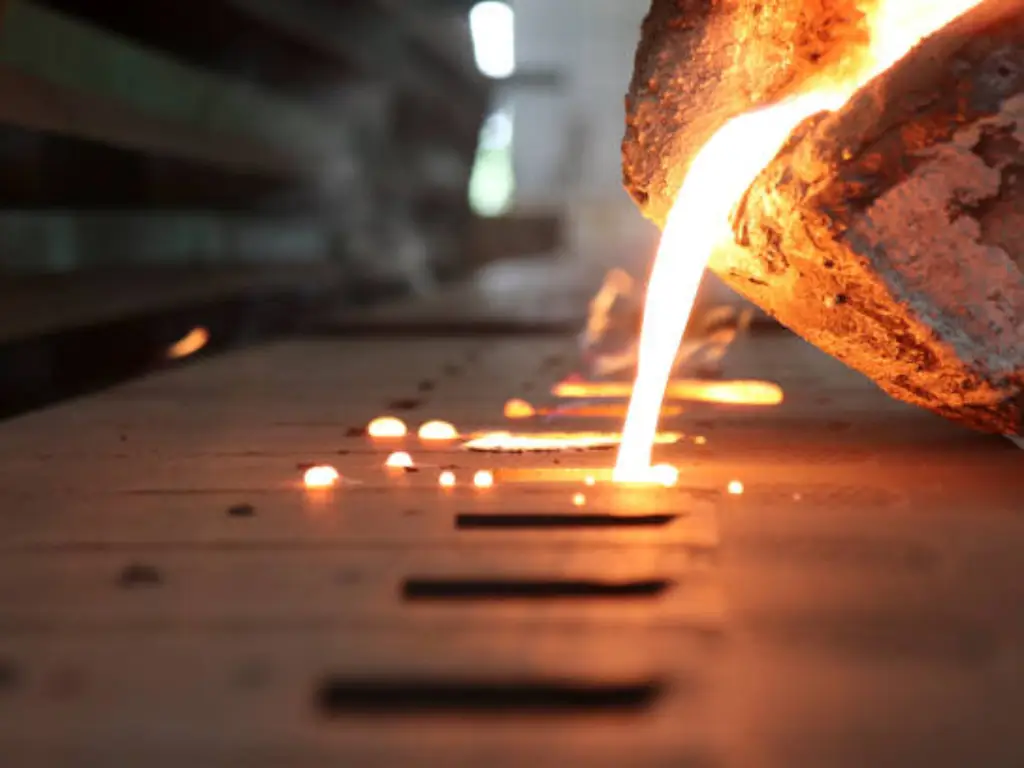
The casting process, although efficient, has a problem of precision because of the thermal expansion and contraction of the molten metal as it solidifies. Even more accurate casting techniques such as investment casting or vacuum casting typically have a larger tolerance than a typical cnc milling center. Moreover, surface finishes in casting are usually granular or textured because of the character of the mold surface, be it sand, ceramic or steel. A secondary machining operation is virtually always necessary to obtain smooth finishes, flat surfaces or sharp edges. When your particular needs require zero tolerance of error on functional surfaces, the subtractive technique offers the control required on the final form.
| Manufacturing Method | Achievable Tolerance | Surface Finish (Ra) | Target Industry | Typical Component Examples |
| CNC Machining | ±0.0005 in | 0.8 – 3.2 μm | Aerospace & Medical | High-speed bearings, surgical inserts, aerospace fasteners. |
| Investment Casting | ±pm 0.005in | 1.6 – 3.2 μm | Power & Defense | Turbine blades, complex valve bodies, firearms components. |
| Die Casting | ±pm 0.002 in | 0.8 – 1.6 μm | Automotive & Tech | Automotive components, laptop frames, heat sinks. |
| Sand Casting | ±pm 0.030 in | 12.5 – 25 μm | Heavy Industrial | Engine blocks, pump housings, large machine bases. |
If your design falls into the “High Precision” category but requires the geometric freedom of casting, Bessercast specializes in narrowing this gap. Partner with us to achieve investment casting tolerances that significantly reduce the need for secondary machining.
Casting for Complex Internal Features
Where machining is superior in linear accuracy, casting is superior in complicated geometries. It is physically difficult or prohibitively costly to make complex designs or hollow cavity structures by removing material. As an example, engine blocks and turbine blades often have internal cooling systems and complex shapes that cannot be accessed by a linear cutting tool without damaging the structural integrity of the outer shell.
Investment casting and sand casting enable engineers to create complex components with internal undercuts and organic curves. In investment casting, a wax pattern is covered with ceramic, melted away and filled with liquid metal, which can be used to create complex designs that incorporate internal labyrinths without multiple assemblies. Although a 5-axis cnc machine can be used to cut complex shapes, the machine time and tool life of cutting such shapes out of a solid block can be prohibitive compared to using a mold. The process of casting gives the required shape in one thermal operation, simplifying the manufacturing chain of parts that need internal fluidity.
Porosity and Structural Strength
To engineers who are interested in the life span of a component, the mechanical properties of the completed part are more significant than the size of the part. The raw materials that are normally used in CNC machining are wrought materials that have been rolled, extruded or forged. This industrialization preparation guarantees a thick, homogenous grain structure with practically no internal flaws. As a result, machined metal components have high fatigue and reliable strength at load.
By comparison, metal casting is prone to porosity, or small gas bubbles or shrink voids that develop as the molten material hardens in the mold. This can be alleviated by high pressure processes such as die casting or squeeze casting which press the metal into the corners of the mold, although this does not completely remove the possibility of internal voids. These inconsistencies are especially likely in sand casting because the sand mold is permeable. A post-casting heat treatment is commonly required to enhance the mechanical properties of cast parts by refining the grain structure. Moreover, certain hard materials are hard to machine because of excessive wear on the tools, and precision casting is a more appealing alternative to specialized alloys despite the risks of the solidification process.
Volume vs. Tooling Costs
The cost-effectiveness of casting and machining is determined by the correlation between the cost of labor, volume of production, and the overall cost. CNC machining is inexpensive to set up. You do not require a custom mold, you just require a digital file and the raw materials. Nevertheless, the price per unit is relatively fixed since machine time and labor expenses are charged on each unit manufactured. This renders machining the best manufacturing process when the volume of production is low, a prototype, or a special industrial equipment.
The casting techniques are characterized by expensive initial investment in the design of the moulds and tools. Die casting mold may cost tens of thousands of dollars and it takes a long lead time to produce. But, when the mold is made, the price of casting a single part is extremely low. This is what mass production is all about. The fixed cost of the tool is amortized over thousands of units as the volume increases, and the cast part would eventually be much cheaper than the machined one.
Economic break-even point is a very important measure:
Casting is more cost-effective when the volume of production is above this QTY. In large volumes, the rate of pouring molten metal is much faster than the incremental removal of material of a cnc machine.
| Comparison Factor | CNC Machining | Sand Casting | Investment Casting | Die Casting |
| Manufacturing Philosophy | Subtractive (Material removal) | Formative (Gravity pour) | Formative (Lost wax) | Formative (High pressure) |
| Precision & Tolerances | Highest (±0.0005) | Low (±0.030) | High (±0.005) | Moderate (±0.002) |
| Complex Geometries | Limited by cutting tool | High (Large parts) | Extreme (Intricate designs) | High (Mass production) |
| Surface Quality | Smooth finishes | Rough/Granular | Good/Refined | Excellent/Consistent |
| Material Integrity | Excellent (Wrought) | Poor (Porosity risk) | Good (Controlled) | Moderate (Gas entrapment) |
| Initial Tooling Cost | Zero ($0) | Low ($500 – $3k) | Moderate ($3k – $10k) | High ($20k – $100k+) |
| Unit Production Cost | Highest | Medium | Medium-Low | Lowest |
| Economic Break-Even (QTY) | N/A (Prototypes) | Low (QTY ≈ 50) | Mid (QTY ≈ 200) | High (QTY ≈ 2,000) |
| Sustainability | High excess material | High recycling rate | Moderate waste | Near-net shape efficiency |
| Lead Time to First Part | Shortest (Days) | Short (Weeks) | Moderate (Weeks) | Long (Months) |
Material Waste and Energy Efficiency
By 2026, the industrial assessment of a manufacturing process will go beyond fiscal measures to include the environmental footprint and resource efficiency of the manufacturing process. CNC machining is essentially a subtractive process which tends to transform up to 80 percent of raw materials into waste material, in the form of metal chips, which need a lot of energy to be reclaimed and re-processed into useful billets. Conversely, metal casting is characterized as a near-net shape production process, in that, it is a process that entails the pouring of an exact amount of liquid metal to form the desired shape, thus reducing the amount of material throughput. Although casting techniques such as permanent mold casting and centrifugal casting consume large amounts of energy to hold molten metal at the necessary temperatures, they tend to have a better sustainability profile when it comes to the mass production of automotive parts by significantly lowering the overall amount of metal that has to be recirculated in the supply chain.
The Hybrid Approach for High-Performance Parts
The most advanced production technique in the contemporary industry is not a two-polar decision, but a combination of the two called Machined Castings. This is a process of casting (e.g. die casting or sand casting) to form a near-net shape, then a machining operation to complete only the important features.
This mixed approach solves the dilemma of accuracy and volume. The complex shapes, internal features and overall bulk of the part are produced efficiently by the metal casting, whereas tight tolerances on bearing surfaces, threaded holes, and flat surfaces are produced by cnc machines. This method greatly saves the overall machine time and tool life since there is much less waste material to cut. It may be automotive parts like transmission housings or high-duty engine blocks, but the finishing process through cnc milling guarantees the quality of the surface and high accuracy needed to assemble it, and the casting guarantees the overall price is competitive at large volumes.
Final Decision Matrix: Choosing Based on Your Project Needs
The selection between casting vs machining must be based on a cold assessment of your project’s technical and financial parameters. There is no universal “best” method; there is only the best method for your current production volume and the physical constraints of the part.
| Feature | CNC Machining | Casting (Die/Investment/Sand) |
| Production Volume | Ideal for Low to Medium | Ideal for High (Mass Production) |
| Initial Cost | Very Low (No tooling) | Very High (Mold Design investment) |
| Precision | High Precision / Tight Tolerances | Moderate to Low Precision |
| Geometry | Limited by Cutting Tool access | Excels at Intricate Shapes |
| Material Waste | High (Excess Material) | Low (Near-net shape) |
| Surface Finish | Smooth Finishes (Ra 0.8-3.2) | Often requires Finishing Process |
| Lead Time | Short (Days to Weeks) | Long (Months for tooling) |
Engineers need to consider the work material, the need of internal features, and the estimated life-cycle volume of the component to arrive at an optimal conclusion. Cnc machining is the standard of the day when it comes to prototypes and high-precision aerospace parts. In the case of automotive components and consumer electronics where large volumes are the driving force behind the strategy, die casting or squeeze casting provides the required volume. With the hybrid method of machined castings, the manufacturers will be able to attain the surface quality and mechanical properties needed in the 2026 global market without compromising the economic efficiency.
In cases where your project requires the final integration of complex designs and unyielding accuracy, precision casting is the ultimate answer to the complex and performance gap. Collaborate with Bessercast to capitalize on our expertise in high-performance investment casting, and have your most demanding parts produced with world-class quality and engineering excellence.