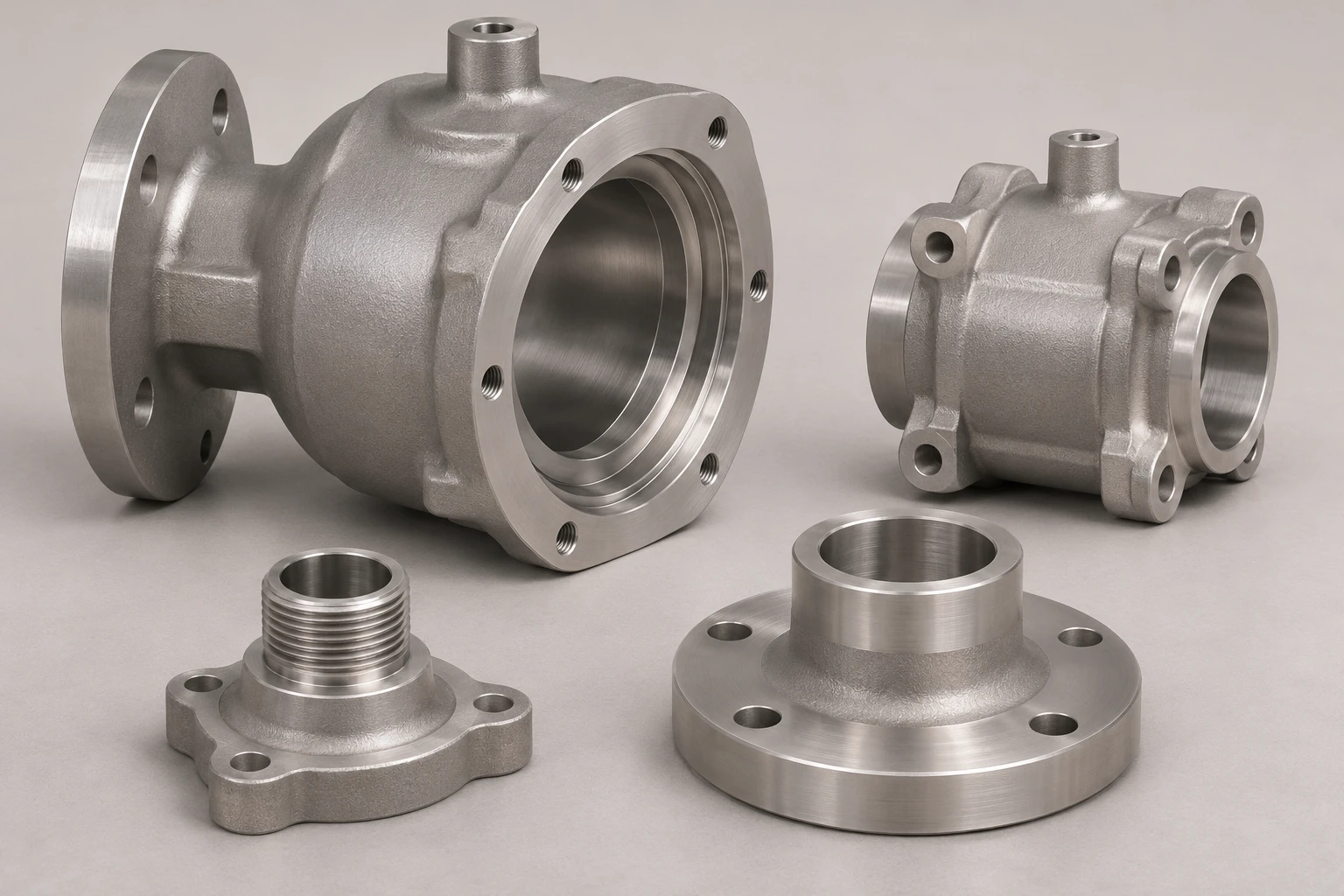
Custom Ball Valve Body Castings
Castings Engineered to Cut Extra Machining and Supplier Handoffs
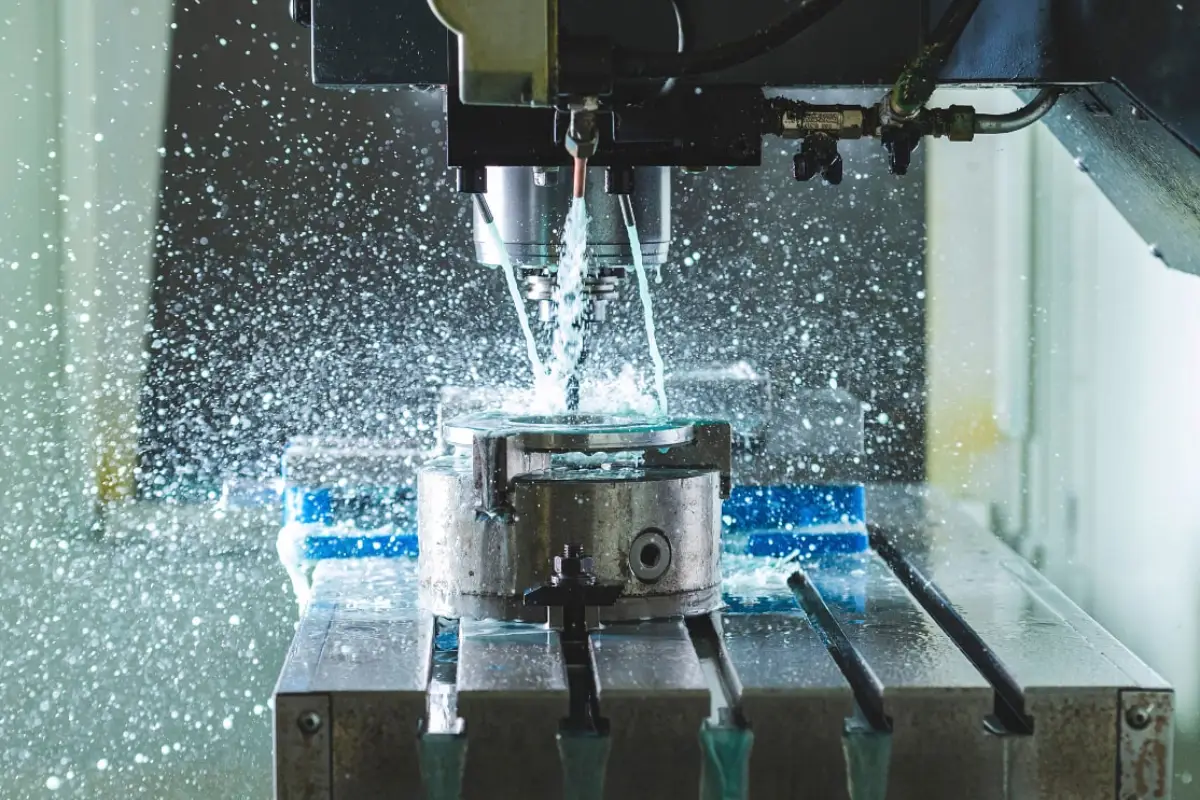
We evaluate your material, geometry, requirements, and quantities before production begins. Coordinating casting with necessary CNC machining cuts unnecessary metal removal and reduces your coordination across separate suppliers.
Ball Valve Body Configurations
We supply cast bodies and matching end connectors based on your assembly and part drawings:
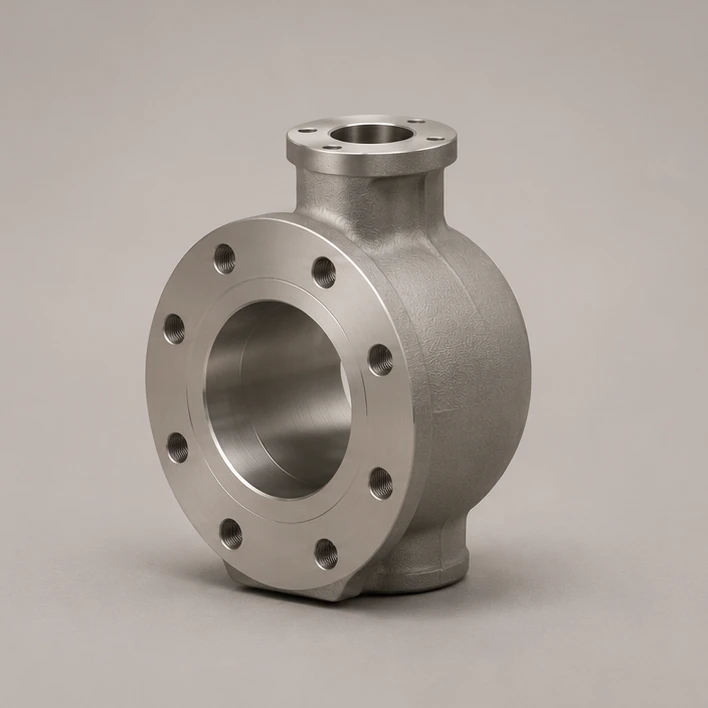
1-Piece Valve Bodies
A compact one-piece pressure body for flanged ball valve assemblies.
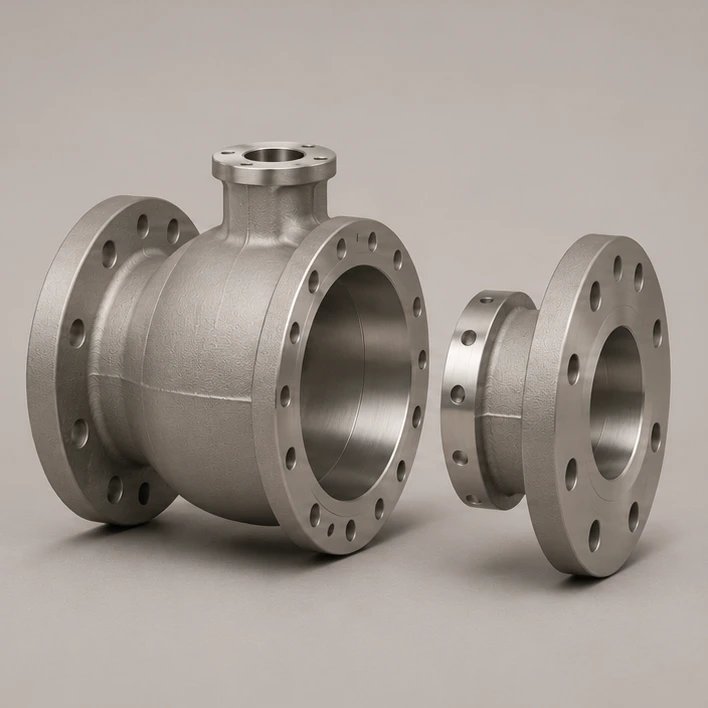
2-Piece Valve Bodies
A two-part housing split into a main body and an end connector.
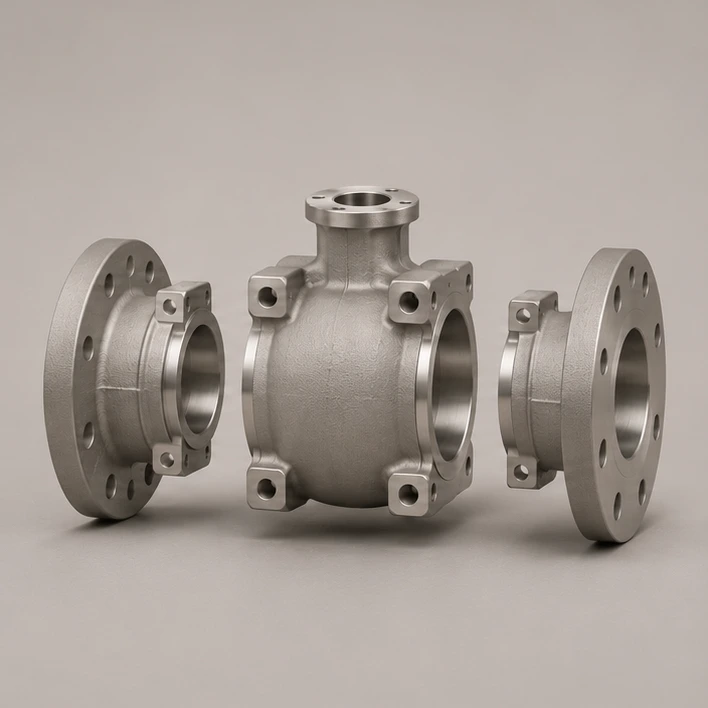
3-Piece Valve Bodies
A three-part shell structure pairing a center body with two end caps.
Manufacturing & cost
A Lower Casting Price Can Mean a Higher Total Cost.
Look beyond the casting quote. Geometry, material, precision, quantity and inspection requirements determine the work—and cost—needed to deliver your valve body.
Geometry
Material
Precision
Quantity
Inspection requirements
Lead time
Cost per Accepted Part = Tooling & Development Allocation + Casting + Required Machining & Treatment + Specified Inspection + Expected Rework & Scrap Cost
Compare quotes for the same drawing, material, quantity and delivery requirements. Check the expected lead time against your schedule. Extra machining or rework can push back delivery and add costs. Use actual data to estimate rework, scrap and any additional delay costs without counting them twice.
01
Weigh the Requirements Against the Budget.
Tighter tolerances, demanding materials and additional testing can increase manufacturing costs. Identify what your application requires, then compare routes that meet those requirements.
02
Investment Casting Adds Upfront Cost—and May Reduce Later Work.
Investment casting requires tooling and process investment, but near-net shapes can reduce material removal and machining. It may be economical where those savings outweigh the added investment; for simple shapes or small quantities, another route may cost less.
03
Spread Tooling Cost Across Realistic Demand.
Consider the first batch, credible repeat orders and the likelihood of design changes. A small trial order with stable repeat demand has different economics from a one-off project that needs new tooling.
Besser manufacturing support
A Clearer Manufacturing Route. Fewer Supplier Handoffs.
01
A Cost-Conscious Route Before You Invest in Tooling
Our technical team evaluates your drawings, materials, order quantities, and delivery targets together. Reviewing casting geometry alongside required machining setups helps identify unnecessary cutting and reduces the risk of casting-and-machining handoff issues before you commit capital to tooling.
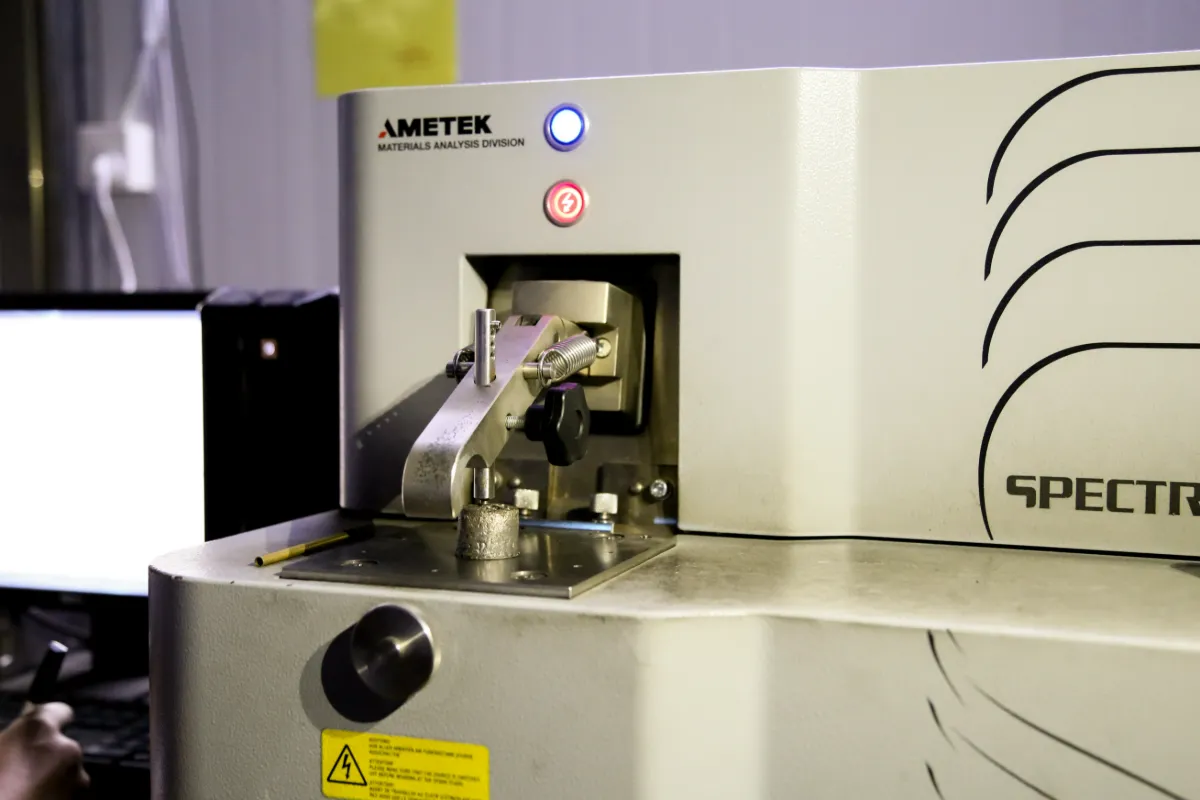
Optical emission spectrometer (OES)
02
Discuss Material Options with Broader Foundry Experience
Review designated cast grades or candidate alloys with a team that has developed and produced over 200 materials across industries. We provide practical processing advice supported by in-house spectrometry for chemical composition and agreed mechanical property testing.
03
Order to Your Stage and Cut Cross-Supplier Coordination
We coordinate investment casting, heat treatment, in-house CNC machining, and partner surface finishing. Order raw castings, partly machined shells, or bodies machined to drawing, reducing the burden of transferring parts, repeating drawing explanations, and managing handoffs between separate vendors.